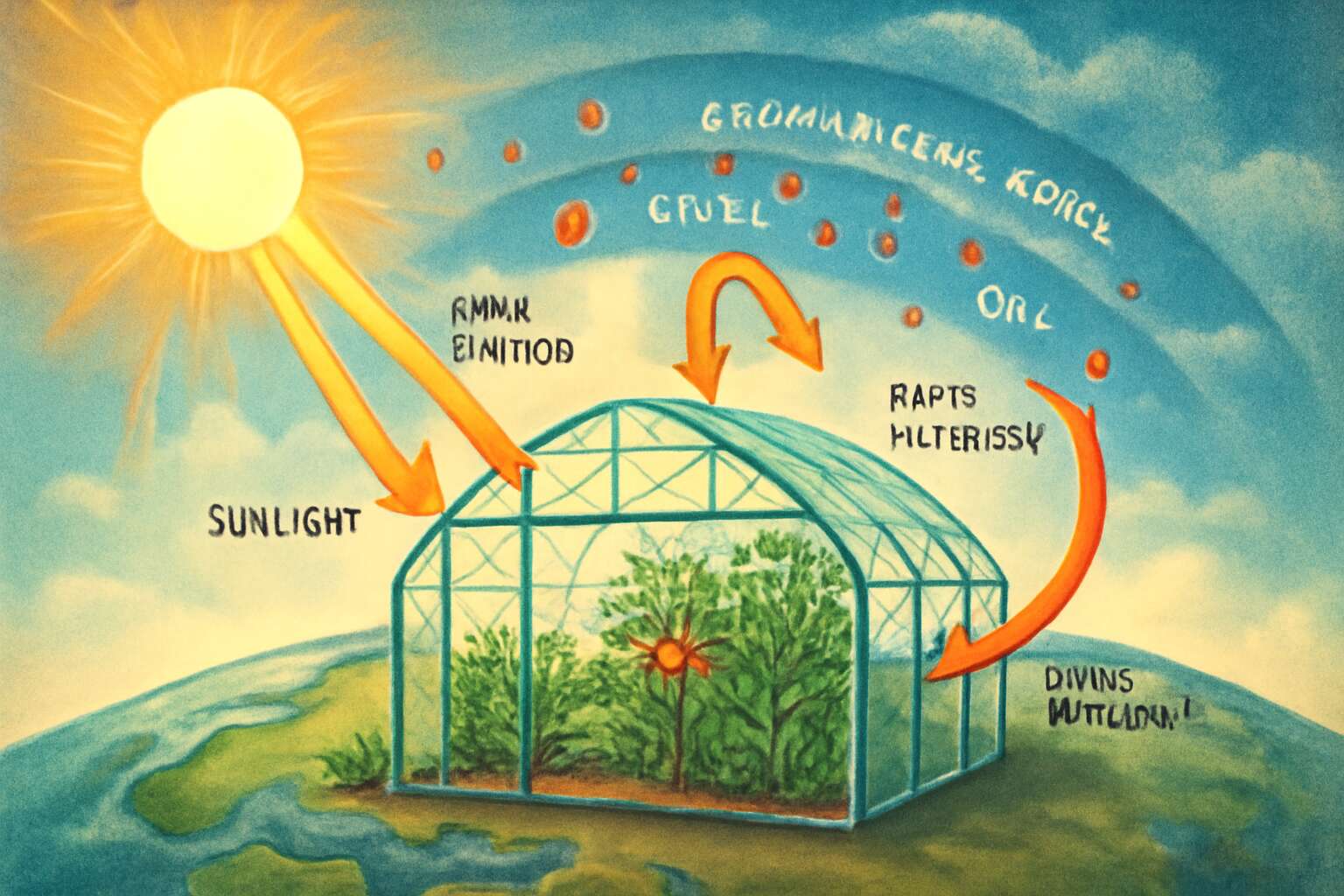
Understanding the Greenhouse Effect
Definition of Greenhouse Effect – Explains what the greenhouse effect is and its role in Earth’s climate
Picture Earth as a giant, cozy blanket wrapped around a globe that’s constantly trying to escape its chill. That’s essentially what the greenhouse effect is—nature’s way of trapping heat and keeping our planet comfortably warm. Without this phenomenon, the average temperature would plummet so drastically that life as we know it would struggle to survive. The greenhouse effect for science exhibition is a perfect way to showcase how natural processes sustain life, yet also how human activity threatens this delicate balance.
At its core, the greenhouse effect involves certain atmospheric gases—think of them as Earth’s thermal insulation—absorbing and rerouting heat from the sun. These gases include carbon dioxide, methane, and water vapor, which act like a planetary thermal blanket. When sunlight hits the Earth’s surface, some of it reflects back into space, but a significant portion is absorbed and re-emitted as heat. The greenhouse gases then trap this heat, preventing it from escaping into space, thus maintaining a climate suitable for life.
- Carbon dioxide (CO₂)
- Methane (CH₄)
- Water vapor
Understanding the greenhouse effect for science exhibition isn’t just about appreciating Earth’s warmth—it’s about recognizing how human actions, such as burning fossil fuels, intensify this natural process, leading to global warming. This balance between natural and enhanced greenhouse effect is what makes our planet both hospitable and vulnerable. So, next time you hear about climate change, remember the vital role of this invisible, heat-trapping phenomenon!
Natural vs. Enhanced Greenhouse Effect – Differentiates between the natural process and human-induced changes
The greenhouse effect for science exhibition offers a fascinating glimpse into Earth’s natural warming process, but understanding the distinction between natural and enhanced greenhouse effect is crucial. The natural greenhouse effect has persisted for millions of years, maintaining a stable climate that supports diverse ecosystems. It’s a delicate balance, where atmospheric gases like carbon dioxide, methane, and water vapor act as an insulating layer, trapping heat and ensuring the planet doesn’t plunge into icy darkness.
However, human activities—particularly the burning of fossil fuels—have significantly amplified this process. The enhanced greenhouse effect results from increased concentrations of greenhouse gases in the atmosphere, which intensifies heat retention. This excess trapping of heat is a key driver of global warming and climate change. For a compelling demonstration at a science exhibition, it’s vital to showcase how our actions upset the natural equilibrium. In doing so, we reveal the urgent need to address human impact on the greenhouse effect for science exhibition, fostering awareness and responsibility among visitors.
Importance for Earth’s Climate – Highlights why the greenhouse effect is vital for maintaining life-supporting temperatures
The greenhouse effect for science exhibition reveals a captivating dance of light and heat, an invisible symphony that sustains life on Earth. Without this natural phenomenon, our planet would be a frozen wasteland, inhospitable and barren. It acts as a delicate blanket, gently holding in warmth and ensuring that temperatures remain within a life-supporting range. This vital process has persisted for millions of years, shaping climates and nurturing ecosystems across the globe.
Understanding the importance of the greenhouse effect for science exhibition invites us to marvel at its profound role in maintaining Earth’s balance. The gases—carbon dioxide, methane, water vapor—form a transparent yet resilient shield, trapping solar radiation and converting it into life-giving warmth. This natural insulation allows forests to flourish, oceans to sustain marine life, and humans to thrive. Recognizing this intricate web of thermal regulation deepens our appreciation of Earth’s delicate equilibrium and underscores why preserving it is paramount.
In essence, the greenhouse effect is not merely a scientific concept but a poetic testament to Earth’s extraordinary resilience. It reminds us that even the tiniest atmospheric molecules wield immense power—shaping climates, supporting biodiversity, and sustaining civilization itself. Through the lens of a science exhibition, this phenomenon becomes a vivid narrative of life’s fragile harmony, urging us to cherish and protect the natural balance that keeps our world alive and vibrant.
Greenhouse Gases and Their Roles
Major Greenhouse Gases – Lists key gases such as carbon dioxide, methane, nitrous oxide, and water vapor
Within the delicate dance of Earth’s atmosphere, certain gases act as silent custodians, trapping warmth and nurturing life itself. These are the greenhouse gases, vital players in the ongoing saga of the greenhouse effect for science exhibition. Without them, our planet would be a frozen wasteland, inhospitable to the myriad forms of life that thrive today.
Major greenhouse gases include carbon dioxide, methane, nitrous oxide, and water vapor. Each possesses unique properties, yet together they weave the intricate fabric of Earth’s climate system. For instance, carbon dioxide persists in the atmosphere long enough to influence global temperatures profoundly, while methane, though less abundant, is far more potent at trapping heat. Water vapor, the most abundant greenhouse gas, acts as a dynamic regulator, amplifying the greenhouse effect in a feedback loop that can intensify global warming.
- Carbon dioxide (CO2) — the primary driver stemming from fossil fuel combustion and deforestation.
- Methane (CH4) — released during livestock farming, wetlands, and fossil fuel extraction.
- Nitrous oxide (N2O) — emitted from agricultural practices and industrial processes.
- Water vapor — the natural, fluctuating component that enhances warming through feedback mechanisms.
Understanding these gases is crucial for grasping the delicate balance of our climate—an intricate symphony where human activity often plays the discordant note, tipping the scales toward an enhanced greenhouse effect for science exhibition that we must confront with urgency and insight.
Sources of Greenhouse Gases – Details natural and anthropogenic sources, including industries, agriculture, and deforestation
Greenhouse gases are the unseen architects of our planet’s climate, shaping a delicate balance that sustains life. Their sources are as diverse as the ecosystems they influence, blending natural processes with human endeavors that have dramatically altered the atmosphere. Understanding these origins is key to grasping the profound impact of the greenhouse effect for science exhibition.
Natural sources include wetlands releasing methane, volcanic eruptions emitting carbon dioxide, and forests absorbing and releasing water vapor. However, anthropogenic activities—those driven by human activity—have significantly amplified these emissions. Industries burn fossil fuels, deforestation strips away vital carbon sinks, and intensive agriculture releases nitrous oxide and methane into the atmosphere. These actions tip the natural balance, intensifying the greenhouse effect and accelerating global warming.
In South Africa, for example, coal-fired power plants remain a major source of carbon dioxide emissions, while livestock farming contributes substantially to methane levels. The complex interplay of these sources underscores the importance of recognizing human influence in this global phenomenon.
- Fossil fuel combustion
- Deforestation
- Agricultural practices
All serve as catalysts in the ongoing evolution of the greenhouse effect for science exhibition, highlighting the urgent need for awareness and intervention.
Impact of Greenhouse Gases – Describes how these gases trap heat and influence global temperatures
Greenhouse gases act as an invisible blanket around our planet, trapping heat and regulating global temperatures. Without this natural phenomenon, Earth would be a frozen wasteland, inhospitable for life. But in recent decades, human activities have intensified this effect, causing temperatures to rise at an alarming rate. The greenhouse effect for science exhibition aims to shed light on this delicate balance, illustrating how gases like carbon dioxide, methane, and nitrous oxide influence our climate.
The primary role of these gases is to absorb and re-emit infrared radiation emitted from Earth’s surface. This process keeps our planet warm enough to sustain life, but excess greenhouse gases amplify this effect, leading to global warming. For example, increased emissions from industries and deforestation have escalated the concentration of greenhouse gases, causing more heat to be trapped. This warming triggers a cascade of environmental impacts, from melting glaciers to shifting weather patterns. Understanding these dynamics is crucial to grasping the profound influence of the greenhouse effect for science exhibition on our planet’s future.
The Science Behind the Greenhouse Effect
Radiation and Heat Transfer – Explains how solar radiation reaches Earth and is re-emitted as infrared radiation
As the sun’s relentless rays pierce the atmosphere, they deliver a torrent of solar radiation that warms our terrestrial sanctuary. This radiant energy, upon striking Earth’s surface, transforms into infrared radiation—an intangible whisper of heat that attempts to escape into the void. But here’s where the enigma deepens: instead of vanishing into emptiness, a significant portion of this infrared radiation is captured and held by the greenhouse gases, creating a delicate yet powerful barrier.
This process, the core of the greenhouse effect for science exhibition, is a natural phenomenon that sustains life on Earth. The greenhouse gases—such as carbon dioxide and water vapor—absorb and re-emit infrared radiation, effectively trapping heat within the planet’s atmosphere. This trapping of heat is not merely a scientific curiosity but a vital component in maintaining the planet’s temperate harmony, preventing it from spiraling into an icy abyss.
Understanding the precise mechanics of radiation and heat transfer reveals the subtle but relentless balance that keeps our world alive. It’s a dance of photons, an invisible ballet, played out in the shadows of our atmosphere—an intricate symphony that sustains the warmth of everything we hold dear in this dark and mysterious world.
Absorption and Re-Emission of Heat – Details how greenhouse gases absorb infrared radiation and re-radiate it
Greenhouse gases are the key players in the greenhouse effect for science exhibition. They have a unique ability to absorb infrared radiation—heat that Earth’s surface re-emits after absorbing solar energy. When infrared radiation encounters these gases, such as carbon dioxide and water vapor, they don’t let it escape into space. Instead, they absorb this energy, causing their molecules to vibrate more vigorously. These excited molecules then re-emit infrared radiation in all directions, including back toward Earth.
This process creates a warming blanket around our planet. The continuous cycle of absorption and re-emission effectively traps heat within the atmosphere. This natural mechanism is vital for maintaining stable global temperatures. Without it, Earth would be a frozen planet, inhospitable to most life forms.
Understanding how greenhouse gases absorb and re-emit heat is crucial. It reveals the delicate balance that sustains life and underscores the impact human activities have on this natural process. For the greenhouse effect for science exhibition, grasping this heat transfer dynamic helps explain why reducing emissions is essential for our future.
Effect on Earth’s Atmosphere – Describes the warming process and how it creates a natural ‘blanket’ around Earth
Within the silent depths of our atmosphere, a subtle but relentless process unfolds—a warming embrace that cloaks the Earth in an invisible shroud. This is the essence of the greenhouse effect for science exhibition, a natural phenomenon that sustains life itself. When sunlight bathes the surface, it transforms into infrared radiation, a form of heat that attempts to escape back into the void of space. Yet, greenhouse gases—carbon dioxide, water vapor, methane—stand as vigilant sentinels, capturing this radiant energy.
As these gases absorb infrared radiation, their molecules vibrate with renewed vigor. In a dance as old as time, they re-emit the energy in all directions, including back toward the Earth’s surface. This cyclical process creates a warming blanket—an atmospheric cocoon—that ensures our planet remains hospitably warm. Without this natural greenhouse effect for science exhibition, Earth would be a frozen wasteland, inhospitable to the fragile tapestry of life that thrives here.
Think of it as an ancient spell woven into the fabric of our sky—an essential symphony of heat transfer that sustains the delicate balance of our climate. The continuous cycle of absorption and re-emission is the unseen force that keeps our world alive, yet it also holds the power to unravel if disturbed by human hands. The ghostly dance of greenhouse gases, therefore, remains at the core of understanding Earth’s climate—a truth both mesmerizing and vital.
Human Activities and Greenhouse Effect Acceleration
Industrial Revolution and Emissions – Correlates historical industrial activities with increased greenhouse gases
The rapid acceleration of the greenhouse effect for science exhibition purposes reveals a stark truth—human activities have dramatically intensified a natural process that sustains life on Earth. Since the dawn of the Industrial Revolution, the combustion of fossil fuels has become a relentless engine fueling global development, yet simultaneously fueling an insidious increase in greenhouse gases. Industries, transportation, and energy production have become primary sources of carbon dioxide and methane emissions, tipping the delicate balance of Earth’s climate system.
In just over two centuries, the concentration of atmospheric greenhouse gases has soared, correlating strongly with human endeavors. An illustrative example is the surge in coal and oil consumption, which releases vast quantities of carbon dioxide—an essential component of the greenhouse effect for science exhibition—into the atmosphere. This escalation prompts the re-emission of infrared radiation, intensifying the natural ‘blanket’ that warms our planet beyond its usual thresholds. It is a stark reminder of how human activities can accelerate a process that once kept Earth just warm enough for life to flourish.
- Burning fossil fuels in power plants
- Deforestation reducing carbon absorption
- Agricultural practices emitting methane and nitrous oxide
Understanding these links is crucial, especially when considering the profound impact of industrial emissions. As factories and vehicles emit greenhouse gases, the enhanced greenhouse effect for science exhibition underscores the urgent need to recognize our role in climate change and the importance of sustainable practices that can curb this alarming trend.
Deforestation and Land Use Changes – Explores how human land management impacts greenhouse gas concentrations
Human activities have become the architects of a rapidly changing climate, with land management practices playing a pivotal role in accelerating the greenhouse effect for science exhibition. Deforestation, urbanization, and land use changes are more than just environmental concerns—they are catalysts that amplify greenhouse gas concentrations in our atmosphere. When forests are cleared, the natural ability of trees to absorb carbon dioxide diminishes dramatically, tipping the balance towards increased greenhouse gases. This reduction in carbon absorption means more CO₂ remains in the atmosphere, intensifying the greenhouse effect for science exhibition.
In regions like South Africa, land use changes have profound impacts, transforming expansive green landscapes into concrete jungles or agricultural zones that emit methane and nitrous oxide. These gases, potent contributors to the greenhouse effect, trap heat more effectively than carbon dioxide alone. The alteration of natural landscapes not only releases stored carbon but also disrupts ecosystems that once helped regulate greenhouse gas levels. It’s a stark reminder that our land management choices directly influence the delicate balance that sustains Earth’s climate.
Fossil Fuel Combustion – Highlights the role of burning coal, oil, and gas in boosting greenhouse gases
The relentless combustion of fossil fuels—coal, oil, and natural gas—acts as a dark incantation, fueling the rise of greenhouse gases that cloak our planet in a warming shroud. This unseen force, born from human activity, accelerates the greenhouse effect for science exhibition, transforming a natural phenomenon into a perilous imbalance. When industries belch smoke and cars spew exhaust, they inject vast quantities of carbon dioxide into the atmosphere, tipping the delicate scales that sustain Earth’s climate.
In South Africa, the echo of this industrial symphony reverberates through the landscape, intensifying the greenhouse effect for science exhibition. Fossil fuel combustion is the primary villain—its emissions of CO₂ and other potent gases like methane and nitrous oxide create a thick, invisible smog of heat-trapping molecules. These gases efficiently absorb infrared radiation, re-emitting it back toward Earth, deepening the atmospheric warmth. The more we burn, the more the natural balance falters, turning Earth’s once gentle greenhouse into a roaring furnace.
Consequences of the Enhanced Greenhouse Effect
Global Warming – Links greenhouse effect to rising global temperatures
The consequences of an enhanced greenhouse effect are becoming increasingly evident across the globe, and South Africa is no exception. Rising global temperatures are a direct result of increased greenhouse gases trapping more heat in the atmosphere. This phenomenon leads to a cascade of environmental shifts that threaten both natural ecosystems and human communities.
One of the most alarming impacts is the intensification of heatwaves, which can devastate agriculture and strain water resources. Additionally, rising temperatures contribute to the melting of glaciers and polar ice, causing sea levels to rise and threatening coastal regions. These changes are not isolated; they often trigger unpredictable weather patterns, including severe droughts and heavy storms.
Understanding the greenhouse effect for science exhibition is crucial in highlighting how human activities such as fossil fuel combustion and deforestation have accelerated these processes. As temperatures continue to climb, the urgency to address the greenhouse effect becomes ever more apparent, shaping policies and personal choices alike.
Climate Change – Details effects on weather patterns, sea levels, and ecosystems
The enhanced greenhouse effect acts as an invisible hand, subtly altering the delicate choreography of our planet’s climate. As greenhouse gases accumulate in the atmosphere, they create a more formidable blanket that traps heat with relentless persistence. This intensification doesn’t just warm the air; it unleashes a cascade of consequences on weather patterns, sea levels, and ecosystems.
In South Africa, the repercussions are vividly felt through unpredictable weather shifts—droughts that parch the land and storms that swell beyond historical norms. Sea levels creep upward, threatening coastal communities and eroding sandy shores with a silent but powerful advance. Meanwhile, ecosystems strain under the pressure, with many species struggling to adapt or facing extinction as their habitats are submerged or transformed.
The greenhouse effect for science exhibition offers a window into this complex web of change. It reveals how human activities—fossil fuel burning, deforestation, and land use changes—have turbocharged natural processes, turning them into forces of environmental upheaval. This isn’t just about rising temperatures; it’s about a planet’s fragile balance teetering on the edge of transformation.
Impacts on Biodiversity and Human Life – Addresses risks to species, agriculture, and communities
The enhanced greenhouse effect doesn’t just warm our planet—it unleashes a ripple of devastating consequences that threaten biodiversity and human life alike. As greenhouse gases continue to accumulate in the atmosphere, the delicate balance of ecosystems faces unprecedented stress. Many species struggle to adapt, and some face extinction as their habitats are submerged or transformed by rising sea levels. For communities in South Africa, these changes mean more frequent droughts, unpredictable storms, and the erosion of coastal shores.
The risks extend beyond nature. Agriculture, vital for food security, is increasingly vulnerable to shifting weather patterns and extreme events. Crops fail under drought conditions, and livestock suffer from water shortages. Human communities bear the brunt of these environmental upheavals, with vulnerable populations risking displacement and economic destabilization. The impact of the greenhouse effect for science exhibition underscores the urgent need to understand and address these cascading effects. It reminds us that our actions—fossil fuel burning, deforestation, and land use changes—are fueling this environmental crisis with tangible, far-reaching consequences.
Ways to Mitigate the Greenhouse Effect
Renewable Energy Sources – Promotes solar, wind, and hydroelectric power
Amidst the vast tapestry of Earth’s delicate balance lies a potent force—the greenhouse effect for science exhibition—an invisible guardian that sustains life while whispering warnings of its fragility. Renewable energy sources emerge as the luminous antidote, harnessing nature’s silent power to diminish humanity’s footprint. Solar panels soak up the sun’s warm embrace, transforming radiant energy into electricity with a promise of cleaner skies.
Wind turbines dance gracefully across the horizon, their blades slicing through the air to generate sustainable power, while hydroelectric stations harness the relentless flow of water, turning turbulence into a source of hope. This triad of renewable energy sources not only curtails greenhouse gases but also champions a future where human innovation aligns with Earth’s natural rhythms. Embracing these alternatives is vital in mitigating the greenhouse effect for science exhibition, fostering a resilient planet for generations to come.
Energy Efficiency and Conservation – Encourages reducing energy consumption
Reducing energy consumption is a crucial step in mitigating the greenhouse effect for science exhibition. When we use energy more efficiently, we lower the demand for fossil fuels, which are major sources of greenhouse gases. Simple actions like switching to LED lighting, insulating buildings, and using energy-efficient appliances can create a significant impact. These measures not only save money but also cut down on emissions that trap heat in our atmosphere.
In addition to individual efforts, adopting conservation strategies on a larger scale can make a real difference. For example, governments and industries can promote policies that encourage sustainable practices and renewable energy use. Implementing a combination of these methods helps reduce the overall greenhouse gases contributing to global warming, ensuring a healthier planet for future generations.
Reforestation and Afforestation – Supports planting trees to absorb CO2
Amidst the swirling tapestry of Earth’s life-support system, planting trees emerges as a potent remedy against the relentless march of the greenhouse effect for science exhibition. Reforestation and afforestation are not merely acts of nature’s renewal but strategic interventions that breathe new life into our warming planet. By nurturing young saplings and restoring vast forests, we harness nature’s own mechanism to absorb excess carbon dioxide—a principal greenhouse gas fueling global warming.
Every leaf unfurled acts as a tiny engine, pulling in CO2 and converting it into oxygen, thus easing the burden on our atmosphere. These green giants serve as vital carbon sinks in the ongoing battle against climate change. To illustrate their power, consider that mature forests can sequester tons of carbon annually, a natural fortress against the greenhouse effect for science exhibition. As more land is reforested or transformed into lush, thriving woodland, the collective effort creates a resilient shield, safeguarding Earth’s delicate temperature balance.
Whether through natural reforestation or deliberate afforestation, planting trees embodies hope—a living testament to our capacity to heal the wounds inflicted on Earth’s atmosphere. As forests grow, they become the lungs of our planet, filtering the air and diminishing the greenhouse gases that threaten to tip the climate into chaos. The green canopy, therefore, is not just a symbol but a strategic bulwark that counters the greenhouse effect with every new sprout reaching skyward.
Policy and International Agreements – Highlights global efforts like Paris Agreement
Global efforts to curb the relentless advance of the greenhouse effect for science exhibition have never been more crucial. International agreements like the Paris Agreement stand as bold testimonies to humanity’s collective resolve to combat climate change. Signed by nearly every nation, this treaty aims to limit global temperature rise by reducing greenhouse gas emissions through a tapestry of commitments. It is a clarion call for nations to unite in a shared mission—transforming policy into action, and hope into tangible change.
Beyond diplomatic accords, many countries have enacted policies to promote renewable energy, improve energy efficiency, and protect vital forests. These measures are the cornerstone of a global strategy to mitigate the greenhouse effect. By embracing clean energy sources such as solar, wind, and hydroelectric power, we diminish our reliance on fossil fuels, the primary culprits behind increased greenhouse gases. Such policies serve as beacons of sustainability, guiding us toward a future where the Earth’s delicate balance can be restored.
- Implementing stricter emission standards
- Encouraging reforestation projects
- Investing in green technology research
- Fostering international cooperation through treaties
Every effort, whether local or global, contributes to a resilient shield against the greenhouse effect. These collaborations symbolize hope—a testament that, united, we can turn the tide on climate change and protect the fragile harmony of our planet’s atmosphere. The power of policy and international agreements lies in their potential to harness collective human ingenuity, transforming the battle against climate change into a shared journey of renewal and resilience.
Interactive and Visual Exhibits Ideas
Demonstrations of Infrared Absorption – Shows how greenhouse gases trap heat using simple experiments
Imagine a simple glass of water heating up in the sun—now, multiply that idea to the entire planet. The greenhouse effect for science exhibition displays can vividly demonstrate how greenhouse gases trap infrared radiation, turning our atmosphere into a cozy, albeit slightly overstuffed, blanket. Interactive experiments are a fantastic way to visualize this process, making the invisible visible. For example, using two identical jars—one covered with plastic wrap and the other open—you can show how trapped heat rises in the sealed container, mimicking greenhouse gases’ heat absorption.
Adding a visual element, like infrared-sensitive paint or thermochromic materials, makes the heat transfer even more engaging. A popular demonstration involves shining a lamp through a spectrum of gases—like carbon dioxide or methane—to observe how these gases absorb infrared radiation. These hands-on activities not only captivate audiences but also deepen understanding of the greenhouse effect for science exhibition visitors. By bringing these experiments to life, we turn complex climate science into an approachable, memorable experience—crucial for fostering climate literacy in South Africa and beyond.
Models of Earth’s Atmosphere – Visual representations of radiation and gas interactions
Imagine stepping into a world where the invisible becomes vividly tangible—where you can see how our atmosphere acts like a giant, invisible blanket. For the greenhouse effect for science exhibition, visual and interactive exhibits are the key to unlocking this mystery. These displays turn complex scientific processes into captivating stories that ignite curiosity and understanding.
One of the most striking ideas is to create models of Earth’s atmosphere using transparent materials layered with different gases. These models can demonstrate how radiation interacts with greenhouse gases, capturing heat and re-emitting it back to Earth’s surface. Incorporating vibrant visuals such as infrared-sensitive paint or thermochromic materials can show heat transfer in real-time, making the process accessible and engaging for all ages.
- Build a miniature Earth with strategically placed gas layers to illustrate how various gases like carbon dioxide and methane absorb infrared radiation.
- Use LED lights that mimic solar radiation, showing how this energy is absorbed and re-emitted by different atmospheric components.
- Integrate interactive panels where visitors can toggle between natural and enhanced greenhouse effects, witnessing the impact of human activities firsthand.
By weaving these visual representations into the exhibition, viewers gain a deeper appreciation of the greenhouse effect for science exhibition and its profound impact on climate. The magic lies in transforming abstract concepts into immersive experiences, inspiring the next generation of climate-conscious explorers in South Africa and beyond.
Simulations of Climate Change Scenarios – Interactive tools illustrating the impact of increased greenhouse gases
Visualizing the greenhouse effect for science exhibition transforms abstract climate science into an immersive journey. Interactive simulations allow visitors to witness firsthand how increased greenhouse gases intensify global warming, making the unseen tangible. Imagine a digital interface where participants can manipulate levels of carbon dioxide or methane, instantly observing the resulting changes in temperature and heat retention. Such tools captivate curiosity and foster a deeper understanding of climate dynamics.
Another compelling approach is using augmented reality to simulate climate change scenarios. Visitors can explore virtual landscapes affected by rising temperatures, sea-level rise, and shifting weather patterns. These simulations serve as a stark reminder of human impact, illustrating how anthropogenic activities accelerate the greenhouse effect for science exhibition. Incorporating real-time data and predictive models invites viewers to contemplate the future of Earth’s climate with clarity and urgency.
- Interactive dashboards demonstrating the correlation between greenhouse gases and temperature increases
- Augmented reality experiences showing melting glaciers and rising seas
- Heat maps revealing areas most vulnerable to climate change impacts
By integrating these innovative visual exhibits, the exhibition becomes a powerful platform for education and reflection. The goal is not just to inform but to inspire a profound sense of responsibility—reminding us that the climate crisis is an evolving story we are all part of. Every simulation, every visualization, beckons us to consider our role in shaping—or healing—the planet’s future.




0 Comments