Understanding the Concept of Exhibition
Defining exhibitions across disciplines
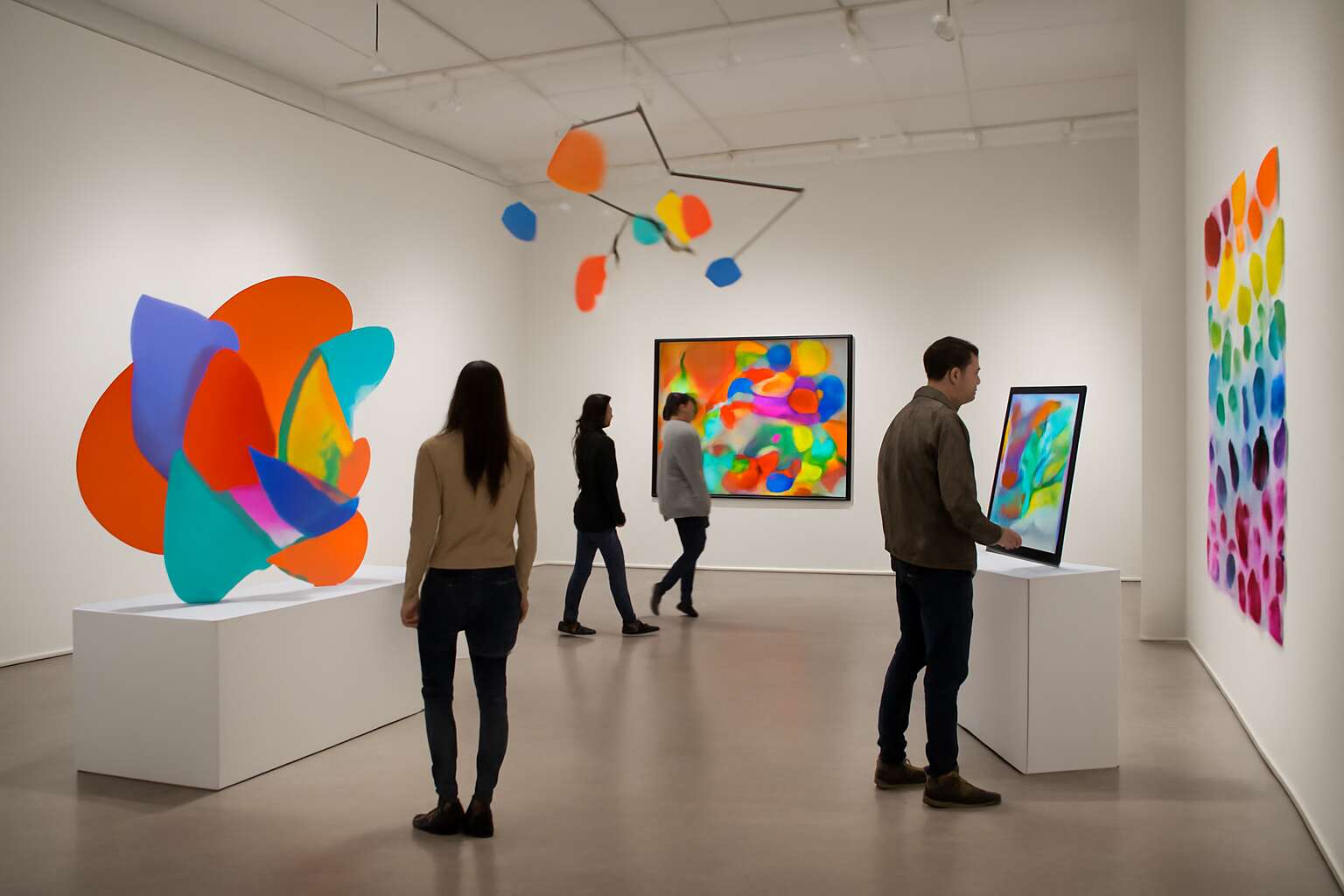
Across South Africa, exhibitions transform empty halls into forums where ideas spark! Debates travel beyond the page. ‘Exhibitions are conversations, not showcases,’ a curator once observed, and that sentiment still rings true. In this sense, what exhibition means becomes a lens for culture, learning, and exchange that travels across borders and disciplines.
Defining exhibitions across disciplines reveals how structure shapes meaning. In art, galleries curate dialogue through objects and light; in science, labs become showcases for revelations; in heritage and history, archives are staged as living narratives; and in commerce, trade shows map networks of opportunity. Understanding what exhibition means here is less about display and more about connection.
- Art and visual culture
- Science and data storytelling
- History, heritage, and social narratives
- Trade, industry, and innovation
Across a South African landscape of galleries, museums, and fairs, exhibitions become public conversations that shape perception, policy, and daily life.
Exhibitions vs events and shows
A fresh stat from recent audience research puts movement in the spotlight: 68% of South Africans say they remember ideas longer than the event flyer. In this light, what exhibition means becomes a staged conversation, not a lone display. It’s a design that invites curiosity, dialogue, and a longer arc of learning.
Exhibitions versus events and shows aren’t merely about hours on the clock. An exhibition curates a through-line—objects, stories, and spaces arranged for interpretation—while an event is a spotlight moment, and a show can be a performance or a sale. The distinction reshapes how audiences respond and remember.
- Duration and pacing: sustained journeys versus peak moments
- Engagement design: prompts conversation rather than one-off attendance
- Content distribution: controlled narrative versus wandering encounters
In South Africa’s vibrant circuit of galleries, museums, and fairs, the concept travels across disciplines, turning empty rooms into public conversations that shape perception and policy.
Historical evolution of exhibitions
Memory travels farther than posters in the minds of audiences, and 68% of South Africans remember ideas longer than the event flyer. To grasp what exhibition means, we trace its arc from curiosity cabinets to immersive spaces.
Historically, exhibitions evolved through stages:
- cabinet of curiosities
- 19th-century world fairs
- modern galleries and traveling exhibitions
In South Africa, this lineage informs how galleries design spaces that invite dialogue rather than passive viewing, shaped by local policy, public funding, and community storytelling.
Key elements that constitute an exhibition
Memory travels farther than posters in a noisy age. In South Africa, 68% of people remember ideas longer than a single event flyer, a reminder that spaces matter more than slogans. Understanding what exhibition means helps explain why audiences linger in places that invite dialogue rather than passive viewing.
Three core elements anchor any exhibition: proposal, presence, and interpretation.
- Curatorial intent that frames questions for visitors
- Spatial design that guides movement and sightlines
- Interpretive materials that translate objects into lived meaning
In South Africa, galleries design spaces for dialogue, shaping how communities tell stories through policy, funding, and local voices.
Contexts Where Exhibitions Shape Meaning
Cultural exhibitions vs commercial exhibitions
In South Africa, exhibitions do more than display objects; they plant meaning in the soil of memory. I’ve watched visitors linger where light and story mingle, and a simple object becomes a doorway! A recent poll suggests 76% of attendees remember a show longer when cultural significance breathes through the display.
Cultural exhibitions invite storytelling, ritual, and heritage to walk beside artifacts. Commercial exhibitions frame objects as opportunities and brands to be recognized. In this sense, what exhibition means shifts with purpose: cultural contexts prize shared identity, while trade-focused spaces prize clarity, promise, and return for the viewer.
- Context as ritual and memory in cultural exhibitions
- Economy and branding in commercial exhibitions
- Audience agency and participatory interpretation
In South Africa’s vibrant spaces, exhibitions become living dialects—bridging the ancient with the immediate, the sacred with the sale.
Educational settings and exhibitions
In South Africa’s classrooms and galleries, exhibitions invite a pedagogy. A recent poll notes 76% remember a show longer when cultural significance breathes through the display. Objects become portals for inquiry, memory, and shared identity.
Educational settings and exhibitions collaborate to turn curriculum into lived experience. This is where learning becomes visible—through artifacts that prompt questions, debate, and connection.
- Curriculum-aligned storytelling
- Hands-on, experiential learning
- Community memory and heritage
- Collaborative, student-curated spaces
In South Africa, these engagements bridge classrooms with public spaces, letting what exhibition means echo in memory long after the gallery lights fade.
Digital and virtual exhibitions
In a country where screens bridge far-flung towns, digital and virtual exhibitions unlock new avenues for learning and wonder. South African audiences glimpse archives, performances, and heritage from classrooms, libraries, and living rooms, transforming what exhibition means into a shared, boundary-free experience.
Digital formats invite interaction rather than passive viewing—comment threads, guided tours, and on-demand discoveries turn visitors into collaborators.
- Curated virtual galleries that adapt to mobile and broadband realities
- Interactive archives that invite annotation and memory-sharing
- Live streams and Q&A sessions with curators spanning time zones
In South Africa, this shift makes memory travel with you, weaving community memory and heritage into everyday life.
These digital passages let exhibitions echo in memory long after the lights go down, connecting classrooms, public spaces, and households in a single, luminous thread.
Public spaces and street-level exhibitions
Public spaces pulse with possibility. In South Africa, the street becomes a stage and a classroom, and 68% of urban residents say public spaces shape how art is remembered.
what exhibition means shifts when the gallery dissolves into sidewalks and markets. It becomes a living conversation, turning fences, bus shelters, and shopfronts into intimate stages that invite dialogue, memory-sharing, and real-time interpretation.
- Pop-up readings that curl around a corner and vanish with the sunset
- Mural tours that turn walls into memory maps
- Night markets where performances spill onto pedestrian zones
In this way, public spaces and street-level exhibitions weave community memory into everyday life, linking classrooms, libraries, and households with a single luminous thread across South Africa.
Influence of Exhibitions on Audience Perception and Behavior
Brand storytelling through exhibitions
A striking statistic shows that 62% of visitors in South Africa report a shift in perception after a well-curated experience. To understand what exhibition means, in practice, one sees a doorway where mood, space, and story collide, memory carved into the psyche.
Influence on perception and behavior arises as audiences are invited to touch the unspoken—through architected light, tempo, and tactile artifacts. The effect can nudge choices and linger long after the last wall label fades, like a whisper in a hushed gallery.
- Spatial choreography that guides attention and pace
- Narrative segmentation that turns objects into meaning
- Interactive elements that invite personal interpretation
Brand storytelling through exhibitions becomes a careful theatre, weaving memory into brand flesh. Rather than catalogs, banners whisper; a light-drawn timeline resonates with South African heritage and urban rhythm, turning footfall into quiet allegiance.
Memory formation and exhibition design
A doorway is not merely a doorway; in South Africa, it can calibrate perception. In SA, 62% report a perceptual shift after a well-curated experience, turning what appears ordinary into memory-ready moments. Influence on perception and behavior arises as audiences are invited to touch the unspoken—through architected light, tempo, and tactile artifacts. The effect nudges choices and lingers after the last wall label fades, like a whisper in a hushed gallery.
- Light punctuates moments to cue memory without shouting.
- Spatial rhythm guides gaze and pace in a human-scale procession.
- Tactile artifacts invite personal interpretation and emotional stake.
Memory formation is the quiet architecture of a visit. Associations anchor in sensory snapshots—colors, sounds, textures—long after the doors close. Thoughtful exhibition design threads these strands into a coherent journey, turning space into story and story into recall. This is what exhibition means for brands in South Africa.
Museums vs galleries: impact differences
In South Africa, a well-curated encounter often recalibrates perception—62% report a perceptual shift that turns ordinary hallways into memory-ready spaces.
Museums and galleries each sculpt influence differently. Museums anchor experience in collection context and public pedagogy; galleries prize immediacy, conversation, and personal interpretation. You feel the tempo slow or accelerate as a curator orchestrates light and touch, guiding eyes toward certain artifacts and away from others.
- Curatorial intent shapes memory formation
- Spatial rhythm channels gaze and pacing
- Audience agency alters engagement style
Ultimately, the question of what exhibition means shifts with venue, purpose, and audience—whether the doors open onto a public archive or a contemporary dialogue.
Measuring impact: footfall, dwell time, and engagement
In South Africa, a well-curated encounter can turn a quiet corridor into a flash of memory—62% report a perceptual shift after a thoughtfully orchestrated exhibition moment. Light, texture, and scent become characters in the story, nudging you to see the everyday with new eyes!
Museums and galleries expect different behaviors: a general audience moves with a curator’s tempo, while a casual observer will linger where conversation about an object sparks resonance. The impact on perception lives in the cadence of display—what you notice, what you recall, and what you question long after you leave.
To measure influence, curators track three threads: footfall, dwell time, and engagement.
- Footfall — visitor counts and flow through spaces
- Dwell time — how long people stay at key works
- Engagement — interactions, questions, or social sharing
Ultimately, what exhibition means shifts with venue and audience; in South Africa, it can be a public archive, a contemporary dialogue, or a memory you carry home, reshaped by what you encounter and how you move through it.
SEO and Content Strategy for Exhibition Topics
Keyword research and user intent around exhibitions
In South Africa’s vibrant gallery lanes and townships alike, exhibitions are more than displays—they are alchemy for memory. The question what exhibition means isn’t fixed; it shifts with place, purpose, and the people who walk through the door. A story framed by light and rural silence can stick in the mind longer than a grand catalog entry.
For SEO and content strategy, focus on keyword research and user intent around exhibitions. Research phrases like what exhibition means and related queries, then craft content that answers concrete questions, guides discovery, and respects local context. Build topics that connect cultural and educational aims with practical exploration.
- Identify core questions about what exhibition means
- Map intent: informational, navigational, or exploratory
- Develop content clusters around exhibition topics and regional voices
In doing so, your narrative stays human and useful, inviting readers to walk through a virtual doorway as if stepping onto a dusty road toward a bright courtyard.
Structuring content for readability and SEO
“Exhibitions are memory alchemists,” a curator once told me, and that line sticks as we talk about what exhibition means. In SEO terms, that meaning anchors content that ties place, people, and learning to curious minds stepping through a doorway.
Structure for readability and SEO starts with intent. Build content clusters around core questions and regional voices. Map intent to short, accessible sections:
- Informational
- Navigational
- Exploratory
Within South Africa’s landscapes, topics should weave rural and urban perspectives, using regional guides, interviews, and features to connect memory, design, and discovery. This keeps the piece human while boosting search relevance.
On-page SEO for exhibition topics
Exhibitions are memory alchemists, a line you hear from curators across farms, towns, and galleries alike. In SEO terms, that meaning anchors content to place, people, and learning as curious minds step through a doorway. This is what exhibition means when strategy leans on memory, space, and storytelling. The work begins with intent: map questions and voices, then guide readers with a calm, human rhythm that respects South Africa’s landscapes and the stories inside them.
On-page SEO for exhibition topics means building content clusters that answer readers’ real questions while weaving regional voices.
- Depth-led guides that answer the exact questions visitors bring to exhibitions
- Region-forward narratives that connect venues, memory, and daily life
- Discovery routes that invite fresh angles on context and design
That approach preserves readability, honors memory, and keeps your piece human.
Creating authoritative, evergreen content
Across South Africa’s galleries and town halls, attention is scarce and memory is currency. In SEO terms, what exhibition means anchors content to place, people, and learning as curious minds step through a doorway. It’s a strategy where place becomes a character and learning the plot.
To build evergreen authority, focus on content that answers real questions while weaving regional voices. Think depth-led explorations that unpack topics, region-forward narratives that link venues to daily life, and discovery routes that invite fresh angles on context and design.
- map reader intent to topic clusters
- integrate local voices from SA’s diverse communities
- highlight space, memory, and design decisions in context
Keep readability humane—short paragraphs, vivid verbs, and a dash of wit to keep the piece lively without sacrificing credibility. After all, what exhibition means is not just a label but a living dialogue with memory and place.


0 Comments