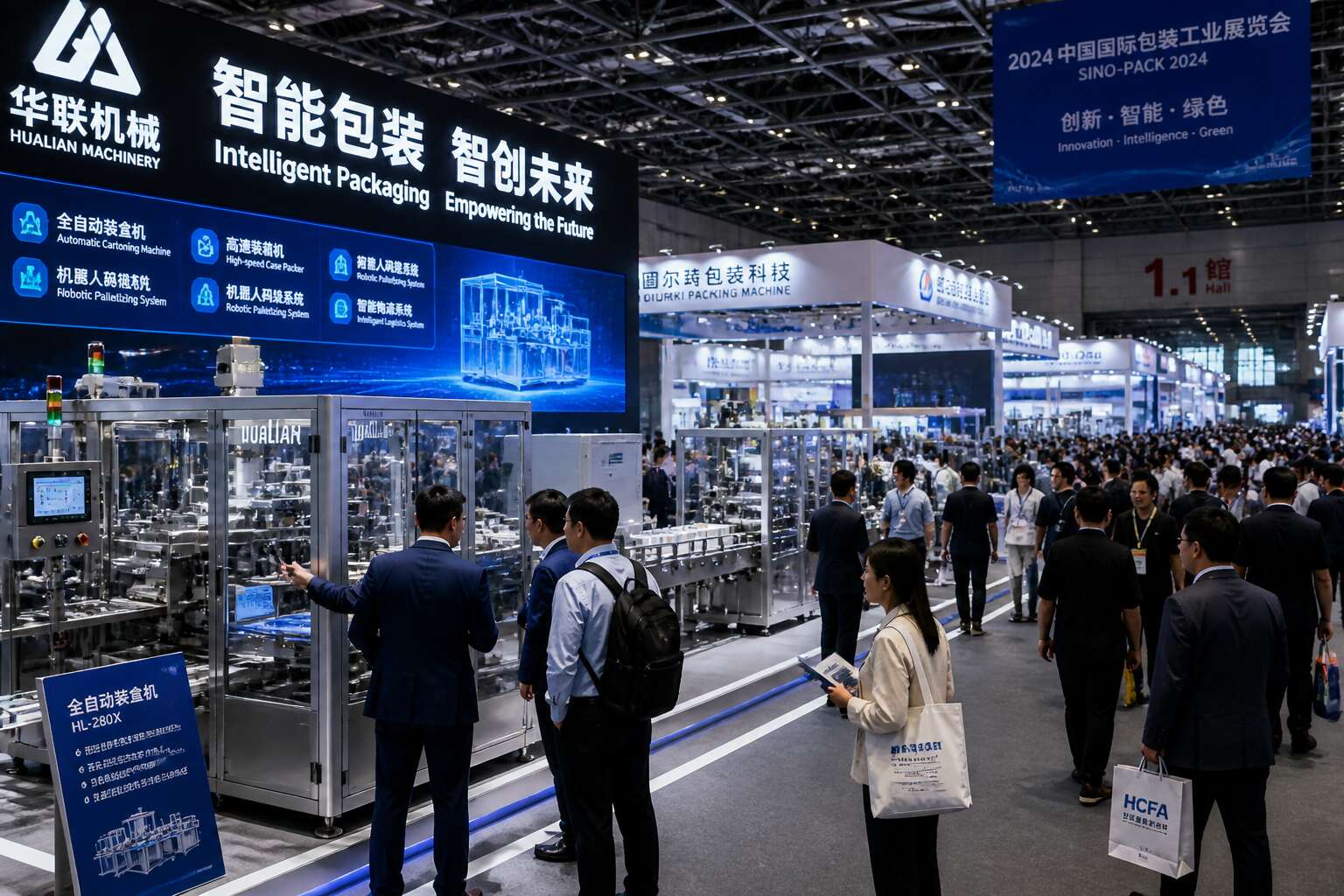
Understanding the Chinese Packaging Machinery Market
Market Size and Growth Drivers
China’s packaging machinery market now exceeds USD 40 billion, a figure that keeps climbing as domestic production lines modernize. For South African buyers, this scale translates into an overwhelming range of options, from entry level vertical form fill seal machines to high speed robotic palletizers. The sheer volume of manufacturers means pricing pressure is intense, which benefits importers willing to verify quality standards carefully.
Growth drivers are straightforward. Urbanization pushes demand for packaged food, while pharmaceutical regulations tighten the need for precision filling equipment. E commerce logistics also fuels the requirement for automated cartoning and case packing systems. These forces converge at the packaging machine exhibition in china, where suppliers showcase their latest iterations to global visitors.
Key sectors driving expansion include:
- Beverage production requiring aseptic filling lines
- Personal care brands seeking flexible labeling solutions
- Cold chain logistics demanding tamper evident packaging
Each of these segments demands different engineering, so buyers must match their specific production constraints against what exhibitors actually demonstrate on the floor.
Regional Manufacturing Hubs
Walk any aisle at the packaging machine exhibition in china and you will notice how regional roots shape machine design. Guangdong dominates high speed filling lines. Zhejiang focuses on modular case packers. Jiangsu specializes in weighing and inspection systems.
- Guangdong: aseptic and beverage lines
- Zhejiang: labeling and cartoning machinery
- Jiangsu: checkweighers and metal detectors
For South African buyers, this geography matters. A beverage producer in Cape Town might source from Guangzhou. A cosmetics line in Johannesburg finds flexible labelers in Wenzhou. The variety creates genuine choice.
Government Policies and Industry Standards
When you walk the aisles at the packaging machine exhibition in china, the conversation rarely stays on mechanics. Chinese manufacturers talk about Guobiao standards, the national technical requirements that every machine must meet before leaving the factory. For a South African buyer, these standards matter more than brand names.
Government policy also drives change. The Made in China 2025 initiative pushes factories toward automation and data integration. Exporters must juggle domestic rules with international certifications like CE marking.
- GB 5226 covers electrical safety
- GB/T 19001 aligns with ISO quality management
- Provincial inspections sometimes add extra steps
Buyers often underestimate how policy shifts affect delivery times. A change in inspection protocols can add weeks to your order. That’s why I recommend reviewing the latest notices before you visit the next packaging machine exhibition in china.
Key Players and Local Competitors
At any packaging machine exhibition in china, the exhibitor list includes established domestic groups and hundreds of smaller workshops. Big names and foreign joint ventures take the headline booths, but the middle aisles belong to agile local competitors. These smaller firms know their provincial buyers personally. They adjust sealing systems, filling heads, and label applicators on the spot. That flexibility matters more than brand recognition for many South African importers.
A quick field guide to the crowd:
– Domestic leaders with decades of food and beverage experience
– Regional specialists who focus on one machine type
– Trading companies that broker machines from several factories
– New entrants showing prototype lines
The overlap between these groups creates intense pricing pressure. At the last packaging machine exhibition in china, I watched one vendor quote a complete bottling line at nearly half the price of a neighboring multinational. For a South African buyer, knowing who actually manufactures the machine versus who simply resells it is the first test of negotiation.
Import vs Domestic Demand
Chinese factories build packaging machinery primarily for their own vast food and beverage sector, and that domestic demand shapes every gear and sensor. At a packaging machine exhibition in china, you will notice equipment tuned for relentless uptime, not exotic complexity. Domestic buyers reward speed and cheap maintenance. Imported machines, by contrast, carry finer precision but cost nearly double. For South African importers, the difference is practical. A domestic unit suits high volume, straightforward lines.
- Domestic demand drives mass produced, rugged designs
- Imported units serve niche, high value products
The import segment accounts for only a sliver of China’s total consumption, yet it defines the premium aisle at any packaging machine exhibition in china. Meanwhile, local manufacturers outsource their surplus to buyers like us. Understanding this dual market lets you negotiate with clearer eyes!
Top Packaging Machinery Exhibitions in China
China International Packaging Machinery Fair (CIPPME)
Every November, Shanghai’s convention district fills with engineers and procurement managers. They are all here for one event: the China International Packaging Machinery Fair (CIPPME). For a South African buyer, this packaging machine exhibition in china offers something no digital catalogue can. You can watch a horizontal form fill seal machine run at full speed, then ask the technician to modify the sealing jaws on the spot.
Most visitors spend their first day just walking the halls. I did the same! The scale takes time to absorb.
- Live demonstrations run continuously, not static displays.
- Manufacturers bring working prototypes, not just brochures.
- Component suppliers outnumber machine builders, which matters when you need spare parts later.
The practical value shows up after you return home. You have compared five suppliers face to face, negotiated prices in renminbi, and collected business cards that actually respond to email.
interpack China and Sino-Pack
For South African procurement teams, the calendar holds two more dates worth blocking off. interpack China, held in Shanghai’s sprawling complex, focuses on processing and packaging technology. Sino-Pack, based in Guangzhou, leans toward the consumer goods side. Each year, these halls fill with working machinery, not simulated models.
What separates the two events comes down to scale and focus:
- interpack China draws global heavyweights showcasing high speed filling lines.
- Sino-Pack attracts regional builders offering flexible, cost effective options.
Both give you direct access to factory engineers who will modify sealing jaws or print heads while you wait. A week at either venue beats months of email negotiations. For any serious buyer, this packaging machine exhibition in china remains the most efficient way to verify what actually runs on a factory floor.
Propak China
Propak China occupies a singular position. Where other halls run on static displays, this one hums with live production. A buyer from Durban can stand beside a running blow moulding line and watch bottles take shape in seconds. The show pairs processing with packaging under one roof, letting you verify the entire chain rather than isolated units.
As a packaging machine exhibition in china, Propak delivers exactly what procurement teams ask for: proof. The Shanghai venue hosts engineers who will remove a machine’s guarding to show you the servo drives inside. That level of access is rare anywhere else.
For South African teams, the practical details carry the weight:
– Pet preform systems tuned to local bottle weights
– Modified atmosphere packing lines for meat and dairy
– Labeling units built for humid coastal factories
Attend this packaging machine exhibition in china and you will collect specifications instead of promises.
CBST China Beverage Industry Exhibition
A single aseptic filling line at CBST, the China Beverage Industry Exhibition, can outrun a mid-sized plant in Soweto. In Shanghai, visitors from Johannesburg and Cape Town compare systems that handle 60,000 bottles per hour with quieter modular lines for artisanal rooibos tea drinks. This packaging machine exhibition in china devotes its floor to liquid logistics, from PET stretch blow moulding to palletising robots that adapt to case sizes mid-run.
The practical offerings stretch beyond hardware:
- Multi-lane filling nozzles for still and sparkling water.
- Hot-fill systems for tropical fruit nectars.
- Label applicators that withstand coastal humidity.
South African beverage makers measure automation costs against local labour rates directly on the show floor.
How to Choose the Right Show for Your Business
Picking the right packaging machine exhibition in china matters more than the flight cost. I have seen Cape Town buyers spend two days at the wrong venue, then miss the suppliers they needed by one hall.
Match the show to your line speed and container type. That single decision shapes everything else.
- Small batch producers should target regional fairs with modular machinery.
- High volume bottlers need the international events in Shanghai.
- Specialist formats, like aseptic cartons or bag in box, demand a narrow focus.
Request the exhibitor directory months in advance. If the names feel generic, the show probably is too.
What to Expect on the Exhibition Floor
Live Demonstrations and Machine Trials
At any packaging machine exhibition in china, live demonstrations are the main draw. Operators push film wrap units to their limits while sales staff talk over the noise. You will see jams, beeps, and the occasional robot arm snatching a sachet.
Trials reveal true reliability. A machine that runs three hours without misfeeding deserves attention. Time your visit for the afternoon when technical glitches are resolved. The packaging machine exhibition in china often schedules stress tests before noon.
- Check seal integrity test stations first.
- Bring your own samples for trial runs.
- Observe automated inspection units rejecting defective packs.
The floor grants direct access to engineers who built the equipment. Ask about maintenance costs and changeover times; the answers separate serious vendors from the rest.
Product Categories on Display
The exhibition floor unfolds like a mechanical city, each aisle dedicated to a different stage of the packaging journey. Primary packaging machines dominate the entry halls, with vertical form fill seal units dispensing powders, granules, and liquids at dizzying speeds. Further in, labeling and coding systems hum alongside checkweighers that measure every gram with quiet authority.
Visitors will find several distinct product categories:
- Filling and dosing equipment for viscous, liquid, and solid products
- Wrapping and bundling machinery for retail and bulk distribution
- End-of-line palletizing and depalletizing robots
- Inspection, detection, and quality control systems
- Smart packaging lines integrated with IoT and data analytics software
The packaging machine exhibition in china allocates each hall to a specific segment, so buyers can navigate by product type. This organization saves days of searching. A food manufacturer sourcing pouch filling lines will find twenty vendors in one corridor, each presenting a different approach to the same challenge.
Smart Manufacturing and Automation Showcases
At a packaging machine exhibition in China, the smart manufacturing zone displays live coordination across every machine. Sensors relay each motion to central dashboards. Robots adjust their grippers mid-cycle without human prompts. This is automation in action.
Buyers can watch collaborative robots work beside operators on a live packaging line. Cloud software tracks every rejection and speed variance. One machine switches bottle sizes automatically while the line keeps running, no stoppage!
- Predictive maintenance sensors that signal wear before a failure
- Digital twin interfaces showing line performance in real time
- Edge computing units that process data locally to cut delays
These demonstrations focus on practical integration. Visitors leave knowing exactly how automation upgrades might behave inside their own facilities.
Networking and B2B Matchmaking Events
At a packaging machine exhibition in China, the aisles fill with purpose. Trade associations report that pre scheduled B2B meetings often outnumber walk up conversations by three to one. Procurement teams from South African food processors sit across from Chinese manufacturers with line specifications spread across the table.
Matchmaking services pair buyers with suppliers based on product type, line speed, and budget. These sessions compress months of supplier research into a single morning. A beverage producer can hold four focused conversations before lunch.
- One on one meetings with vetted equipment makers
- Translation support for technical specifications
- Scheduling for post show factory visits
The informal spaces deliver their own value. A coffee queue becomes a discussion about sealing temperatures. A lunch table turns into a negotiation over spare parts delivery. The packaging machine exhibition in China rewards visitors who arrive with a clear brief and a willingness to engage.
Seminars and Technical Forums
Step away from the machinery hum and the seminar rooms tell another side of the packaging machine exhibition in china. Sessions run from morning to late afternoon, covering line efficiency audits, material compatibility, and export certification. The audience is not passive. Engineers arrive with specific questions about their own production constraints.
Technical forums use a different format. Suppliers present case data from installations in emerging markets, including yield rates and maintenance intervals. A South African biscuit manufacturer can compare those figures against local performance standards.
Common seminar topics include:
- Energy consumption benchmarks for pouch filling equipment
- Corrosion prevention for washdown environments
- Integration of vision inspection with legacy conveyors
The real exchange happens after the talk ends. Speakers gather by the podium while a queue forms with business cards and a line of specific questions. I have seen a single question from the floor redirect an entire presentation on filling accuracy.
Strategies for International Exhibitors and Buyers
Navigating Language and Cultural Barriers
At any packaging machine exhibition in china, the real barrier isn’t the machinery. It’s the unspoken rules. I’ve watched buyers from Johannesburg lose hours because they assumed a nod meant agreement. Instead, confirm every detail in writing.
Consider these tactics for smoother negotiations:
- Hire a local interpreter who understands packaging terminology, not just general Mandarin.
- Exchange business cards with both hands, a small gesture that signals respect.
- Ask open ended questions to verify that a price quote includes installation and training.
These steps seem simple, but they prevent costly misunderstandings. The most successful visitors arrive with a phrasebook and a patient mindset. Cultural fluency matters as much as technical knowledge.
Logistics and Customs for Machinery Imports
Shipping a machine into China for a packaging machine exhibition in china involves more than booking a freight forwarder. Customs clearance hinges on HS codes and commodity inspection. A single digit error can delay your crate by weeks.
Every inbound unit demands a set of obligations:
- Correct HS classification
- China Compulsory Certification where applicable
- Temporary import bond paperwork for demo units
ATA carnets waive duties, but processors still require declarations. The exhibitor manual lists approved customs agents. Independent brokers often complicate clearance.
One buyer from Durban ignored this and paid demurrage for eleven days. A little patience with paperwork prevents that kind of loss.
Cost-Effective Booth Design and Marketing
Booth space at any packaging machine exhibition in china commands a premium that tempts exhibitors into architectural excess. The most effective stands I have observed in Shanghai and Guangzhou practice deliberate scarcity. One operating machine, two ergonomic tables, and a wall of white space outperform any double-deck spectacle. Buyers remember the conversation, not the carpet.
Budget discipline starts before departure. Ship lightweight banners by sea freight. Print brochures in Guangzhou, where costs sit far below Johannesburg rates. Marketing works the same way. Pre-book meetings with vetted buyers through the show’s matchmaking portal instead of chasing foot traffic.
Common drains on exhibit budgets:
- custom rigging for elaborate overhead structures
- branded giveaways shipped from abroad
- multilingual staff hired without interpreter training
Every rand saved on spectacle can fund a second demonstration shift. At a packaging machine exhibition in china, that shift produces the qualified conversations that actually convert.
Building Partnerships with Local Agents
At any packaging machine exhibition in china, the most valuable conversations often happen after the hall lights dim. Local agents carry the quiet knowledge of provincial supply chains, customs rhythms, and the unspoken preferences of factory owners in Guangdong or Shandong. I have watched South African exhibitors transform a handshake into a distribution agreement within three show cycles.
These partnerships require deliberate groundwork:
- Identify agents who already service your competitor’s spare parts market.
- Ask for their service records, not their sales decks.
- Negotiate territory boundaries before the show opens.
The agent works as your on-site presence between exhibitions. Their workshop floor reveals the real wear patterns on your machinery. The right partnership sustains the conversation through every quiet month afterward.
Post-Show Follow-Up and Lead Conversion
When the last machine stops running at a packaging machine exhibition in china, the real conversations shift to email inboxes and WhatsApp threads. South African buyers wait a week before opening follow-up messages, so timing alone will not close a deal.
A strong first communication references something tangible: the model photographed on your phone, the exact price quoted, the delivery timeline mentioned over coffee. That precision separates serious suppliers from exhibitors who send generic newsletters.
- Price negotiators expect a written quotation within three days.
- Technical buyers need a document link, not an attachment.
- Brochure collectors belong in a six month nurture cycle.
In my experience, South African buyers convert faster when they request a recorded video of the machine running with their own packaging material. That habit is common among regular visitors to the packaging machine exhibition in china, where floor demonstrations rarely lead to orders without this follow-up evidence.
Future Trends Shaping China’s Packaging Machinery Industry
Sustainable Packaging and Eco-Friendly Machines
China’s packaging machinery sector is shifting toward sustainability with measurable urgency. Exhibitors at any packaging machine exhibition in china now showcase equipment designed for biodegradable films, lighter containers, and reduced material waste. The machines themselves consume less energy and produce fewer emissions.
Manufacturers are integrating closed-loop systems that recycle water and heat during production runs. Servo-driven motors replace older hydraulic components, trimming power usage by significant margins. Tooling now accommodates recycled content without sacrificing speed.
Buyers from South Africa should watch these specific developments:
– Machines that handle compostable polymers at high throughput
– Modular designs allowing quick changeovers between material types
– Real-time monitoring systems that flag waste instantly
These trends appear across every packaging machine exhibition in china. The focus is practical efficiency, not abstract promises. For importers, that translates to lower operational costs and easier compliance with tightening environmental standards.
AI and IoT Integration in Packaging Lines
Walk the floor of any packaging machine exhibition in china and you will notice a quiet shift. The machines are networked. IoT sensors track every cycle, temperature, and pressure reading. AI algorithms sift through that data to predict failures before they happen.
For a South African importer, this changes the risk equation. A line that self-diagnoses means fewer unplanned stoppages in Johannesburg or Durban. The hardware matters less than the decisions the machine makes.
Consider what is emerging at the next packaging machine exhibition in china:
– Predictive maintenance alerts sent directly to your phone
– Real-time production dashboards accessible from Cape Town
– Automated quality checks that adjust parameters mid-run
The integrations are embedded in the machines on display. The question is whether buyers are ready to adapt their own workflows to match.
Customization and Flexible Packaging Solutions
Customization now dictates what buyers inspect at any packaging machine exhibition in china. The one-size-fits-all line has vanished. South African operators want equipment that shifts between bottle sizes, pouch formats, and label styles in minutes. The machines on the floor answer with servo-driven changeovers and modular tooling that cut downtime sharply.
Flexible packaging solutions lead the display. Engineers are building lines that process recyclable films, paper-based laminates, and thinner gauges without losing output speed. One system can run a stand-up pouch, a flat sachet, and a rollstock pack in a single shift. Visitors to the packaging machine exhibition in china will find this adaptability ready for inspection.
- Quick-change vacuum systems for multi-format production
- Automated film tension controls for delicate substrates
- Digital registration for short, customized print jobs
The Rise of E-Commerce and Express Packaging
E-commerce parcels now move in volumes that would have seemed impossible a decade ago. Chinese machinery builders have responded with high speed carton erecting and case sealing lines that handle mixed sizes without slowing. The express packaging sector drives demand for void fill systems and automated boxing cells, all visible at the packaging machine exhibition in china.
Visitors from South Africa will notice how these lines prioritize speed and protection:
- Right sized corrugated cases cut on demand to reduce void space
- Air cushion and paper fill dispensers integrated directly into packing stations
- Print and apply labelers that generate shipping labels in line
Courier networks require lightweight, damage resistant packs. Manufacturers are fitting cameras and sensors to reject flawed seals before dispatch. For anyone supplying online retail, the packaging machine exhibition in china remains the place to see parcel packing efficiency in action!
Challenges and Opportunities After 2025
After 2025, the packaging machine exhibition in china will look different. Domestic labor costs in Chinese factories keep climbing, pushing builders toward more autonomous lines and away from speed alone. That creates an opening for South African buyers who need fewer technicians on site.
At the same time, component supply chains face pressure. Chip shortages and steel price swings force machinery makers to redesign modules around what is reliably available. The result is simpler servos and sturdier pneumatics, which often suits smaller packhouses better.
Energy efficiency is becoming a gatekeeper for export orders. European buyers demand detailed power consumption data before signing. Chinese builders respond with servo driven systems that draw power only during motion. This gives visitors at the packaging machine exhibition in china a chance to compare real operating costs against purchase prices.

0 Comments