Understanding the Conceptual Differences and Overlaps
Defining Art Installations in Modern Practice
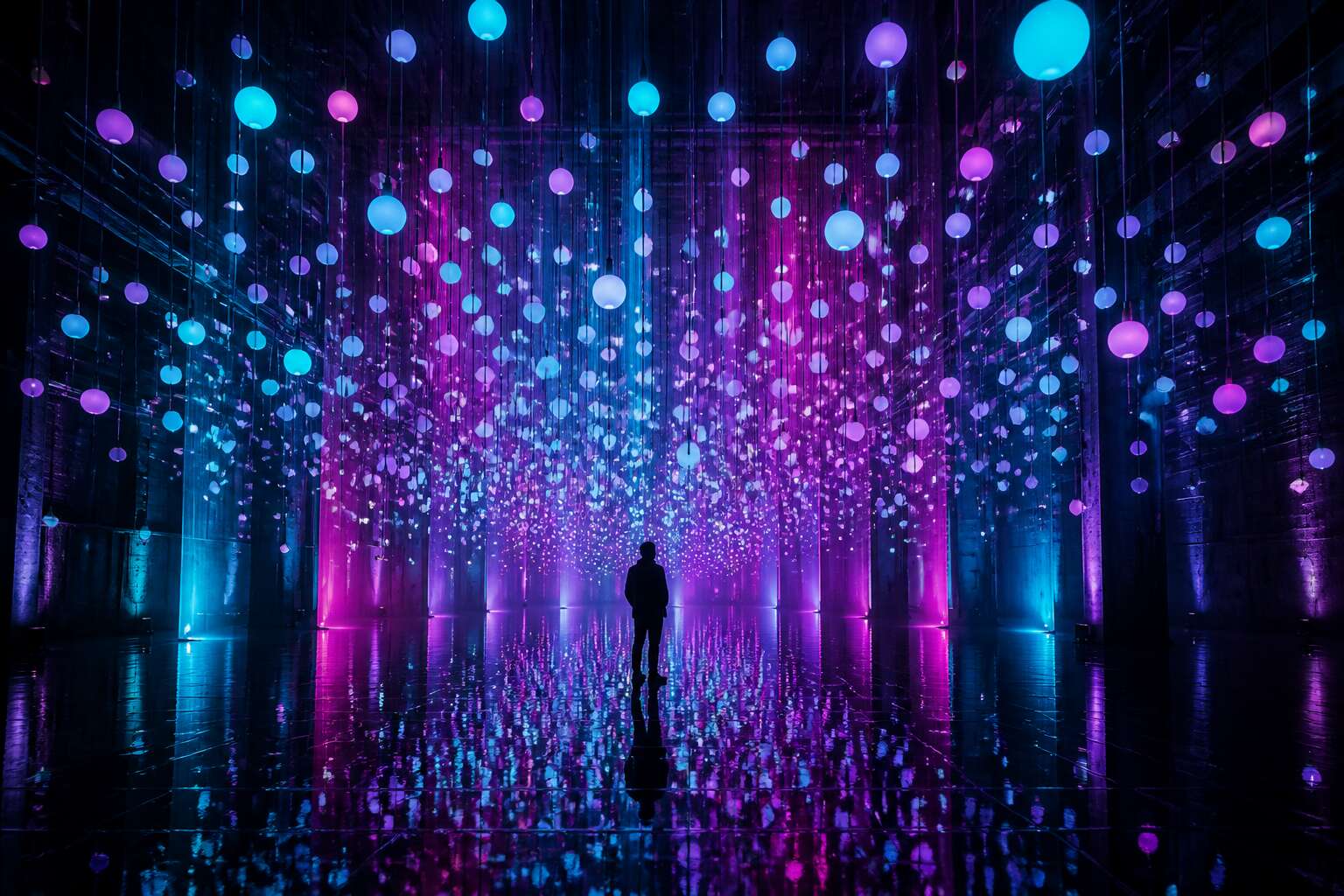
I recall a warehouse in Durban where floor tilted beneath me. That is what an installation or exhibition can do; it rewrites your assumptions. An installation typically commands the whole room, while an exhibition presents individual objects for view. The overlap appears when curators design sequences turning a collection into one narrative.
To clarify edges, consider these rules:
- An installation is anchored to its exact location.
- An exhibition can be dismantled and moved.
- The overlap happens when the site itself becomes content.
Understanding conceptual differences helps anyone navigate modern practice. The next time you encounter an installation or exhibition, ask which space transforms.
The Role of Context in Curated Exhibitions
A curator in Cape Town once told me that her job is to make visitors forget they are being led. She was right. The role of context in curated exhibitions determines whether a visitor glances at a piece or stands transfixed for minutes. Lighting alters mood. Proximity changes perception.
This is where the overlap of installation or exhibition becomes apparent. A curated exhibition may not fill the room with one artwork, but it shapes the room around many. The context carries the meaning. For South African audiences, pairing a 1976 Soweto photograph with a contemporary sound piece creates depth beyond either object alone.
- Spatial rhythm: the distance between works
- Wall text: the curator’s written framing
- Thresholds: entry, passage, exit
Curators also consider what visitors carry into the space. Expectation, memory, even fatigue influence reception. That is why the curated context often matters more than individual merit.
How Temporary and Permanent Displays Differ
Nothing sharpens attention quite like a deadline. A temporary installation or exhibition arrives with an expiry date, which changes visitor behaviour. They queue, they photograph, they check the calendar. The work becomes an event! A permanent display, by contrast, accumulates dust and devotion equally. The same piece viewed over years shifts meaning as the viewer changes, even when the frame does not.
The conceptual gap is straightforward: permanence implies institutional confidence, while temporary projects suggest hypothesis. The overlaps matter more. Both demand spatial intelligence. Both tell a visitor what deserves attention and for how long.
For South African institutions, the tension between these modes is productive. A pop-up in Cape Town and a permanent gallery in Pretoria operate under different social contracts, yet both rely on the same fundamental gamble: that a person will stop, look, and feel something.
Blurring Lines Between Spatial Art and Collection Shows
The old categories no longer hold. A collection show built around a single installation or exhibition forces visitors to move differently. They pivot, crouch, and circle. They read the work with their bodies before their eyes catch up. This physical negotiation changes the social contract of the gallery. In Cape Town, a beaded tapestry mounted as an immersive environment does more than sit on a wall. It defines the room.
The overlap is not a failure of categories. It is a deliberate curatorial tactic. Institutions with permanent holdings use spatial commissions to test how objects behave under new conditions.
Consider the signals each mode sends:
– A commissioned installation claims the room
– A collection piece claims the lineage
– Together, they blur ownership of meaning
The visitor absorbs the collision, and the exhibition becomes a living argument about what deserves preservation.
Planning Your Display: From Concept to Realization
Identifying Audience Needs and Spatial Constraints
The real test of any layout comes when the first wheelchair turns a corner. Audience needs and spatial constraints merge into decisions about sightlines, pathway width, and lighting angles. For an installation or exhibition, these factors demand attention before a single object is placed. I always map the visitor’s journey from entrance to exit, noting where a crowd might gather or a label might go unread.
Consider a few practical checks during the planning phase:
- Will a wheelchair user move freely through each transition?
- Does the light source create glare on protective glass?
- Can the room hold your expected audience without congestion?
Answering these early prevents costly changes. The final installation or exhibition then feels inevitable, a clean fit between purpose and place.
Developing a Strong Thematic Narrative
A visitor should feel the narrative before they read a single wall panel. The thematic spine of any installation or exhibition is not a slogan or a colour palette; it is the logic that decides which objects face each other, and which moments deserve silence. I start by writing a short statement that would survive a conversation with a sceptic. If the idea can be explained in one breath, the display has a reason to exist.
From that statement, I build a sequence of encounters. Each room or plinth must advance the story.
- Define the emotional arc: tension, discovery, resolution.
- Choose three artefacts or works that carry that arc.
- Test every other object against those three anchors.
This method keeps the planning phase honest. When a piece fails to serve the narrative, it leaves the floor plan. The result is an installation or exhibition that feels intentional, where every sightline and transition earns its place in the visitor’s memory.
Budgeting for Materials, Staff, and Insurance
No one walks into an installation or exhibition and asks about the insurance premium. They notice the lighting, the spacing, and the quiet confidence of a well-hung piece. Someone paid for that confidence. Budgeting for materials, staff, and insurance is the least glamorous part of display planning.
I have watched a strong concept collapse in a single quote from a rigging company. The numbers do not lie. In South Africa, load shedding adds a backup power line item. A temporary installation or exhibition deserves the same financial scrutiny as a permanent build. Here is what I verify before anything gets ordered:
– Materials that survive humidity, dust, and transport between venues
– Staff hours for installation, daily upkeep, and deinstallation
– Insurance covering public liability, transit damage, and theft
The realisation phase is a negotiation between vision and arithmetic. Keep the thematic narrative close, but keep the invoice closer.
Collaborating with Artists, Curators, and Designers
Every installation or exhibition begins as a conversation. The artist brings a private vocabulary. The curator translates it for a public. The designer asks the practical questions: where does the power come from, how does the light fall, what does the floor carry. My role is coordination.
I have learned to schedule this collaboration early. A studio visit reveals more than any brief! Walking through the gallery space together changes the conversation. The artist points at a wall. The curator measures sightlines. The designer checks the fire escape route.
The plan emerges from these negotiations. Materials get sampled. Mockups get built. When the artist, curator, and designer agree on the load, the layout, and the sequence of rooms, the display stops being an idea. For an installation or exhibition to succeed, that commitment must survive every late change and last-minute substitution.
Selecting the Appropriate Venue or Alternative Space
The right space can make or break an installation or exhibition. In South Africa, a former mine dump might outshine a white cube gallery. Rent is not the only factor. Load capacity, humidity, and public transport access matter more than square meterage. I once scouted a warehouse in Durban where the roof leaked, but the light was perfect. Choose a venue that serves the concept. Ask if the floor can carry a concrete sculpture. Check if the security system matches the artwork’s value. Consider the audience’s journey from parking to exit. For alternative spaces, look at shipping containers, church halls, or disused factories.
- Test the acoustics before signing.
- Measure door widths for large pieces.
- Confirm insurance requirements early.
The venue is a collaborator, not a container. A well-chosen site adds meaning without extra cost. When the architecture supports the work, the display feels inevitable.
Designing Engaging and Interactive Spaces
Mastering Lighting for Visual Impact
One soft spotlight can change the entire mood of an installation or exhibition. I have seen a row of ordinary objects transformed by a single low beam. That is the power of mastering lighting for visual impact. Gesture, texture, and even dust become part of the story. Interactive spaces demand a different discipline. The visitor becomes a performer, and your lighting must respond to their movement.
- Layer ambient and accent lights to guide attention
- Use motion sensors to shift brightness as people approach
- Test contrast ratios to avoid harsh glare
Each choice affects how long someone lingers. A well lit corner invites curiosity, but a flatly lit room feels like a waiting area. Lighting design must balance brightness and shadow for any installation or exhibition.
Integrating Multimedia and Digital Technology
Interactive spaces change how a visitor relates to the work. When a sensor reads your movement and shifts a projection, you stop observing an installation or exhibition. You are composing it. In South Africa, where public venues often carry complex histories, digital layers can address those histories directly. Visitors add their own responses in real time.
In my experience, a successful interactive room relies on restraint. One responsive element, such as a floor that reacts to weight, works better than five competing screens. Multimedia must carry the narrative, not obscure it. The hardware also needs to survive constant use. Touch panels in a busy museum face heavy daily pressure.
Consider what the space asks of its audience:
- Proximity triggers that reward slow movement
- Audio cues that respond to spoken words
- Projection mapping that transforms a plain wall
Each decision changes whether someone lingers or moves on. The result is a space with its own logic, built for participation.
Optimizing Traffic Flow and Visitor Accessibility
Museum planners often find that the invisible architecture of movement dictates the success of any installation or exhibition. A visitor who feels lost will not engage with the art; they will engage with their own frustration. The layout must whisper directions without shouting, guiding feet through a narrative arc while leaving the eyes free to wander. This choreography of bodies requires precise calibration, a blend of architectural psychology and practical sense.
In South Africa, spatial awareness carries historical weight, so the flow must respect both the physical site and the emotional journey of the attendee. Clear sightlines allow for spontaneous discovery, while defined thresholds create moments of anticipation. Consider how sight lines intersect.
– Physical accessibility for wheelchairs and those with limited mobility
– Cognitive accessibility, offering clear wayfinding and rest zones with minimal sensory overload
– Social accessibility, creating spaces for group interaction without obstructing solo exploration
Traffic flow is not a mechanical problem but a human one. The goal is to encourage lingering where the story deepens and swift passage where the content is purely transitional. When these pathways align, the entire installation or exhibition breathes with a natural rhythm, allowing every guest to feel like a participant in a larger, unfolding dialogue rather than a passive observer in a crowded hall.
Selecting Interpretive Materials and Signage
Interaction transforms a visitor from a spectator into a participant. In South Africa, where oral tradition runs deep, interpretive materials that invite conversation feel more natural than static labels. A well-designed interactive space might include tactile models, scent stations, or response walls where visitors leave their own marks. I have watched people spend twenty minutes at a simple touch station, while a video screen nearby drew barely a glance.
Interpretive signage requires the same care for any installation or exhibition. Text should be concise, readable, and bilingual where appropriate. Consider these principles when selecting materials:
- Use high contrast and large type for readability
- Position signs at eye level and at seated height
- Choose durable materials that withstand frequent handling
Every sign should earn its place in the narrative. When the text, placement, and design align, the installation or exhibition engages visitors as active participants rather than passive readers. That is real engagement!
Incorporating Interactive Elements for Deeper Engagement
Participants rarely remember a painting as vividly as they remember their own reaction to it. A successful installation or exhibition begins with the question: what will visitors do here that they could not do at home? One clever interactive piece uses a pressure plate to trigger a low drumbeat with every footstep. Visitors adjust their stride to make music, and suddenly a gallery becomes a playground.
I have seen an elderly visitor dance through a corridor of light because the sensors responded to her movements. The mind gets bored, but the body stays curious. Switches, pulleys, and hand-cranked devices have a physical charm that screens lack. Interaction works best when it is subtle enough to make the visitor feel resourceful.
Balancing Aesthetics with Conservation Needs
Fragile objects dictate how we design interactive spaces. In one installation or exhibition, I watched a curator position a rare manuscript behind a sensor-triggered glass panel. Visitors lifted their hands to reveal a page without ever breathing on it. That balance requires constant negotiation. The visual appeal must not undermine the object’s stability. We choose materials that absorb humidity, controls that limit force, and lighting that avoids ultraviolet damage. Each element serves both the visitor and the artifact. When those priorities align, the space feels secure and alive. Conservation becomes a quiet collaborator. That is the real art of exhibition design.
Marketing and Educational Strategies for Success
Crafting Press Releases and Media Partnerships
The lifespan of a press release is measured in seconds. Editors decide before the second sentence whether a story deserves space, and arts writers in South Africa are the most brutal judges of all. They have seen every formula: the bland announcement, the endless acknowledgements, the desperate plea for coverage.
Strong media partnerships emerge when the exchange is real. A radio station needs a compelling audio moment. A newspaper needs striking visuals. A podcast needs a voice with stories to tell. When the narrative behind an installation or exhibition is unpacked with care, coverage tends to follow without aggressive follow-ups.
- Grant exclusive behind-the-scenes access to the artist
- Supply print-ready images and a tight fact sheet
- Share attendance projections that show public interest
Educational programming stretches the lifespan of the work itself. School visits, curator tours, and panel discussions keep a single installation or exhibition alive long after the opening night crowd has gone. The best campaigns treat the release as the first beat in a longer relationship between the work and its public.
Leveraging Social Media and Influencer Outreach
Somewhere between the fourth Instagram Story and the eleventh LinkedIn post, an interesting thing happens with an installation or exhibition: strangers start trusting it. Social media reaches audiences that press releases cannot manage alone. In South Africa, where data costs shape attention spans, a well-edited thirty-second video often outperforms a thousand-word essay.
Influencer outreach works when the exchange is genuine. A creator with eight thousand engaged followers in Johannesburg can deliver more foot traffic than a billboard in Sandton. We once watched a ceramicist with a modest following fill a Tuesday afternoon.
The mechanics involved:
- Scouting micro-influencers who actually visit galleries
- Offering them a private walkthrough before public hours
- Sharing their content across your own channels
Educational content extends the conversation. A school group’s visit becomes a series of Stories, a curator tour becomes a podcast episode, and each share pulls a new audience toward the installation or exhibition.
Designing Guided Tours and Workshops
A guided tour can transform a visitor’s relationship with an artwork. Statistics from the International Council of Museums suggest that visitors who join a guided experience spend up to forty percent longer inside an installation or exhibition. That additional time is where curiosity turns into comprehension.
Designing workshops requires a clear understanding of your audience. A school group needs tactile activities and short explanations. Corporate clients often prefer a behind-the-scenes perspective on curation and production. Retirees might appreciate a slower pace with more conversation.
– Artist-led demonstrations that reveal technique
– Materials-based sessions for families and children
– Curator Q&A walks that encourage critical questions
Each format serves a distinct purpose. The workshop itself becomes a gateway to a deeper appreciation of the installation or exhibition.
Practical considerations matter. Schedule tours at off-peak hours to avoid crowding. Limit groups to fifteen participants for intimate discussion. Train guides to read body language and adjust their delivery. A visitor who seems disengaged may simply need a different entry point.
The most successful educational programs treat the tour as a starting point. When visitors leave with questions, they return with friends. That cycle depends on the quality of the encounter itself, not the quantity of programming.
Offering Virtual Access Through Online Platforms
Many cultural venues across South Africa discovered that a physical closure did not mean an audience loss. Virtual access through online platforms keeps an installation or exhibition alive beyond its walls. The shift is not about replacing the gallery visit. It gives people in other provinces a chance to see what they could not reach easily.
From our own experience, a short film series with the curator speaking directly to the camera works well. That simple approach outperforms polished animations! Pair it with a downloadable reading list or audio guide for visitors who prefer silence.
A practical framework might look like this:
- Record a live walkthrough, then edit it into five minute chapters.
- Ask visitors to submit questions through WhatsApp and answer them in a weekly video.
- Share visitor photographs and drawings on the platform’s social channels.
The online layer extends the lifespan of an installation or exhibition, and it creates a paper trail for sponsors who want measurable reach.
Measuring Visitor Engagement and Feedback
The real measure of an installation or exhibition arrives weeks after opening night. Visitor numbers tell part of the story, but they do not reveal whether the work changed a perspective or started a conversation. We need measurable signals from multiple sources. We track dwell time, repeat visits, and questions from guided tours. We also read comment cards and monitor social media mentions. A simple entry point is a short exit survey with three questions: what stuck, what confused, and what they wanted more of.
Education programmes generate their own data. Workshop attendance and facilitator notes provide usable information. One rural museum found that school groups remembered more when they handled objects before seeing the exhibit. That insight reshaped their marketing message and the educational script.
Feedback loops should feed both the marketing team and the curatorial team. When a sign is misread, or a label is ignored, that is feedback too.
Overcoming Common Challenges in Exhibition Management
Managing Logistics and Crate Shipping Hazards
Nearly 40% of art shipments arrive damaged, often because the crate design fails before the truck does. Managing an installation or exhibition means securing the logistics chain long before the first work is hung.
Crates built for permanent storage struggle on long haul routes. Humidity shifts swell timber, pressing against delicate frames. Internal bracing that suits a studio floor may not survive a forklift transfer at a Johannesburg freight hub. We once unpacked a sculpture that had shifted six centimetres inside its supposed custom fit casing.
Common hazards we track:
- Clear lifting points on every crate exterior
- Temperature and humidity data loggers on all consignments
- Internal cushioning inspected after each leg of the journey
The run from Durban harbour to a Cape Town gallery tests every assumption. Vibration, climate and repeated handling damage the object. A solid plan assigns one person to verify condition at each transfer point. Every installation or exhibition depends on that discipline.
Handling Insurance and Liability Issues
Insurance claims in the art world usually fail because someone assumed liability sat with someone else. A work damaged during an installation or exhibition demands a transfer of custody that is documented and signed. The moment of handover is the point of law. Once the crate leaves the carrier, the venue assumes responsibility. The contract must name the exact party for every stage: delivery, unpacking, wall mounting, and deinstallation. The policy also needs a subrogation waiver so the insurer cannot chase the artist after paying the gallery. In my experience, the policy is read only after a claim lands.
A practical checklist keeps the process honest:
– Confirm the named insured on the certificate of entry
– Check the exclusion for damage from condensation or load shedding
– Secure written approval for any late loan request
Do this before the first nail is driven, and the installation or exhibition can proceed without a costly dispute.
Adapting to Last-Minute Setbacks or Delays
Every seasoned producer knows a schedule can unravel before the first object enters the room. A power failure, a delayed truck, a missing component. The key to adaptation lies in having contingency protocols already in motion. When a builder misses the deadline for a critical wall, I’ve learned to reorder the sequence of tasks rather than argue about blame. This often means moving lighting rigging earlier or shifting conservation work to another day. The practical steps matter:
- Confirm which contractors are on standby
- Keep spare hardware and mounting materials on site
- Verify access hours with the venue daily
A flexible timeline absorbs most shocks. For any installation or exhibition, the producer who prepares for disruption gains the trust of artists and lenders alike. That trust carries the project through the inevitable surprises. A calm response to setbacks separates a smooth installation or exhibition from a stressful one.
Ensuring Compliance with Health and Safety Codes
Health and safety codes rarely make the exhibition brochure, yet they determine whether an installation or exhibition opens on time. In South Africa, municipal inspectors hold the power to shut down a show over a single unguarded cable or an overloaded socket. I have watched seasoned teams scramble because someone overlooked a fire exit clearance!
The daily routine of compliance demands attention to small details:
- Electrical equipment must carry a valid certificate of compliance
- Emergency exits need to remain unobstructed during every phase of setup
- First aid kits and fire extinguishers belong within reach of the build area
A producer who treats these checks as routine protects the artwork, the visitors, and the venue’s standing with local authorities. That quiet diligence carries every installation or exhibition through the scrutiny of inspectors and the confidence of lenders.
Evaluating Economic Impact and Sustainability
Around 68% of exhibition projects in South Africa exceed their original schedules, according to industry surveys. The gap between a budget and a final invoice often comes down to how well a team predicts the unpredictable. A venue that looks ideal in photographs may lack adequate loading dock capacity, or the local municipality may require additional permits for temporary structures. These realities shape the economic footprint of an installation or exhibition long before the first visitor arrives.
Managing common challenges in exhibition management starts with honest cost modelling. Transport quotes should include waiting time at depots, since trucks often queue for hours. Labour rates must account for overtime during load-in, especially when access windows are restricted. One producer I worked with kept a contingency equal to 10% of the total budget, and it saved the project when a venue suddenly introduced a new security levy. That buffer is not a luxury; it is a practical response to the uncertainties that define this industry.
Evaluating economic impact and sustainability requires more than counting ticket sales. A successful installation or exhibition contributes to local businesses, from caterers to equipment hire firms. Municipalities also measure the value of cultural tourism, where visitors extend their stay and spend on accommodation and dining. To track this accurately, organisers should gather data from multiple sources, including visitor surveys and retail reports. The figures help justify future funding and public support.
Sustainability in this context means reducing waste and avoiding unnecessary transport emissions. Reusable wall systems and modular plinths can serve several shows without losing quality. Energy efficient lighting lowers operating costs and reduces the carbon footprint of an installation or exhibition. These choices align financial discipline with environmental responsibility, making both the balance sheet and the venue greener. Long term viability depends on this kind of practical forethought.
Teams often overlook the cost of dismantling and disposal. A crate that arrives with an artwork may never leave, creating storage fees. Materials like printed vinyl and MDF frequently go straight to landfill. Working with suppliers who accept returns or offer take back schemes can reduce these expenses. The best logistics plans include a clear exit strategy for every physical element, ensuring that sustainability is not just an aspiration but a measured outcome.



0 Comments