Understanding the Core Difference
Defining an Exhibition
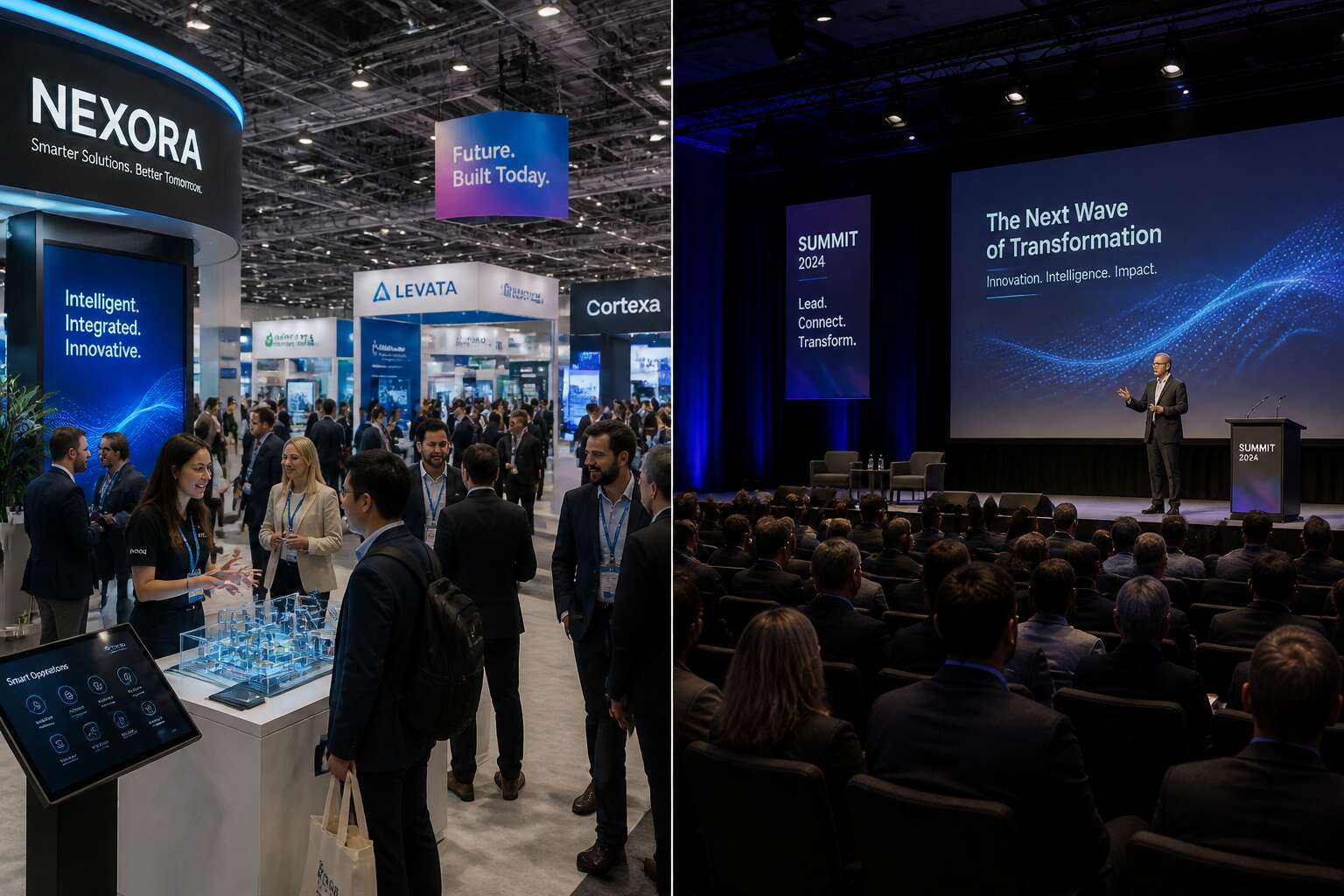
An exhibition is not a conference. That sounds obvious, but the line blurs more often than you would think. An exhibition prioritises the tangible: products on stands, prototypes you can touch, live demonstrations. The floor is the stage. Visitors move from booth to booth, gathering brochures, asking technical questions, and comparing suppliers side by side. The value lives in the physical space.
In South Africa’s trade landscape, exhibitions like the Rand Show or the Cape Town International Boat Show anchor entire industries. They are commercial marketplaces. A conference, by contrast, trades in ideas spoken from a podium. That difference shapes your budget and your time allocation.
– Exhibitions focus on display and interaction
– Conferences focus on discourse and learning
– Attendance goals differ: sourcing versus absorbing
That is the exhibition vs conference equation in its simplest form, and it gets more nuanced as the events grow larger.
Defining a Conference
The exhibition vs conference framework starts with one defining feature of a conference. A conference captures attention through the spoken word. Where an exhibition asks you to touch and compare, a conference asks you to listen and question. Speakers hold the floor for an hour, distilling research and experience into arguments that shift how you think. The value lives in your notes and the questions you formulate.
The exhibition vs conference divide becomes clear the moment you observe the room. I have watched delegates settle into their seats, facing one direction toward the podium. You trade your time and attention for structured insight.
Conference formats include:
- Keynote addresses that frame the theme
- Panel discussions where experts spar
- Breakaway sessions for focused exploration
These formats support collective reasoning. South African conferences, from the Mining Indaba to the Design Indaba, demonstrate the exhibition vs conference distinction in practice.
The Fundamental Distinction
Watch a delegate’s feet. At an exhibition, they move constantly, pulled by new displays. At a conference, they stay planted for an hour while a single voice commands the room. The fundamental difference between an exhibition vs conference is the direction of attention.
In an exhibition, attention scatters across dozens of competing displays. Visitors walk, stop, handle, question. In a conference, attention converges on one point: the speaker at the podium.
The implications are practical. An exhibition rewards curiosity and comparison. A conference rewards patience and concentration.
I have seen executives treat the two as interchangeable. They book a booth when they need to shift opinion, or they buy a delegate pass when they need to showcase hardware. The mismatch shows within the first hour! The exhibition vs conference choice should follow your objective, never the other way around.
Common Misconceptions
The exhibition vs conference decision is a psychological contract with your audience. One format asks them to remain still and receptive. The other invites them to move, to compare, to make snap judgements. I have watched marketing teams destroy months of planning by choosing the format that flattered their ego rather than their objective.
Common misconceptions surface in every planning cycle:
- That a busy booth equals genuine engagement. It usually equals a free pen!
- That a conference delegate is a captive audience. They are one mobile notification away from walking out.
Both errors stem from conflating physical presence with real influence. The exhibition vs conference format is rarely the problem. The real failure is demanding the wrong kind of attention from the wrong kind of room.
Key Characteristics Compared
Format and Structure
When you compare format and structure, the exhibition vs conference distinction becomes obvious. An exhibition unfolds horizontally, occupying space with booths and installations. Visitors wander, pause, and interact. A conference moves vertically, guided by a schedule of talks and sessions. Attendees sit, listen, and process sequentially. This difference shapes our psychological engagement. In exhibitions, choice empowers curiosity. In conferences, structure imposes focus. Consider the physical layout:
- Exhibitions use open floor plans and demos.
- Conferences use auditoriums and breakout rooms.
The gap is not about content quality. It is about how your body and mind receive information. Exhibitions demand navigation. Conferences demand attention. That fundamental asymmetry influences every decision you make.
Duration and Frequency
Time behaves differently in these two realms, and that asymmetry shapes the decision of which to attend. An exhibition is a recurring creature, often returning to the same city each year like a seasonal tide. Its lifeblood is the frequency of its cycle, and its value compounds with each visit. A conference, however, is often a solitary peak, a singular event designed to be a one-time summit of ideas. The scarcity of that experience creates its urgency.
The practical commitment also diverges sharply. An exhibition demands a full day, sometimes two, to navigate the vast hall. A conference, by contrast, can be a half-day affair or a tightly packed three-day sprint. The choice hinges on your calendar’s elasticity. Here is how the time investment typically breaks down:
1. Exhibition visits: 4 to 8 hours per day, often multiple days.
2. Conference attendance: 45-minute to 1-hour sessions, clustered over one or two days.
3. Networking windows: Open and fluid at exhibitions, scheduled and timed at conferences.
This temporal contrast feeds directly back into the overall exhibition vs conference debate. The former is a marathon of discovery, the latter a series of sprints toward insight. Your schedule will dictate your horizon, and that horizon will determine which format serves you best.
Participation and Interactivity
Interactivity is the first thing you notice in an exhibition vs conference comparison. An exhibition is a sensory space. You pick up a product, feel its weight, and test limits. The exhibitor wants your hands on the machinery, not just your eyes on a slideshow.
Conferences trade in a different currency. The speaker holds the microphone, and your participation is mostly verbal. You ask a question, then carry the idea to the next session. Neither format is passive.
- Exhibitions: product trials, live demos, and tactile comparisons
- Conferences: structured Q&As, breakout debates, and formal discussions
The exhibition floor fosters social serendipity. Conversations happen at booths and in queues. In the exhibition vs conference debate, conference interaction is deliberate. You schedule a meeting, find a corner, and talk on time.
Physical vs Virtual Elements
In the exhibition vs conference comparison, physical space itself becomes a language. At an exhibition, the venue is a designed ecosystem of light, sound, and engineered foot traffic. The virtual counterpart struggles to replicate the buzz of a crowd moving through a hall. A digital floor plan is convenient, but it lacks the gravitational pull of a popular booth.
Conferences, however, translate cleanly to the virtual realm. The core elements are auditory and visual. A slide deck and a speaker’s voice carry the same intellectual weight through a webcam as they do on a stage. The physical venue is a container, not a catalyst.
– Exhibitions rely on spatial memory and serendipitous encounters.
– Conferences rely on content clarity and speaker authority.
When comparing these formats, the physical exhibition floor offers a density of information that a screen cannot. You absorb the scale of a machine or the finish of a material through proximity. A conference session, even in person, is a focused beam. The rest of the room fades into shadow. The individual value of the event comes from what you take away intellectually, rather than what you physically discover.
Purposes and Objectives
Why Exhibitions Are Held
Exhibitions are business engines. Their purpose is to create opportunities for direct commerce, not to share wisdom from a podium. When I walk an exhibition floor, I see companies courting buyers with live demonstrations and handshake deals. The objective is immediate engagement with the market.
Exhibitors pursue a handful of measurable goals:
- Capture qualified leads for the sales pipeline
- Launch products with real-time customer reactions
- Reinforce loyalty among existing customers
- Scout competitor activity in one concentrated space
This is where the exhibition vs conference distinction matters most. Conferences trade in ideas and learning. Exhibitions trade in attention and transactions. You attend a conference to absorb. You work an exhibition to convert.
Why Conferences Are Organized
Conferences answer a different demand. They exist to accelerate collective intelligence. When I sit in a conference hall, I watch professionals realign their mental models around new data and methodologies. The currency is insight. Exhibition floors trade in transactions; conference rooms trade in perspective.
Organizers design conference programs around tangible objectives:
- Expose delegates to divergent viewpoints
- Create structured networking spaces that outlive the event
- Build consensus around emerging industry standards
- Grant professional development credits that carry institutional weight
The exhibition vs conference comparison sharpens here. Exhibition outcomes appear within days. Conference value compounds across years. Companies sponsor stages to earn authority. Delegates register to strengthen their professional standing. Both pursuits matter, but they are not interchangeable. Evaluate each exhibition vs conference opportunity against your own timeline. Do you need a contract or a conviction?
Overlapping Goals and Synergies
Take the pulse of any thriving industry event and you will find the architecture of separation eroding. The exhibition vs conference comparison once drew a bright line between action and thought, but the most vital gatherings now blur that boundary with deliberate intent. Vendors at a Johannesburg trade floor no longer simply push brochures; they deliver micro-lectures that shape buyer philosophy. Conversely, a mining conference delegate leaves the plenary session to test a rig in the adjacent expo hall. A certain alchemy occurs when these worlds collide. The sales conversation is elevated by the intellectual framework, while the keynote is grounded by tangible demonstration. This confluence serves a professional ecosystem that refuses easy categories.
The purposes, at first glance, seem to pull in opposing directions. One seeks to convert, the other to convince. Yet lean closer and the objectives begin to braid together.
– A product launch becomes a platform for thought leadership, introducing a concept alongside the tool.
– A networking coffee break is repositioned as a peer-to-peer advisory session, where insight is the real currency.
– A technical seminar ends with a direct call to action, steering an audience from theory to a specific showcase.
– An exhibition’s success metrics evolve from lead counts to shared methodologies.
– A conference agenda is built around live demonstrations, turning abstract policy into visible function.
How does one measure return in this blended environment? A company might measure engagement by the length of a conversation, not the speed of a transaction. The synergies are practical and immediate. For the architect orchestrating the event, the integration reduces operational friction. Attendees purchase a single pass that grants access to both the hall and the auditorium, eliminating the choice of which vital experience to sacrifice.
In Cape Town, a recent infrastructure summit exemplified this new economy. Investors sat through a discourse on sustainable financing, then toured a showcase of the very machinery that would deliver it. The conceptual and the concrete informed each other. We witnessed the birth of a more efficient model, one where the equation is not a contest between two formats but a composition of strengths. The question of exhibition vs conference dissolves entirely when the programme is built as a single, coherent journey, where the aisle becomes an extension of the stage. The collective energy feeds a singular purpose: progress.
Measuring Success in Each Setting
Measuring success in the exhibition vs conference debate requires a shift in perspective. Exhibition floors rely on quantitative signals: qualified leads, demonstration requests, and scanned badges. The objective is conversion, and every aisle is measured against that output.
Conference programmes demand different evidence. Success appears in the quality of audience questions, the density of notes taken, and the persistence of corridor discussion after a session. The return is intellectual, not transactional.
Organisers who blend formats now track both. A hybrid scorecard might include:
- time spent in booths compared to time in sessions
- number of resource downloads following a keynote
- repeat attendance across hall and auditorium
- social mentions that reference both a demo and a talk
Each metric carries a different weight, but together they reveal the true return. The exhibition vs conference comparison, when reduced to outputs, misses the point. Success is the alignment of format with intent.
Audience and Networking Opportunities
Who Attends Exhibitions
There is a particular energy in the air at an exhibition, a spectral hum of intent. The crowd is a living organism, teeming with decision-makers and technical specialists who have traded their daily routines for the cacophony of the show floor. These are not passive observers; they are hunters. They come with a list of problems to solve, and they measure your presence by the weight of your answers.
The audience is comprised of several distinct archetypes. You have the engineers, the architects of industry, and the procurement officers holding the purse strings.
– C-suite executives scouting for strategic acquisitions.
– Technical staff seeking hands-on demonstrations.
– Distributors looking for new lines to carry.
– Media and analysts mapping the industry’s direction.
This gathering is the crucible of the exhibition vs conference debate. At a conference, the audience huddles in dark rooms, listening to a single voice. At an exhibition, the power disperses into the crowd. Conversations happen in the open, across aisles, and over the rims of coffee cups. The networking is immediate, visceral, and unscripted. I find that a handshake here carries more weight than a round of applause in a lecture hall, simply because it happens between people who are actively seeking each other out. The exchange is the product.
Who Attends Conferences
Conferences draw a different sort of participant. These are the listeners, the note-takers, the ones who seek clarity through shared experience. They come not to browse but to absorb, to sit with ideas and let them settle.
The conference audience includes:
- Mid-level managers seeking strategic insight.
- Academics and researchers presenting new findings.
- Consultants looking to refine their expertise.
- Government representatives tracking policy shifts.
Networking happens in the margins. It occurs over lunch tables, in corridor conversations between sessions, and during the Q&A after a keynote. Unlike the sprawling exhibition floor, conference networking follows a rhythm. I have watched strangers find common ground through shared vocabulary and shared curiosity. The exhibition vs conference comparison often misses this nuance. Both spaces create connection, but the conference cultivates it slowly, deliberately, over the course of days.
Networking Dynamics in Each Setting
The real difference in an exhibition vs conference often surfaces in the way people talk, not just what they talk about. On an exhibition floor, the air hums with a transactional energy. Strangers converge on a booth, exchange pleasantries, and quickly pivot to product specifications or pricing models. It is a dynamic of rapid triage, where participants scan for relevance and move on.
– The physical tone is louder, more kinetic.
– Navigation is spatial, driven by visual displays.
– Conversations are typically brief and purposeful.
Conference networking, by contrast, favors a more deliberate cadence. The value lies in the shared intellectual space created by a speaker. A comment during a panel discussion can become the catalyst for a deep, one-on-one dialogue that continues over coffee. This is where trust is built. The exhibition vs conference comparison often focuses on the number of interactions, but the quality of the connection is defined by this pacing. One is a sprint; the other, a marathon of quiet, sustained engagement.
Lead Generation and Relationship Building
For exhibitors, the exhibition floor operates as a lead generation engine. Each conversation converts a visitor into a name, a job title, a potential pipeline. A reliable rule of thumb: a well-staffed booth captures between 50 and 200 qualified leads per day, depending on foot traffic and product appeal. That raw quantity contrasts sharply with conference lead generation.
At a conference, relationship building takes precedence over volume. The audience arrives with a willingness to engage deeply, often after a speaker has framed a problem they recognise. A single discussion might yield fewer contacts, but those contacts carry purchasing authority or strategic influence. To maximise either setting, consider these proven approaches:
- Pre-book meetings with target attendees before the event.
- Use a simple digital form to capture lead details on the spot.
- Follow up within 48 hours to preserve the connection.
The exhibition vs conference choice ultimately shapes your return on effort. Exhibitions reward breadth, conferences reward depth. In the exhibition vs conference calculation, your team must decide which outcome drives the budget, then staff and prepare accordingly.
Making the Right Choice
Factors to Consider
The budget is set. The team is available. Now you face the exhibition vs conference question, and your answer will determine the next quarter’s stress levels. Beyond formats, audiences, and synergy, the choice itself runs on three practical factors.
- Your primary deliverable: canned demos and brochures point to exhibitions, while policy changes and strategies suit conferences.
- Your attendee’s mindset: people at exhibitions browse, people at conferences deliberate. Know which state you need.
- Your internal bandwidth: exhibitions demand booth duty, conferences demand note-taking. Both exhaust staff, but differently.
Rank these factors honestly. If you cannot name a single measurable outcome, neither format will save you. The exhibition vs conference decision depends on your desired deliverable and the attendee’s likely frame of mind. Choose accordingly, and remember that a wrong choice wastes more than just a day!
When an Exhibition Fits Better
Some business questions answer themselves once you stop asking them politely. This is one of those moments. If your product thrives on demonstration, on the feel of a machine in hand or the sight of a prototype moving, then the exhibition vs conference debate is already settled. An exhibition gives you the floor space to let the work speak.
Consider the practical rhythm of your typical week. A trade show floor is a place of motion, where a visitor’s attention is a flickering thing. You have seconds to hook them with a live interaction. A conference hall, by contrast, offers a captive audience, but they are seated, listening, and often distracted by the next speaker. If your sales cycle depends on immediate sensory appeal, an exhibition fits better.
Use this simple checklist to guide your planning:
– Book the booth if your product requires physical handling.
– Skip the stage if your pitch is a conversation, not a presentation.
– Choose the exhibition if your team excels at quick, repeated pitches.
– Reconsider only if your buyers prefer detailed, documented proposals.
It is about matching your deliverable to the room. Expo floors reward showmanship. Podiums reward patience. Know which one your staff can deliver without collapsing, and your choice in the exhibition vs conference question becomes far less frightening.
When a Conference Fits Better
The expo floor has an undeniable pull. But that magnetic energy can be an expensive mismatch for complex, high-stakes solutions. The exhibition vs conference debate often tips when your value proposition lives in the details, not the demo.
Here is when you step away from the booth:
- Your sales cycle involves multiple decision-makers with specific, technical queries.
- Your product is a service, an idea, or a system, not a physical artefact.
- Your buyers need to feel educated, not entertained, before they commit.
- Your competitors are already established on the show floor.
A conference provides a quiet authority. It offers sustained attention. The audience has chosen to sit with a topic, which means you can build a logical argument from a podium. This setting allows for a deep dive into case studies or data, a format where fluff gets exposed. When your messaging requires nuance, the flash of an exhibition vs conference comparison fades. The stage becomes a sanctuary for complex thought. You want to be seen as the authority in the room, not the loudest voice in the hall. The patience of a lecture hall often converts better than the rush of a concourse. Choose the space that gives your message room to breathe.
Hybrid Approaches
Some organisers refuse to choose, and that is not cowardice. It is pragmatism. The exhibition vs conference polarity can be collapsed into a single week, provided each element respects its own grammar. A morning of keynotes, an afternoon on the floor, then back to the seminar room for the hard questions.
What makes this work in practice:
- Use the expo floor for first contact and the conference track for conversion.
- Let the same content appear in both spaces, but with different textures.
- Schedule conference sessions before the exhibition hall opens, so attention does not compete.
South African audiences are accustomed to hybrid formats, and they reward organisers who respect their time. The exhibition vs conference debate dissolves when each format serves its proper function. Mix them wisely, and neither side feels shortchanged!
Budget and Resource Allocation
I have watched carefully planned event budgets collapse because of misplaced priorities. The exhibition vs conference choice depends on financial distribution. An exhibition demands capital for floor space, booth construction, and transport. A conference consumes funds through speaker fees, venue hire, and catering.
Resource allocation follows a different logic for each format. Exhibitions reward repetition and visual impact. Conferences reward intellectual density and networking time. Ask yourself what your organisation actually produces, because that determines the ledger. Consider the hidden costs that appear in either column:
- Security deposits for booth structures
- Audio visual equipment rental
- Emergency logistics buffers
My experience in South Africa tells me that exhibition vs conference budgets fail when organisers underestimate transport of physical materials. A conference can move on a laptop. An exhibition cannot.



0 Comments