Understanding the Landscape of Tourism Exhibitions in Southern Africa
The Role of Trade Shows in Regional Travel
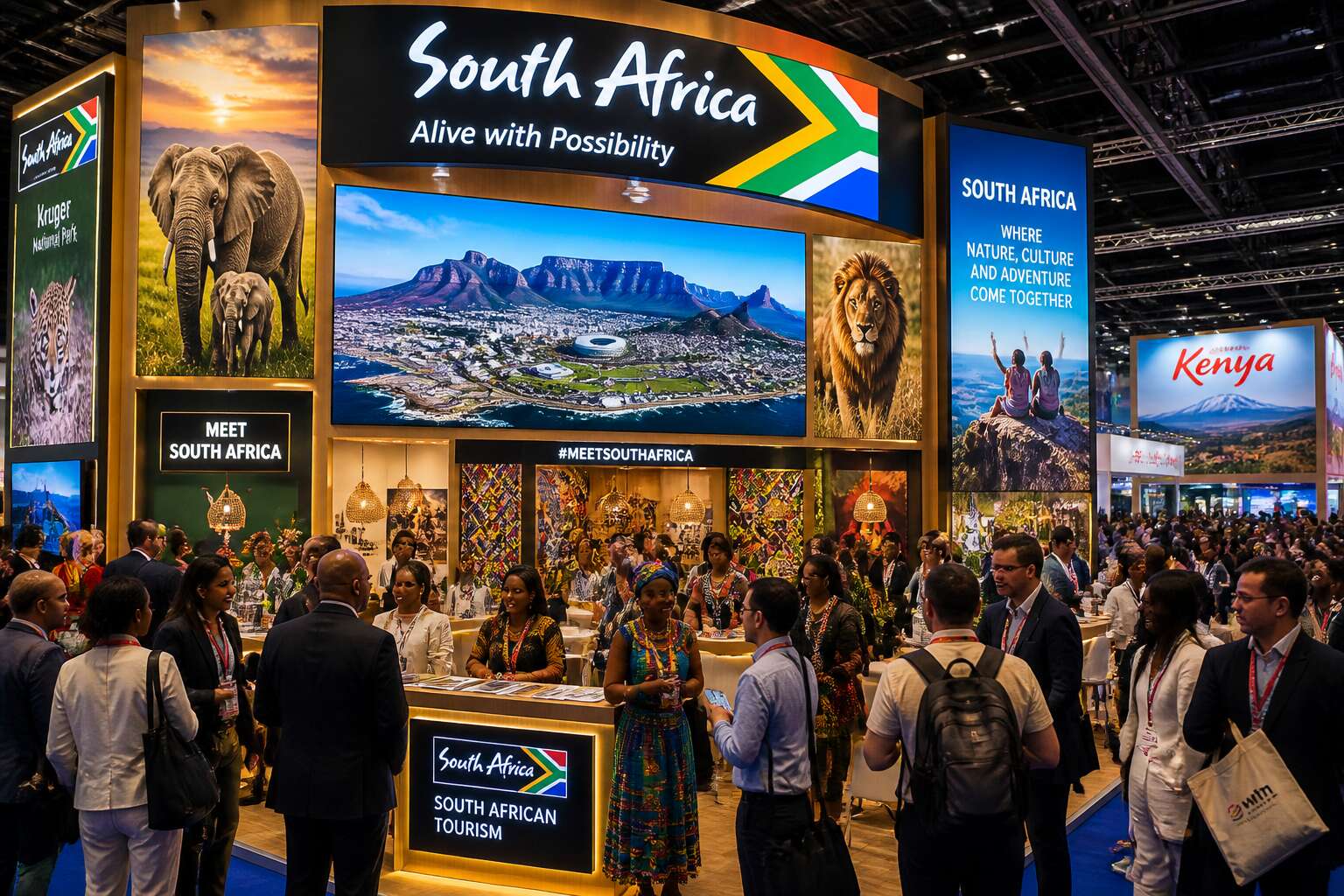
In Southern Africa, the sa tourism exhibition is a reckoning for the travel sector. Professionals gather to gauge who survived the last season and who is investing in the next one. Trade shows in this region function as dense marketplaces where a single conversation can redirect a route network.
For regional travel, these events are practical. An exhibition floor allows:
- Direct access to decision makers who rarely answer emails
- A clear read on which destinations are gaining ground
- Immediate feedback on new products from actual buyers
I see the value in the overlap: a South African tour operator might find a Mozambican lodge owner, or a Namibian transport company might connect with a Cape Town agency. The sa tourism exhibition draws operators from across the SADC region. Attendees compare notes on border delays, currency shifts, and visitor preferences. Those connections shape the region’s travel calendar for the following year!
Key Players and Organizers
The sa tourism exhibition is a produced event, not a spontaneous gathering. South African Tourism holds the organising mandate for the main programme. Provincial authorities manage their own exhibition spaces, and hotel groups plus airlines book floor placement based on the forecasts they hold for the coming year. I have watched these commitments shift across editions, and the pattern is always telling.
Buyers from international agencies attend with clear targets.
- Conservation tourism operators from the Greater Kruger area
- Coastal hospitality groups from KwaZulu-Natal, the Western Cape, and Maputaland
- Cross-border transport providers serving the SADC region
Organisers decide the floor plans, the delegate list, and the conference panels. Their authority extends to the timing of events and the selection of speakers. Those decisions shape every commercial conversation that follows. The sa tourism exhibition offers the simplest read on Southern Africa’s key players and the institutions behind their choices.
Economic Impact on Local Communities
The sa tourism exhibition has a direct economic effect. International buyers eat at local restaurants, sleep in community guesthouses, and hire regional transport. The spending spreads quickly, often reaching townships and rural hubs that never see a convention badge.
The multiplier effect is tangible. Local suppliers book out months in advance. Craft groups from Limpopo restock their stalls twice. Small logistics operators run daily shuttles to the venue. One edition can shift annual income for dozens of families.
Consider what a single edition generates:
- Occupancy spikes at guesthouses in Soweto and Pretoria
- A 25% rise in sales for food vendors within 5 kilometres
- Full rosters for community guides in the Magaliesberg
That is the quiet economy behind the sa tourism exhibition, the one that keeps local communities invested in its success.
Trends in Exhibition Formats
Understanding the Landscape of Tourism Exhibitions in Southern Africa
Across Southern Africa, the exhibition floor is changing shape. The sa tourism exhibition now blends physical pavilions with digital portals, letting a Berlin buyer tour a Karoo lodge without boarding a plane. This hybrid approach is a direct response to how travel decisions are made.
I have watched exhibitors use projection mapping to colour a stand with a Karoo sunset. The old static booth, stacked with brochures, is giving way to sensory staging. Some exhibitors use scent, soundscapes, and simulated night skies. Others prioritise speed networking over long presentations.
Three formats are gaining ground:
- Curated buyer lounges where meetings are pre-scheduled
- Pop-up showcases that rotate daily
- Live demonstrations of local experiences, from malva pudding tastings to shimmying dance workshops
The sa tourism exhibition remains a central fixture, yet the format is shifting. What worked a decade ago, the gloss and giveaway pens, feels outdated. The next edition will measure engagement, not footfall!
Preparing a Standout Exhibition Presence
Designing an Engaging Booth
A booth at the sa tourism exhibition succeeds or fails in the first three seconds of a visitor’s glance. I have watched delegates drift past identical counters, and the ones that stop offer an immediate reason to engage. Your preparation must begin with the visitor’s path, not your products.
Map the physical flow before arranging a single chair. Place your most striking visual at eye level on the approach side. Use lighting to create warmth, not glare. For the sa tourism exhibition, where regional authenticity matters, include a tactile element such as unpolished stone. A simple checklist for your build day:
- Test sightlines from the aisle.
- Confirm power supply for any screens.
- Position staff at the booth’s edge.
Scent and sound finish the job. A subtle playlist of folk music or a bowl of dried fynbos anchors memory. This is how a modest space becomes a destination!
Crafting Compelling Marketing Collateral
Marketing collateral represents your reputation long after the hall empties. At the sa tourism exhibition, a visitor might collect forty brochures. Yours must survive the journey home. Print on textured stock. Use photography that shows real faces, not stock smiles. Write copy that answers one question: why should someone cross the world for this place?
Digital collateral matters equally. A QR code that leads to a slow-loading page wastes the moment. Links must be tested before opening day. A one-page fact sheet for journalists, with statistics that surprise, completes the package.
Consider what attendees keep:
- A map with hand-drawn routes
- A postcard with a handwritten note
- A sample of local tea
These objects become memories. The sa tourism exhibition rewards those who treat collateral as a gift, not a handout.
Leveraging Technology for Virtual Engagement
A standout presence at the sa tourism exhibition now extends beyond the physical hall. Virtual engagement creates a second layer of reach. A live stream from the stand lets remote audiences experience the energy without boarding a plane. An interview with a local guide, filmed on a phone, outperforms a polished corporate video.
In my experience, the hybrid format demands preparation more than the physical one. Rehearse camera angles. Test microphones. Assign one team member to monitor chat questions while another speaks to visitors in person. This split focus separates memorable exhibitors from forgettable ones.
Three practical tools earn their place:
- A booking calendar synced to the display, enabling instant meeting scheduling
- A QR code that launches a virtual tour of a lodge or reserve
- A follow-up email sent while the conversation remains fresh
These small investments extend every interaction’s lifespan. The sa tourism exhibition rewards exhibitors who treat virtual engagement as essential, not optional.
Training Staff for Effective Networking
A burned hand teaches the best lesson. I watched three exhibitors at the sa tourism exhibition learn this the hard way. They had the glossy banners, the giveaways, and the prime corner spot. Still, their stand emptied within an hour of opening. A tired representative stood behind the counter, scrolling on a phone, waiting for someone to approach. They treated the space as a stage, but the actors were unprepared for the script.
Most visitors at the sa tourism exhibition only stop for three minutes. Within that window, a staff member must read intent, adjust their pitch, and close the loop. A well trained team does not need to shout over the noise. They listen for what a buyer is not saying. They notice the distracted gaze, the quick glance at a competitor’s stand, and the half asked question that reveals a real business need. Training sharpens those instincts. Networking at these events is not about collecting fifty business cards. It is about leaving ten people with a precise memory of your operation.
Effective preparation requires a clear brief. The sa tourism exhibition rewards teams who rehearse the basics until they are automatic.
– Introduce yourself with your name and role within the first ten seconds.
– Ask one open ended question about the visitor’s business model.
– Confirm the visitor’s timeline for making decisions.
– Offer a single, relevant piece of information that builds trust.
There is another element that often gets overlooked. Staff must be trained to disengage politely. A conversation that drags on consumes time that belongs to another buyer. A well rehearsed phrase like, “I want to introduce you to my colleague who handles that region,” allows for a clean transition. The measure of successful networking at the sa tourism exhibition is not the volume of chatter. It is the quality of the follow up that lands in the inbox within twenty four hours. Train your people to make every brief interaction count, and the exhibition will do the rest.
Measuring Success with KPIs
Preparation begins long before the first pallet of brochures arrives. At the sa tourism exhibition, the stands that hum with quiet confidence share a common discipline. They measure their success before they measure their space. What does victory look like? Ten qualified leads? Twenty confirmed bookings? A signed partnership?
Set those metrics early and review them daily.
- Number of conversations lasting longer than five minutes
- Volume of follow up meetings secured on the spot
- Count of digital scans or QR captures at the stand
- Ratio of repeat visitors to first time prospects
These numbers reveal more than foot traffic. They expose the difference between curiosity and commitment. A striking booth draws a crowd, but the crowd means little if nobody remembers your name the following Tuesday. KPI driven preparation turns the sa tourism exhibition into a laboratory instead of a lottery. Each evening, gather the team, review the data, and adjust tomorrow’s approach. The exhibition then becomes a focused conversation, not a theatrical performance.
Navigating Networking and Business Opportunities
Identifying High-Value Contacts
At any given sa tourism exhibition, hundreds of conversations compete for your attention. The trick is knowing which handshakes matter before you extend your own. I scan name badges for specific clues: hotel groups with expansion plans, regional tourism boards launching new campaigns, and procurement managers from safari lodges. These people convert a five minute chat into a signed contract.
Map the floor plan before you arrive. Mark the stands that align with your services, then target those first. Early mornings tend to draw serious buyers; afternoons attract casual browsers. The sa tourism exhibition runs on relationships, not random encounters.
A reliable way to separate decision makers from the curious:
– Look for job titles with purchasing authority
– Check for frequent visits to a single stand
– Ask about specific procurement timelines
The most valuable contacts often skip the grand displays. They move quietly, with a list of questions and a clear mandate. Intercept them before they leave.
Effective Follow-Up Strategies
Roughly eighty percent of sales require five follow ups, yet most exhibitors vanish after the first polite email. At the sa tourism exhibition, the gap between a handshake and a contract is filled by the follow up. I have watched perfectly good leads dissolve because nobody sent a timely note.
The effective approach is simple. Send a specific reference to your conversation, not a generic brochure. Name the person you met and the project you discussed. Then do it again a week later, with a new detail.
Speed matters. A follow up sent within 48 hours reads as professional. A follow up sent after two weeks reads as an afterthought. The sa tourism exhibition rewards persistence, but it punishes desperation. Keep your messages short, relevant, and spaced out.
Collaborating with Tourism Boards
At the sa tourism exhibition, the true asset is the quiet conversation between appointments, not foot traffic. Tourism boards need on the ground intelligence. They want to know what travellers do, not what you imagine they do. I focused on three provincial authorities this year. The results: a collaborative stall, a shared campaign, a joint media briefing. The exhibition rewards those who listen twice as much as they speak. To make the most of this space, follow two rules:
- Identify the board representatives attending the sa tourism exhibition and study their regional plans before you arrive.
- Offer a specific capability, like sustainable transport or niche adventure, that aligns with their current marketing objectives.
The rest is patience and a willingness to share credit.
Exploring B2B vs B2C Interactions
Most visitors assume networking at the sa tourism exhibition means handing out brochures to anyone who pauses. The real dynamic splits into two separate currents. B2B conversations happen in quiet corners with scheduled meetings, where buyers from tour operators and transport providers compare margins. B2C moments erupt at the stall edge, with families asking about child friendly activities and weekend packages.
I found the two require different postures! For B2B, bring data on occupancy rates and repeat booking patterns. For B2C, bring story and sensory cues like local food photographs. The sa tourism exhibition rewards those who assess each exchange before offering a handshake.
- B2B success stems from pre booked consultations and shared spreadsheets.
- B2C success stems from quick, memorable exchanges that move people to a booking form.
Time management defines the outcome. Allocate mornings to business leads and afternoons to public engagement, and the exhibition delivers both types of growth.
Maximizing Post-Exhibition Momentum
Converting Leads into Partnerships
The final hour of the SA tourism exhibition often feels like the calm after a storm. Once the banners are rolled up and the last visitor departs, a quieter and more critical phase begins. The data on your device is only raw material; the real craft lies in the deliberate cultivation of those connections. A swift follow-up is the first test of your credibility.
Consider the distinction between a casual query and a genuine opportunity. When you return to the office, the goal is not to send a generic blanket email. Instead, curate your follow-ups based on the substance of your conversations. The most successful operators use a specific protocol to sort the wheat from the chaff.
– Log every contact immediately while the context is fresh.
– Prioritize leads based on their specific travel niche or buying power.
– Attach a personalized note referencing a unique detail from your meeting.
This method separates the tire kickers from the serious stakeholders. As you nurture these relationships, focus on the specific needs of the South African market. Your pitch must evolve into a partnership proposal that reflects shared goals for regional tourism growth. The endurance of the business link depends on a transparent exchange of value and the patience to see the potential through a sustainable footprint.
Content Marketing from Exhibition Insights
A single conversation at the SA tourism exhibition can provide material for multiple articles. Attendees reveal their preferences through offhand remarks and pointed questions. The operator who listens closely leaves with a clear picture of market sentiment, a valuable source for future storytelling.
Content marketing thrives on this material. Transform exchanges into case studies, trend reports, or short video narratives. What puzzled visitors about regional travel? Which destinations sparked the most debate? These observations, once written down, become the foundation for a newsletter series or an industry blog.
- Quotes from attendee conversations, paraphrased with permission
- Comparisons between booth traffic and social media engagement
- Patterns in enquiries that reveal emerging travel niches
Publishing insights from the event while the memory remains sharp gives your audience a timely perspective. The exhibition ends, but the conversation it starts can continue for months.
Building a Year-Round Exhibition Strategy
The bustling hall falls silent, yet the hum of opportunity continues. Many operators treat the event as a single peak, then return to the daily grind. That rhythm leaves value behind. The month after the exhibition is a quiet goldmine, a time when decisions made on the floor still hold weight. A vendor who acts on those conversations within a week secures the advantage that others lose by waiting.
The true measure of the sa tourism exhibition is not found in the number of brochures distributed. It is found in the sustained engagements that ripple outward for months. Building a cadence around the event, rather than treating it as a one-off, changes the game entirely. Consider the practical steps that anchor this approach.
– Schedule quarterly check-ins with the contacts you made, not just a single follow-up.
– Repurpose your exhibition materials for year-round webinars and resource pages.
– Set a calendar reminder to revisit and update your exhibition lead data.
These actions create a loop. The 2025 edition of the sa tourism exhibition becomes a reference point, not a conclusion. Many successful teams use the lull between shows to workshop ideas that surfaced in passing. A question from a visitor about a niche route might evolve into a dedicated tour package by the next cycle. This strategy also informs your financial planning. By understanding the seasonal flow of the sa tourism exhibition, you can allocate resources for both the active season and the reflective period that follows. The event becomes the primary anchor of a twelve month plan, giving every sales pitch and marketing asset a common touchpoint. That continuity transforms one annual event into a durable foundation for your entire commercial year.
Feedback Loops and Continuous Improvement
A month after the sa tourism exhibition, the conversations that mattered most are still fresh in the minds of a select few. Feedback from the floor is a form of currency, yet most operators let it depreciate. Every question asked at a booth, every hesitation during a pitch, and every offhand remark about pricing holds a data point. Capturing that intelligence systematically turns casual observation into a structured asset.
The teams that treat post event analysis as a discipline, rather than a chore, uncover patterns others miss. A recurring query about accessibility at certain lodges might indicate a broader market shift. An unexpected surge of interest in a specific region signals where to direct next year’s content. The sa tourism exhibition becomes a listening post, not just a sales platform.
– Record visitor questions verbatim in a shared log.
– Tag each lead with a note about their primary interest and objection.
– Review the log monthly to identify emerging themes.
Emerging Trends and Innovations in Tourism Exhibitions
Sustainable and Eco-Friendly Exhibitions
Regenerative travel has reached the exhibition floor. At the SA tourism exhibition, sustainability now dictates everything from stand construction to waste processing. Organisers are applying circular economy principles, using modular structures designed for reconfiguration instead of disposal.
Bio-based materials are gaining ground. Exhibition builders are testing mycelium panels and recycled ocean plastics to shrink the carbon footprint of pavilions. Water refill stations and digital brochures have displaced single-use items, yet the deeper shift involves procurement decisions across the entire supply chain.
Emerging practices include:
- Carbon-neutral stand design powered by renewable energy
- Local sourcing of materials and catering to bolster regional economies
- Waste diversion systems that keep 90 percent of refuse from landfills
These shifts mirror traveller expectations. Attendees now scrutinise the environmental credentials of events they support. A green exhibition has become a baseline requirement for viability. For the SA tourism exhibition, embracing these innovations signals a commitment to the very landscapes it promotes, fostering a more honest conversation between host communities and visitors.
Data-Driven Personalization
Your badge scanned 47 times. That is 46 more than the number of meaningful conversations you had. At the SA tourism exhibition, I watched exhibitors use data-driven personalization to change that. They track which pavilions pull you in, which brochures you actually scan, and how long you linger at a virtual reality safari stand. Then they adjust their offers in real time.
This is not about creepy surveillance. It is about relevance. Instead of a one-size-fits-all sales pitch, you get a precise match for your travel interests and budget. The system learns that you prefer coastal lodges over bush camps, or that your family needs wheelchair accessible routes. That intel shapes both the booth’s layout and its follow-up emails.
- Real-time heatmaps of booth traffic
- Personalized itinerary suggestions based on passport scans
- Dynamic pricing for exclusive tour packages
The result is a more efficient floor. Less wasted time, fewer cold pitches, and a better return on every exhibitor’s rand. Data-driven personalization is quietly turning the SA tourism exhibition into a system that connects travellers and destinations on a personal level.
Hybrid Event Models
The pulse of the exhibition floor has changed. I noticed it between the coffee stands and the long queues for the virtual safaris. A quiet shift is happening beneath the noise, and it revolves around hybrid event models. The SA tourism exhibition is no longer just a physical gathering; it is becoming a bridge between the tangible and the digital.
For the South African travel industry, this means an exhibitor in Cape Town can host a live buyer from Berlin without either of them stepping onto the same carpet. The mechanics are straightforward. A physical booth operates as a broadcast studio, while a digital platform handles the overflow of international delegates. This approach does not replace the handshake; it simply extends its reach past the venue walls.
– Live-streamed product launches for remote travel agents
– Interactive Q&A sessions that merge floor attendees with online audiences
– On-demand content libraries that keep the conversation alive for months
What strikes me most is how these models create a persistent presence. The exhibition stops being a three day event and becomes a continuous touchpoint. Data from digital interactions feeds back into the physical floor, refining the next day’s engagement. It is an efficient loop that respects the pace of modern business. The SA tourism exhibition is evolving into a dual reality, one where distance no longer dictates opportunity.
Cultural Showcase and Authenticity
A rising tide of cultural pride is reshaping how nations present themselves. “Our identity is our currency,” remarked one exhibitor, capturing the shift from generic displays to authentic storytelling. The sa tourism exhibition has seen a notable movement toward experiences that honour heritage rather than dilute it for mass appeal. Visitors now seek tangible connections to place through craft, cuisine, and living tradition, not manufactured spectacle.
This evolution manifests in how destinations curate their presence. Villages reconstruct their main street, complete with artisans at work. Culinary teams demonstrate regional techniques at purpose built stages. Storytellers share folklore passed down through generations. The result is a platform where genuine cultural exchange takes precedence over transaction.
These focused approaches yield meaningful engagement:
– Hands-on craft demonstrations that teach traditional skills
– Local musicians performing original compositions alongside classic pieces
– Exhibits curated by community elders rather than marketing teams
– Tasting menus that explain the provenance of each ingredient
The sa tourism exhibition proves that staged authenticity fails to convince, while genuine representation builds lasting connections with discerning travellers.


0 Comments