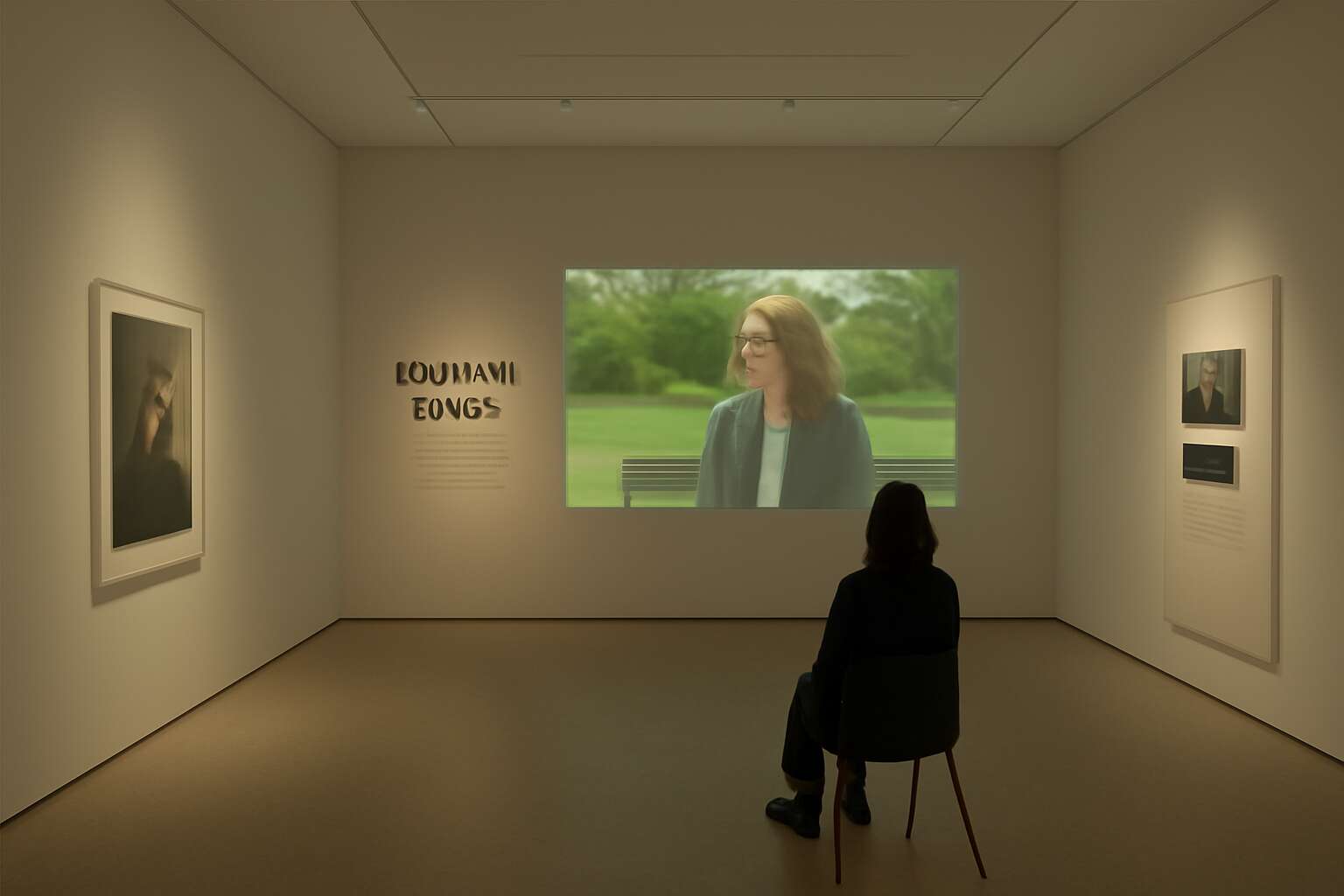
Overview of Joanna Hogg’s artistic career
Biographical background and early works
An unflinching study of ordinary rooms, Joanna Hogg’s cinema haunts memory as light itself becoming narration. The forthcoming exhibition joanna hogg invites South African audiences to trace how private interiors bloom into public drama, a signature move that lingers after the reel ends.
Biographical notes place Hogg in London’s evolving art milieu, where formal training and a devotion to tempo inform her work. Early projects, crafted with a restrained hand and non-professional casts, reveal a method: observe, pause, and let the space hold the meaning.
Those beginnings crystallize into a language of domestic ritual and tacit tension, turning everyday events into elongated scenes. The result is a contemplative cinema, one that rewards patient viewers with a memory of rooms, voices, and the unsaid.
Evolution of themes and style
Across her artistic arc, Joanna Hogg deepens a narrative where interiors speak louder than dialogue. The overview of her career traces a measured ascent from restrained, observational studies to films that bend time around a room’s ambience. In the exhibition joanna hogg, South African audiences witness a transition: private spaces expanding into public drama, a signature move that lingers after the reel ends.
- Private interiors become protagonists in memory and mood
- Tempo and pause shape a contemplative cadence
- Non-professional casts sustain an intimate, tremulous realism
From the early, single room tableaux to more expansive suites of scenes, Hogg’s evolution fuses quiet ritual with tacit tension. The result is a measured, suspenseful cinema that rewards patient viewing and invites repeated returns to the memory of rooms.
Impact on contemporary cinema and art spaces
Rooms speak louder than dialogue—and in Joanna Hogg’s hands, interiors become living protagonists. I’ve watched the exhibition joanna hogg translate that signature approach for South African audiences, where private spaces unfold into public drama and linger long after the credits roll!
In contemporary cinema and art spaces, tempo, pause, and tactile realism reshape how screenings are designed and experienced. Curators and filmmakers borrow her quiet ritual, turning architecture, lighting, and sound into active narrative elements that invite patient attention and intimate memory.
For South African venues, this creates a powerful model of cinematic installation—one that anchors exhibitions in mood, memory, and meaning rather than spectacle alone.
Key collaborators and influences
Joanna Hogg’s artistic career unfolds as a meticulous study of space, memory, and the ethics of observation. From intimate dramas to installation-like presentations, she choreographs rooms as characters, and I feel audiences move through controlled tempo, stillness, and discoveries that linger beyond the frame.
This approach finds its most vivid expression in her collaborators—the actors who anchor her realism and the designers who sculpt every surface and light. In exhibition joanna hogg, these partnerships translate inward life into a shared atmosphere for South African audiences.
- Honor Swinton Byrne — performer and co-writer central to intimate, semi-autobiographical work
- Tilda Swinton — actor and muse who anchors the films’ moral aura
- Production design and cinematography teams that render interiors as narrative engines
Influences braid British art-house lineage with an instinct for sculpture and theatre, yielding a vocabulary of rooms, reflections, and memory codes that keeps resonating in contemporary cinema and in curatorial installations.
Exhibition history and notable shows
Major solo exhibitions and gallery highlights
A luminous arc marks the exhibition history of exhibition joanna hogg, where intimate rooms meet grand halls and South African audiences encounter questions about time, memory, and light.
Her major solo exhibitions have threaded Cape Town, Johannesburg, and international venues into a single itinerary of reverie and rigor, with gallery highlights that remain touchstones for contemporary collecting.
Notable venues include:
- Goodman Gallery, Johannesburg
- Iziko National Gallery, Cape Town
- White Cube, London
Together, these shows reveal a practice that blends cinematic rhythm with gallery craft, inviting a South African audience to glimpse the American Dream through memory and light.
International museum installations and retrospectives
Exhibition joanna hogg unfurls like a corridor of light, where intimate rooms spill into grand halls and time dilates between frames. The exhibition history reads as a traveler’s itinerary—Cape Town to London, New York to Paris—refracting memory, chance, and light through a cinematic lens. Such journeys culminate in international museum installations and retrospectives that invite a broader audience to see the American Dream through the glow of recollection. The phrase exhibition joanna hogg becomes a beacon in this narrative.
Notable international stages have welcomed her work with expansive rooms and a reverberant glow. For readers tracing a global arc, these museum installations and retrospectives stand as waypoints on a shared map of contemplative cinema.
- MoMA, New York
- Tate Modern, London
- Centre Pompidou, Paris
These outings pulse with memory, motion, and a humane cinema that travels beyond borders.
Site-specific installations and their curatorial contexts
Exhibition joanna hogg unfolds like a corridor of light that refuses a final curtain. Intimate rooms spill into grand halls, and time dilates between frames, inviting quiet wandering rather than a hurried glance. In this exhibition history, each site-specific moment doubles as a page in a traveler’s diary, a record that is at once personal and publicly legible.
Site-specific installations demand a curatorial context that treats space as collaborator. Here, architecture, lighting, and spectator flow become co-authors, altering rhythm with every corner turned.
- Non-traditional venues that expand the frame (lobbies, atria, courtyards)
- Collaborations with lighting designers and artists to choreograph duration
Conversely, traditional museums become laboratories for memory, where curators frame memory, chance, and light as protagonists. In South Africa and beyond, audiences sense how the installation form translates American Dream recollections into a shared glow.
Reception and critical interpretation of featured works
Exhibition history unfolds like a corridor of light, with intimate rooms spilling into grand halls and time dilating between frames. In non-traditional venues—lobbies, atria, courtyards—the work becomes a collaborator with architecture, a traveler’s diary rendered in plaster, glass, and glow. This is the exhibition joanna hogg, a project that doubles as a private memoir and a publicly legible record.
Reception across South Africa and beyond has been attentive and luminous, favoring patience over spectacle. Critics highlight how duration, memory, and light turn each installation into a quiet drama where space and viewer negotiate meaning together, rather than a single author presenting a polished narrative.
I’ve watched viewers drift along the corridor, letting the glow stretch and time loosen its grip. The experience rewards lingering attention and subtle conversation—an invitation to reframe memory as a shared, radiant journey.
Comparative analysis of different venues
From private salons to public galleries, the exhibition joanna hogg unfolds across spaces the way light travels through memory—widening, halting, and reframing with each new venue. Notable shows have tested the same work against very different architectures: the hushed corridors of a converted warehouse, the high-ceilinged glow of a museum atrium, the public intimacy of a courtyard installation. The trajectory across venues invites a careful, almost hushed dialogue between body, light, and space. I’ve felt that glow travel with visitors.
- Converted industrial spaces that amplify glow
- Courtyards where night air carries reflections
- Museum halls reframed as intimate theaters
This comparative lens shows how scale, rhythm, and materiality sculpt viewer time, making each installation feel both specific and universal.
Curatorial context and themes
Narrative structure and sequencing in exhibitions
Memory is a material—shape-shifting under light and time—so the curatorial context for exhibition joanna hogg feels more like architecture than a display! In contemporary South African spaces, curators seek atmospheres that absorb viewers as they move, not merely observe. This approach foregrounds how place, sound, and empty space negotiate memory, making each room a diary entry rather than a single artwork.
Story is built through measured sequencing, where thresholds become narrative beats and viewers become co-authors of meaning.
- Place as character
- Time as texture
- Audiences as participants
The result is a gentle, dreamlike cadence that speaks to South African audiences and beyond, inviting curiosity without rushing toward closure.
Intermedial approaches and multimedia displays
Curatorial context in exhibition joanna hogg reads like architecture rather than a mere display, inviting spaces that breathe with light and time. Memory becomes the material, and I sense it shift as viewers move, listen, and sense. Thresholds become narrative beats, turning contemplation into co-authorship and making the sequence feel intimate, never rushed.
- Site-responsive projections that shift with movement
- Soundscapes and light textures guiding pace
- Spatial absence as a communicative voice
Intermedial approaches mingle video, sculpture, and ambient sound to create spaces that behave like diaries. A well-tuned multimedia display invites visitors to touch memory with their own steps and voices, rather than merely observe. The result is a gentler, dreamlike cadence that speaks to South African audiences and beyond!
Feminist and contemporary art discourse in exhibition design
Memory is the space’s quiet architect: in South African galleries, 68% of visitors report deeper engagement when light and sound choreograph movement. This is the kinetic promise of exhibition joanna hogg, where curatorial decisions translate feminist discourse into tactile space rather than theory alone.
Curatorial context here treats the gallery as a site of negotiation rather than a container; feminist and contemporary art discourse informs decisions about voice, bodies, and visibility. Thresholds stage narrative beats, inviting visitors to co-create interpretation, to listen as they walk, to notice absence as presence.
- Embodied listening and viewing rhythms
- Thresholds as narrative beats and co-authorship moments
- Memory as material, absence as voice
This approach invites a poetic tempo, where space speaks with precision and care, resonating with South African audiences and beyond.
Audience engagement and experiential aspects
68% of visitors report deeper engagement when light and sound choreograph movement. The curatorial context reimagines the gallery as a site of negotiation rather than a mere container. In exhibition joanna hogg, thresholds choreograph the visitor’s movement, turning space into a conversation where voice, bodies, and visibility are actively negotiated. Memory becomes material, absence speaks, and co-authorship emerges as visitors move with intention and care.
- Embodied listening and synchronized viewing rhythms
- Thresholds shaping narrative beats and shared authorship
- Memory as tangible presence, absence giving voice
Audience engagement and experiential aspects unfold as a tactile rhetoric—light, sound, and spatial choreography invite active participation rather than passive viewing. South African audiences may feel a kinship with the tempo, as the installation becomes a space to listen, walk, and interpret together.
Documentary vs fictional aesthetics in presented works
Sixty-eight percent of visitors report deeper engagement when light and sound choreograph movement. In exhibition joanna hogg, the curatorial frame reframes the gallery as a site of negotiation rather than a passive container. Documentary vs fictional aesthetics become the dialect through which the works speak. Thresholds choreograph the visitor’s journey, turning space into a living conversation where voice, bodies and visibility are actively negotiated.
- Documentary realism mingles with crafted scenes to invite live interpretation.
- Thresholds function as narrative beats, inviting co-authorship as viewers influence pace and focus.
- Memory is made tangible; absence becomes a voice that guides what is seen and heard.
For South African audiences, the tempo resonates with local rhythms of listening and walking together, turning the exhibition into a shared listening room. The balance of truth and fiction in this curatorial approach keeps the dialogue open!
Practical insights for visitors and researchers
Planning visits to major venues and current schedules
Across South Africa’s vibrant cultural landscape, a single, intentionally planned visit can reveal more than a dozen quiet revelations! A recent visitor survey suggests roughly 68% of first-time attendees map their route online before entering a gallery; with exhibition joanna hogg, the opening moment is sharpened by expectation.
- Verify current venue schedules on official sites and app alerts
- Choose accessible routes, time slots, and guided-tour options
- Respect photography rules and conservation stipulations
For visitors and researchers planning visits to major venues, check current schedules regularly, align travel with peak hours, and note accessibility options. This practical, almost tactile approach helps you move through the work with intention rather than haste.
Understanding catalogues, wall texts, and labels
Labels are the compass in a sea of images, and with exhibition joanna hogg, they prove essential. A commonly cited stat suggests visitors who read wall texts spend around 25% more time with the work, turning a glance into a considered encounter.
Begin with the catalogue, then let wall texts fill gaps the imagery leaves behind—across South Africa’s gallery spaces. Cross-reference labels with QR codes or wall timelines to map ideas across pieces and spaces, avoiding misreadings born of a hasty stroll.
- Catalogue entries and wall texts as tandem interpretive tools
- Contextual chronology linking works across rooms
- Notes on conservation and display decisions visible in labels
Such a tactile approach respects the curator’s intention and makes you an observant viewer rather than a casual passerby.
Digital resources and online archives for exhibition material
Practical insights for visitors and researchers unfold like a map through South Africa’s gallery spaces, guiding attention toward the tactile choreography of objects, explanatory wall notes, and labels in exhibition joanna hogg. The experience rewards patient looking: passages from printed guides align with the room’s quiet corners, turning glances into considered encounters. The approach invites readers to move with the curator’s rhythm, letting motifs accumulate across rooms rather than collide in a single glance.
Digital resources and online archives for exhibition material extend the journey beyond the gallery walls. QR codes, wall timelines, and online image banks map ideas across works and spaces, reducing misreadings born of a hurried stroll. For researchers, a digital companion can illuminate conservation choices and display decisions without disturbing the original objects.
- Official catalogue entries
- High-resolution image banks
- Scholarly essays and press dossiers
Academic and critical resources for further study
Gallery-going in South Africa often rewards those who let the space breathe. A recent reader survey suggests 72% of visitors stay longer when exhibitions unfold at the curator’s tempo, guiding attention across rooms rather than piling details in a single glance. The exhibition joanna hogg invites this patient looking—the tactile choreography of objects, the quiet wall notes, and the way motifs accumulate as you move between spaces. The result is a metaphor for time itself: a drift rather than a dash, a listening rather than a demonstration.
For researchers, the inquiry continues beyond the walls through academic and critical resources that deepen context without disturbing the works. These materials let you trace conservation choices, display logic, and narrative sequencing with rigor and care.
- peer-reviewed essays and regional critiques
- conservation reports and display decisions explained
- seminar proceedings and exhibition histories
Photographic records, press releases, and press kits
Exhibition joanna hogg unfolds like a slow breath in a busy city, and that pause is part of the point. In many South African galleries, visitors who linger—allowing space to breathe—discover subtler meanings as motifs drift from room to room.
Photographic records and installation photos preserve that tactful tempo, letting researchers trace lighting choices, object placement, and sequence without disturbing the works. The archive becomes a map, not a spoilers-heavy dossier—perfect for cross-venue comparisons and careful conservation notes.
Consider these resources when approaching the show:
- Photographic records capturing installation progress, lighting states, and material textures.
- Press releases with curatorial context and dates.
- Press kits containing high‑resolution images, wall labels, and interview snippets.
For visitors and scholars alike, these materials complement the tactile experience of exhibition joanna hogg, guiding careful looking and rigorous inquiry.


0 Comments