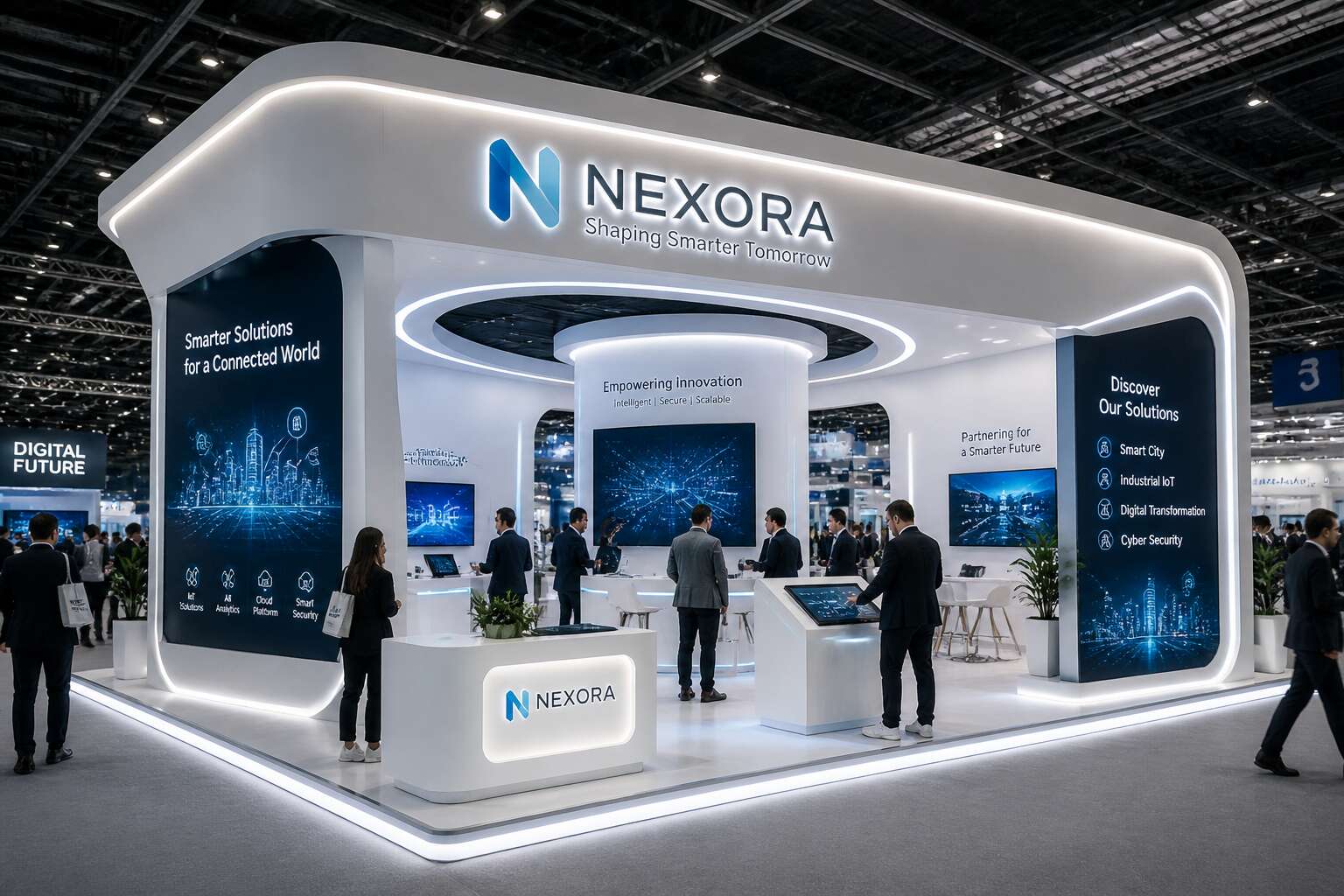
Defining the Aesthetics of Contemporary Trade Show Displays
Minimalism and Clean Lines: Less Is More
For every hundred exhibitors shouting for attention, the one that whispers often commands the room. This is the quiet power of minimalism in exhibition stand modern design. Negative space works as a visual pause, giving attendees a moment to breathe in a landscape of relentless noise. The philosophy is simple: strip away the superfluous to reveal the function. When every line serves a purpose, the result is precision, not emptiness.
This approach demands a rigorous edit of your brand’s material presence. Nothing is added for decoration; everything is intentional. The most effective contemporary displays often rely on a limited material palette to achieve this clarity. You might consider how this principle translates into physical components:
– Polished concrete floors that reflect light and anchor the structure
– Single-sheet metal facades with a seamless, matte finish
– Suspended lighting grids that replace bulky overhead trusses
By limiting options, you force a focus that visitors perceive immediately. I have seen trade show floors where a simple white box outperforms a two-story fortress of graphics. The reduction of visual stimuli allows your core product to become the hero, not the backdrop. It is the difference between showing everything and proving everything. I firmly believe that in this context, restraint is the most persuasive tool available. The modern aesthetic is not about being sparse, it is about being decisive.
Bold Typography and Graphic Statements
The average attendee spends three seconds deciding which booth to approach. Bold typography beats that clock. An exhibition stand modern approach uses oversized letterforms, stark colour contrast, and graphic repetition to transmit your message faster than a sales pitch ever could. Type becomes architecture. Scale creates authority. Consider what this means in practice:
- Typography that doubles as a physical partition
- Muted backgrounds that make letters vibrate
- Full-wall graphics that replace product demos
The market in South Africa demands this clarity. Exhibition spaces in Johannesburg and Cape Town are crowded with identical structures. Your typography needs to sever that sameness. One sharp, oversized statement can stop a rushing crowd. A well-placed graphic element gives visitors a reason to slow down and enter.
Color Psychology to Attract Attention
In a crowded Johannesburg expo hall, colour is the first language a visitor speaks. The human eye registers hue before it decodes a single word. For an exhibition stand modern in its approach, pigment becomes a strategic tool, not mere decoration. Warm oranges signal energy and urgency. Cool blues communicate trust and precision. Each shade carries physiological weight.
South African designers now use colour blocking to define zones within an exhibition stand modern. A lime green wall can funnel attendees toward a demo area. A matte black ceiling creates intimacy for private conversations. The psychology is subtle but measurable. Research indicates that up to 90% of snap judgements about a brand rest on colour alone.
Test your palette under harsh exhibition lighting before committing. What looks sophisticated in a studio can turn muddy on a show floor. The right hues, applied with discipline, give a Cape Town audience a clear emotional signal.
Spatial Flow and Traffic Management
A well composed exhibition stand modern reveals itself through rhythm. Attendees at a Johannesburg expo hall move with a specific urgency; they scan, evaluate, and decide in seconds. The display that respects this pace earns their pause.
We have all felt the friction of a poorly planned stand. Contemporary designs manage foot traffic by treating space as a sequence of weighted choices. A wide central aisle draws the eye forward. Subtle shifts in flooring, the angle of a partition, the placement of a seating nook, these details guide where feet land. Traffic becomes a measurable record of design quality.
Here is how spatial flow works on a busy floor:
- Generous entry zones prevent a build-up of bodies at the threshold
- Demonstration areas anchor circulation at natural stopping points
- Exit pathways remain visible from any position inside
When movement feels unforced, the exhibition stand modern becomes a calm and purposeful space.
Lighting Techniques to Highlight Key Products
Fluorescent hall lighting flattens everything it touches. At Johannesburg expo venues, the effect is uniform and harsh. I have watched visitors walk past a well built stand because its light did not invite them in. A display with controlled light stands apart immediately. The exhibition stand modern treats illumination as a tool for emphasis, not a background detail.
Grazing light rakes across a surface to expose grain and texture. Diffused light softens edges and reduces contrast. Track fixtures allow repositioning as the day changes. These techniques draw a visitor’s eye to specific products without signage.
- Low voltage spotlights create sharp pools of light
- Linear LED strips outline shelving and guide the eye
- Adjustable heads let exhibitors shift focus between launches
Visitors respond to this intentionality. They slow down and remember what they saw. For an exhibition stand modern, lighting is the difference between being seen and being noticed.
Innovative Materials and Fabrication Trends
Sustainable and Recyclable Materials
Exhibition waste is a persistent issue. In South Africa, most stand materials end up in landfills after a single show. The exhibition stand modern approach changes that by using recycled aluminium and agricultural fibre board. These materials are lighter and perform consistently.
Fabrication trends now favour mechanical connections over permanent glues. This allows rapid disassembly and reuse.
- Compressed straw panels for wall partitions
- Recycled PET felt for display surfaces
- Bamboo laminates for flooring
These choices cut material costs by nearly a third. An exhibition stand modern built this way keeps its visual impact across multiple events. Water based coatings and modular frames complete the cycle. The result is a stand that leaves a smaller footprint, both physically and environmentally.
Smart Glass and Interactive Surfaces
Smart glass shifts from transparent to frosted with a simple switch. This creates private meeting spaces without permanent walls. Interactive surfaces use touch sensors embedded in counters and display panels. Visitors can browse product specifications directly on the surface they are touching.
For an exhibition stand modern, these technologies replace printed brochures and static displays. Motion sensors trigger content changes when someone approaches. Projection mapping turns ordinary walls into dynamic brand experiences.
Common interactive elements include:
– Touch sensitive display panels
– Gesture controlled product viewers
– Smart glass partitions that adjust opacity on demand
The fabrication side is simpler than it appears. Modular frames accommodate wiring and sensors with minimal custom work. Reusable components transfer between events without extra tooling. The visual effect is substantial, and the cost stays manageable for regular exhibitors.
Modular Structures for Flexibility
A modular frame that assembles in hours rather than days changes the economics of exhibiting. For a South African brand, this means less time spent on site and more budget allocated to the experience itself. The exhibition stand modern approach favours components that click together without custom tooling.
Lightweight honeycomb panels and aluminium extruded sections reduce transport weight while holding their shape across multiple shows. Fabric skins stretched over curved frames replace expensive painted walls, and they pack flat for the return trip!
Common modular components include:
- Slot together connectors that need no screws
- Standardised panel widths that fit any booth size
- Recessed channels for cabling and spotlights
A structure built this way adapts to a 3 metre inline booth or a 50 square metre island without new drawings. That flexibility defines the modern build.
Use of Fabric and Tension Structures
Tensile architecture is rewriting the rules of what a booth can be. The global market for tension fabric structures grows annually, and South African event organisers are taking note. An exhibition stand modern by design often uses these systems to build sweeping ceilings or curved backdrops that would require heavy steel in a traditional build.
The engineering is simple. Aluminium masts and cables hold PVC or fibreglass cloth in place. Air moved by low wattage fans forces the material outward, creating smooth, unbroken surfaces. The result is a structure with zero hard edges. It feels lighter than air, yet it withstands the vibration from a busy hall floor. These structures can span up to ten metres without internal supports, opening up the space below. This creates an area that feels larger than its footprint, a powerful advantage in a crowded expo.
Fabric also changes the sensory experience. Dye sublimation printing on polyester gives you photographic quality graphics with no visible seams. Printed tension fabric absorbs ambient sound, reducing the chaotic noise of the show floor. Backlit with LEDs, the material glows like a lantern, drawing visitors from across the hall. The visual impact is immediate.
For the practical organiser, the benefits are concrete.
– Fabric panels are lightweight, cutting logistics costs by up to 40%.
– The material is printable a week before the show to keep content current.
– Tension structures demount in under an hour, reducing labour fees.
– The cloth wipes clean and shows no creases after flat packing.
The flexibility is the real prize. A fabric skin can be stretched over a frame this year and re-skinned with new graphics next year. The structure stays, the identity changes. This is the essence of an exhibition stand modern approach. It is not fragile art. It is robust engineering worn on a beautiful surface. The material does the heavy lifting, and the atmosphere does the selling.
Reinforced Lightweight Composites
Reinforced lightweight composites are changing what an exhibition stand modern can achieve. Honeycomb panels, with aluminium or paper cores, deliver a flat surface that is strong yet light enough to lift with one hand. This matters in venues like Johannesburg’s Expo Centre, where speed of build dictates your budget.
Carbon fibre and fibreglass laminates now replace steel in structural frames. They resist corrosion and bend into shapes that were impossible to fabricate a decade ago. The material’s stiffness allows wider spans with thinner columns.
- Transport costs drop significantly.
- Floor loadings remain well within venue limits.
- Assembly requires fewer hands and less time.
Composite fabrication is not a gimmick. It is the logical next step for a design industry that wants durability without the weight.
Integrating Technology for Immersive Experiences
Virtual and Augmented Reality Showcases
At a recent trade show in Cape Town, a virtual reality headset kept visitors engaged for nine minutes. That is an eternity on a show floor! An exhibition stand modern must do more than display products. It must transport people into scenarios where they can experience value firsthand. Augmented reality overlays show machinery operating at full capacity without moving a single part. Virtual reality places a client inside a building before it exists. These tools solve real problems.
Consider the practical advantages:
– Reduced product shipping costs
– Unlimited demonstration cycles
– Real-time data collection on visitor interactions
Every component must work together. The hardware needs space, lighting, and trained staff. When executed well, an exhibition stand modern becomes a space for memorable encounters, where visitors stay longer and absorb more.
Touchscreen Kiosks and Digital Catalogs
A single touchscreen kiosk can replace a rack of printed brochures. Visitors walk away with digital copies, not crumpled paper. That kind of interaction builds an exhibition stand modern around convenience and speed. Trade show attendees expect instant answers, and a well-placed kiosk delivers product specs, case studies, and pricing in under a minute.
Digital catalogs offer similar advantages for our staff. Updates happen overnight, so every visitor sees current information. No outdated price lists, no wasted printing costs!
- Staff capture visitor contact details through the same screen.
- Sales teams receive hot leads in real time.
- Visitors compare product options side by side without waiting.
An exhibition stand modern should feel like a resource, not a display. When people can explore at their own pace, they ask smarter questions. That is the value of integrating technology into the visitor experience.
Real-Time Social Media Walls
In South Africa, where data costs can make or break a live event, the real time social media wall offers a powerful return on engagement. It does not just display content; it validates the crowd. When a visitor’s post appears on the main digital screen, their phone becomes a remote control for the entire exhibition stand modern. This interaction creates a magnetic pull that draws foot traffic from the aisle because people want to see their own names in lights.
A live wall aggregates posts from X, Instagram, and LinkedIn into a single visual feed. It works best when you pair it with a clear call to action near the product demo area.
– It runs on a simple Wi-Fi network with a LAN backup.
– It filters out spam and irrelevant posts automatically.
– It displays trending topics and live sentiment scores.
The value lies in the feedback loop. Attendees feel heard, and your team sees which products generate the most buzz in real time. Instead of a silent, static booth, the space becomes a dynamic hub of conversation. The technology encourages visitors to stay longer, wait for their post to be shown, and engage with your brand on a personal level. An exhibition stand modern is not just about what you show; it is about how you make the audience participate in the story.
LED Video Walls with Dynamic Content
An empty LED wall is a missed opportunity. At a modern exhibition stand, the video wall serves as the primary visual anchor, but its true power lies in dynamic content management. The technology adapts to audience flow, shifting from a product showcase to a data visualization tool in seconds. This agility keeps the space feeling alive and responsive.
The success of a video wall depends on strategic planning, not pixel count alone. Consider the viewing distance, ambient lighting, and the physical placement of your demo units. A wall that dazzles at a distance must still deliver clarity up close, balancing spectacle with information transfer.
The content strategy must be tightly edited and cycled with purpose.
– Alternate between high-impact branding and detailed product shots.
– Use motion graphics to direct attention toward live demonstrations.
– Schedule technical deep dives during peak foot traffic hours.
– Pair the wall with audio zones for a layered sensory experience.
The logistics of power and heat management are critical, especially in venues with unreliable infrastructure. A single high-brightness wall can draw significant current, so a modern exhibition stand design must account for load-shedding resilience. This avoids a silent screen during a critical product reveal. The best displays in Johannesburg or Cape Town are those that blend sheer visual force with practical operational planning. Content that ignores the audience’s patience will fail, so the narrative must change before attention wanes. This is where the exhibition stand modern design earns its reputation, by turning a passive screen into an active sales tool.
IoT-Enabled Product Demonstrations
Most product demonstrations end when the salesperson stops talking. At a modern exhibition stand, IoT-enabled product demonstrations sustain the interaction through continuous data exchange. Sensors embedded in your products communicate with screens and handheld devices, letting visitors trigger responses through touch or proximity. This creates a direct feedback loop between visitor and machine.
Consider how a connected pump or solar inverter responds when a visitor adjusts its load remotely. Data streams appear instantly on a dashboard, revealing performance metrics that matter to engineers and procurement managers alike. We find this offers proof of capability that static displays cannot match.
A practical setup might include:
- A central gateway collecting sensor data from multiple demo units
- A dashboard that visualises live performance comparisons
- QR-linked access to send detailed reports to the visitor’s inbox
The exhibition stand modern approach treats every interaction as a data point. Johannesburg’s industrial buyers respond well to measurable outcomes.
Mobile App Integration for Visitor Engagement
Only 32% of trade show visitors pre-plan which exhibitors they will visit. The rest wander until something catches their eye. A mobile app shifts that dynamic. Your exhibition stand modern becomes a destination, not a detour, when attendees can unlock content through their own device.
Visitors expect an experience that responds to their presence. The app can:
- Queue them into a virtual waiting list for product discussions
- Let them bookmark specific areas of the stand for later
- Send a time-stamped follow-up note the moment they leave
We have watched this approach transform passive foot traffic into intentional engagement. The phone is not a distraction. It is a bridge.
Creating Memorable Brand Interactions
Live Demonstrations and Workshops
People remember how a product made them feel, more than the specifications on a brochure. Live demonstrations transform passive viewing into active participation. At a recent trade show in Johannesburg, I watched visitors queue for twenty minutes just to try a packaging machine themselves. That is the power of hands-on engagement! An exhibition stand modern design should include dedicated zones for workshops, where visitors can touch, test, and explore. Consider what your team can offer in short, focused sessions:
- A quick assembly challenge using your product
- A guided sensory test for food or cosmetics
- A mini consultation where visitors leave with a personalised sample
These spaces create genuine conversations between your team and potential buyers. The result is a memorable interaction that stays with visitors long after the event closes. Give people something to do, and they will remember your brand.
Gamification and Contests
Seventy percent of visitors forget a brand within a week of a trade show. That statistic is the enemy of every exhibitor. A modern exhibition stand must do more than display products. It must engineer a memory so potent that it survives the flood of post-show information. Gamification is that engineered memory.
Consider the primitive pull of competition. It bypasses the logical brain and speaks directly to our desire for mastery and recognition. An exhibition stand modern in its design will integrate these playful mechanics into its physical space. A leaderboard for a simple virtual challenge, a prize wheel that reveals a discount code, or a timed puzzle related to your industry are all effective starters. The reward itself does not need to be costly; the bragging rights and the shared moment of triumph are often the real draw.
To structure this engagement, think about these three contest formats:
1. A daily “speed round” where visitors answer a trivia question about your sector on a touchscreen kiosk.
2. A social media photo contest with a unique backdrop that encourages brand sharing.
3. A “guess the number” game featuring a product component, which naturally leads to a conversation about its specifications.
The post-game moment matters most. This is where your staff steps in to connect the fun to the function. They can ask how the experience felt and pivot to the product’s tangible benefits. Simultaneously, you are collecting valuable data. The mechanics of the game, from entry forms to app interactions, become a data capture engine for your sales team. This turns play into a critical business function, ensuring that every laugh and cheer on the floor translates directly into a qualified lead on your roster.
Personalized Greeting and Networking Areas
Research from the Event Marketing Institute shows that 91% of attendees feel more positive about a brand after a face-to-face meeting. Yet many stands treat visitors as a crowd. An exhibition stand modern design carves out space for human exchange, separate from product displays.
Personalized greeting starts with a warm, informed welcome. Staff who know a visitor’s name and company before they ask change the entire tone of the conversation. A dedicated networking alcove with comfortable seating gives prospects a place to speak openly, a quiet retreat from the noise of a busy Johannesburg expo.
- A private consultation corner with two chairs.
- A booking system for scheduled meetings with your product experts.
- A refreshment station for informal conversation.
This separation of function, from loud zones to calm spaces, is what makes an exhibition stand modern. It gives your sales team the environment to build relationships that last.
Interactive Product Customization Stations
When visitors can leave their mark on a product, they leave with something unique they helped create. Interactive product customization stations turn passive viewing into hands-on participation. An exhibition stand modern design places these stations where foot traffic flows naturally, inviting attendees to engrave, print, or assemble their own version of your offering.
The exchange works both ways. Visitors invest time and attention, which deepens their connection to your brand. They also photograph their work for social channels, extending your reach across South Africa. A successful setup might include:
- A live engraving desk for names or short messages
- A colour-mixing wall where attendees create a unique shade
- A modular assembly station for build-your-own experiences
Each interaction gives visitors a physical artefact and a story to share. That memory anchors your brand long after the expo floor clears, proof that an exhibition stand modern approach rewards participation over observation.
Photography Booths with Branded Backgrounds
Every visitor enters the expo hall wearing a mask, but the camera pulls it away in one flash. A photography booth with branded backgrounds turns attendance into a ritual. It captures the stranger you were for three seconds and pins that ghost to your social feed. In South Africa’s exhibition circuit, these booths create quiet rituals. Attendees leave with digital proof they existed inside your world.
The photograph is an artifact. A branded background transforms the ordinary selfie into something deliberate. Visitors trade their image for your logo, a transaction both parties accept willingly. Those images travel further than any brochure, surfacing in WhatsApp groups and Instagram stories. An exhibition stand modern approach protects the ritual instead of suffocating it with louder displays.
The booth earns respect when it honours the queue:
- Flattering light that moves the line quickly
- Backdrops echoing your exhibition stand modern identity
- Sharing options with no app download
Sustainability and Eco-Conscious Stand Design
Reducing Carbon Footprint with Green Materials
The South African exhibition floor has a growing appetite for accountability, and the industry is responding with remarkable grace. Exhibitors now understand that a physical presence carries a tangible weight, and they are lightening that load with every thoughtful decision.
This shift toward an exhibition stand modern in appearance and ethos involves scrutinising every component. Recycled aluminium, rapidly renewable bamboo, and modular timber from certified sources replace virgin plastics. These materials are not merely eco-friendly props; they are structural and design choices with a lower environmental cost.
Consider the supply chain of your build:
– Reusable LED lighting systems that reduce energy consumption on site.
– Biodegradable carpets and graphics printed on recyclable substrates.
– Modular components designed for reuse across multiple events.
The responsibility extends beyond the show floor to dismantling and waste management. The modern stand is a conscious visitor, treating resources with respect and leaving a smaller footprint. This method evaluates the entire lifecycle, from fabrication to final disposal, ensuring the industry remains relevant without being reckless. When compared to a Victorian-era folly of disposability, this new approach is both a relief and a necessity for our local climate.
Energy-Efficient Lighting and Power Usage
A single exhibition hall can consume as much electricity as a small Karoo town. An exhibition stand modern in design treats power as a precious resource. I have seen exhibitors slash energy use by over half without dimming their impact!
Consider these measures:
- Motion activated LED fixtures that respond to foot traffic.
- Low voltage systems powered by portable solar arrays.
- Smart timers that kill standby power after show hours.
The result is a stand that operates with purpose, not waste. Energy efficiency is no longer an afterthought. It drives every design decision for a responsible presence.
Reusable and Recyclable Stand Components
A single exhibition can generate hundreds of kilograms of composite waste, most of it destined for a landfill after just three days. An exhibition stand modern in approach challenges this linear lifecycle. The industry is moving toward a circular model where every panel, beam, and connector has a second life. I have watched crews dismantle a two-storey structure in hours, with every component catalogued for its next deployment. This is not about compromising on aesthetics; it is about engineering for permanence within a temporary format.
The shift requires a change in procurement strategy. Instead of purchasing bespoke joinery, companies are investing in systems that allow for infinite reconfiguration. Consider these reusable components:
– Aircraft-grade aluminium extrusion frames that snap together without adhesives
– Interchangeable graphic panels printed on recycled PET felt
– Click-lock flooring tiles that require no glue or screws
These elements allow a stand to evolve with your brand. A modular exhibition stand modern in construction retains its investment value, reducing total cost of ownership across multiple shows. The result is a presence that feels fresh, yet carries the integrity of materials that refuse to become refuse. The focus remains on the conversation, not the waste trail you leave behind.
Sustainable Transportation and Logistics
The quietest part of an exhibition stand modern in approach is the journey it takes to reach you. A stand built for eco-consciousness does not end at the hall doors. It begins with how components travel along the N3 or across the Karoo. Sustainable transportation means flattening crates, consolidating loads, and choosing local suppliers to shorten the road.
On a recent site visit, I noted how the logistics plan had been drawn before a single panel was cut. One Johannesburg based designer measures her stand’s carbon footprint from the workshop floor, not the show floor. The industry observes three practices:
- Lightweight aluminium honeycomb panels cut fuel per trip.
- Regional rigging crews avoid cross-country runs.
- Empty crates return on the same truck that delivers the graphics.
Every kilometre saved is a material saved. An exhibition stand modern in logistics treats transport as part of the design problem, not an afterthought.
Waste Reduction Strategies During Events
Roughly 30% of event waste lands in landfills before the show even closes. That statistic should make any exhibitor wince. An exhibition stand modern in its thinking treats waste as a design flaw, not an inevitable outcome.
The shift starts with modularity. Components that click together without adhesive or destructive fasteners survive multiple shows. Graphics printed on fabric pull taut and peel off clean, ready for rebranding. Carpet tiles replace broadloom, allowing damaged sections to swap out individually.
On site, the strategy continues. Builders separate offcuts immediately. Packaging returns to the warehouse instead of the bin. One Durban crew I worked with kept a running tally of every screw and bracket, reclaiming over 200 kilograms of reusable hardware from a single build.
Waste reduction also means planning the breakdown before the build. Labels on every panel indicate its next destination, whether storage, recycling, or another event. This precision keeps materials circulating, not decomposing. The result is an exhibition stand modern that leaves the floor as clean as it arrived.
Budgeting and Planning for Your Next-Generation Stand
Cost Breakdown: Design, Fabrication, and Logistics
A R500,000 exhibition stand modern build can quietly absorb another R150,000 in freight, storage, and on-site handling. Most exhibitors budget for design and fabrication, then treat logistics as an afterthought. That is a costly error.
Break the budget into three fixed categories. Design covers concept development, 3D rendering, and structural engineering. Fabrication includes materials, labour, and finishing. Logistics spans transport, customs clearance, assembly, and dismantling.
- Design documentation and approval fees
- Fabrication materials and skilled labour
- Freight, insurance, and site handling
Each line item should carry a 10% contingency. South African exhibitors face unique variables, from load shedding to port delays. This exhibition stand modern cost plan only works when the numbers hold up before the show floor opens.
Choosing Between Custom vs. Modular Systems
The R500,000 exhibition stand modern build haunts every budget, yet the real spectre is the unfunded contingency. In South Africa, load shedding and port delays can consume margins before the show floor opens. I allocate 10% above each line item, design, fabrication, and logistics, without exception!
Custom stands offer sculptural freedom. Modular systems offer certainty. For a company with recurring shows, modular components amortise across events. For a single flagship reveal, custom fabrication leaves a sharper memory.
Consider these factors before committing:
- Venue dimensions and ceiling restrictions
- The lifespan of your graphics versus reusable frames
- Local labour rates for on-site assembly
Timeline Management for Seamless Execution
The most honest hour of any build arrives in the dark, when the venue falls silent and the structure stands half-formed. Budgets are contracts with ourselves, promises written in rands that the lighting rig will hum, the graphics will align, and the carpet will land without a crease. Yet time is the truer master, and its demands begin long before the first panel is lifted from its crate. A timeline, pinned to the wall with brutal specificity, becomes the map through the chaos. Without it, the exhibition stand modern vision unravels into a heap of unbolted aluminium and quiet panic.
In this country, delivery schedules shift like sand. The harbour holds your beams hostage, and the power grid fancies its own interruptions. My own planning starts with a reverse count from the show opening, marking hard deadlines for every load-bearing decision: the design sign-off, the fabricator’s final invoice, the transport booking, the floor slot. The schedule is not a hope; it is a sequence of causes and effects, each one tethered to the next. When the date slips, I do not negotiate with suppliers, I re-sequenced the build.
The hidden costs of haste are rarely printed on a quote. They appear as overtime rates, as airfreight surcharges, as the quiet wage of a crew working through a load-shedding night on generator power. A phased budget protects you from these ghosts. Allocate funds for the unforeseen, but also for the labour of urgency itself, because the true price of the exhibition stand modern is paid in hours, not only steel. After the doors close, the timeline’s final demand is the dismantle, the return crate, the storage unit waiting for the next life of your materials. A stand that is planned with this entire arc in mind does not end when the lights dim; it rests until the next season calls it back.
Partnering with Experienced Stand Builders
Every unfinished stand I have seen this year shared one origin, a budget that avoided the truth. The design was beautiful, the location promising, but the money was a fiction. A credible partner for your exhibition stand modern build will ask to see your full allocation, not just the headline figure.
They probe the contingency, the freight, the overtime. Experienced builders in this country have learned to price for the load-shedding night and the paint that refuses to cure. That knowledge changes the shape of a quote. I check every estimate for line items that reveal character. The supplier who names their sub-contractors, who lists the transport route, who shows me their margin, earns my trust. Their numbers hold up when the venue throws its surprises.
Measuring ROI: Tracking Leads and Engagement
Every rand spent on an exhibition stand modern must answer to the sales floor. Last year, a client spent 20% more on lead qualification software, yet their closure rate jumped 35%. That is the discipline of planning. I allocate funds to measurement before fabrication because untracked engagement is pure vanity.
- Time spent per visitor at interactive stations
- Number of qualified conversations per hour
- Digital content downloads or QR scans
For an exhibition stand modern, these metrics flow into a live dashboard. I review them twice daily and adjust staff deployment. Budgeting for this level of feedback costs less than a single wasted demo. In South Africa, where travel and load-shedding add friction, precise ROI tracking separates profitable shows from expensive spectacles.
Future-Proofing Your Stand for Multiple Shows
Budgeting for a stand that survives only its first show is short-sighted. The real expense appears when you rebuild from scratch every season. An exhibition stand modern in its design philosophy treats the structure as a permanent asset with a multi-year lifespan.
I plan for a three-year lifecycle. This means specifying durable frames, interchangeable graphic panels, and modular tech mounts that accept upgrades as digital tools evolve. The lighting rig configured for this year’s product range should accept new control modules next season without rewiring.
For a multi-show strategy, certain costs repeat:
- Shipping between Johannesburg, Cape Town, and Durban venues
- Storage fees and handling between events
- Replacement graphics for regional messaging
Including these variables in your initial budget means each exhibition stand modern deployment costs less than the last. Upfront planning prevents unexpected logistics bills that shrink your marketing budget.


0 Comments