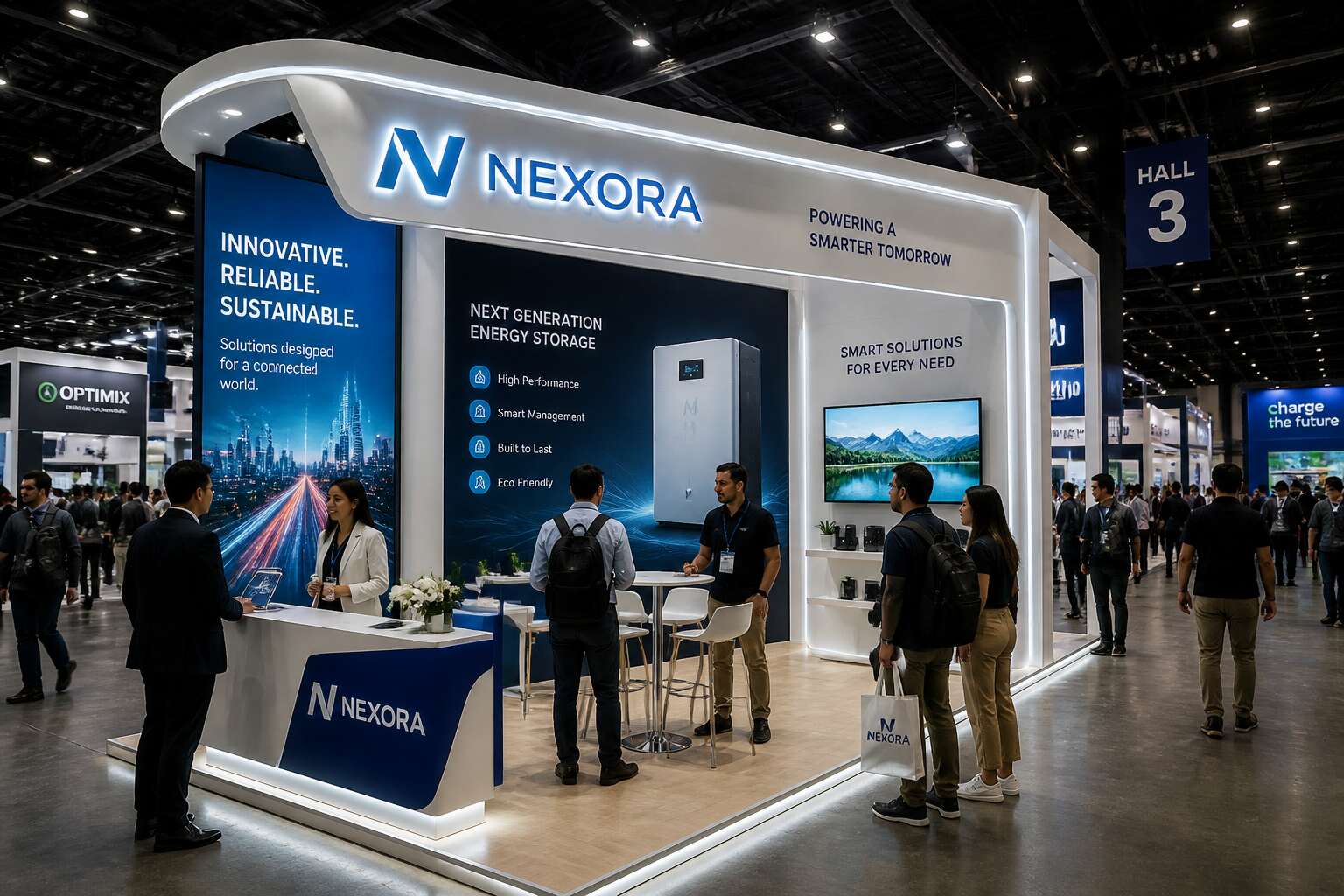
Understanding Exhibition Displays
Core Definition and Purpose
In the crowded halls of South African trade shows, capturing attention is the primary challenge. Understanding what is exhibition display starts with recognizing it as a strategic investment, not a simple expense. An exhibition display is a purpose-built environment designed to translate your brand identity into a physical, tangible experience.
The core purpose extends beyond mere visibility. It directs foot traffic, spotlights key offerings, and frames the conversation on your terms. A well-designed display engages potential clients immediately, prompting interaction and building a memorable brand experience. It often relies on specific elements:
- Visual hierarchy to emphasize flagship products.
- Interactive features to create memorable engagement.
- Strategic lighting to establish a distinct atmosphere.
These components work together to convert passive onlookers into active leads.
Evolution of Exhibition Displays
Walk into any major South African trade show today and you will see a landscape transformed. What is exhibition display in the modern era? It has evolved dramatically from the collapsible stands and printed banners of two decades ago. Those early setups were passive, waiting for visitors to stop rather than reaching out to draw them in.
The shift began with technology. Touchscreens replaced brochures. LED walls replaced fabric backdrops. But the deeper change was philosophical. Exhibitors realised that a display is not a backdrop; it is a performance space. Consider how far we have come:
- The move from product rows to narrative journeys.
- The integration of data capture tools that turn a handshake into a follow-up email.
- The use of sustainable materials for reusable structures.
These developments mean that what is exhibition display now serves as a direct extension of a brand’s promise, measured by the quality of conversations it sparks.
Key Terminology in the Exhibition Industry
The exhibition industry uses precise terms that define the practical side of any booth. In South Africa, “shell scheme” and “space-only” are two of the first you will hear. They determine what you can build and how much you will spend. Understanding “what is exhibition display” requires knowing these terms before you approach a supplier.
Here are the key terms most exhibitors need to master:
- Shell scheme: a framed booth package supplied by the venue.
- Space-only: a bare area with no walls, flooring, or furniture.
- Modular display: a reusable system of panels and frames.
Each term affects your logistics, budget, and design approach. An inline booth sits alongside others, while an island stand is visible from all sides. The phrase “what is exhibition display” becomes clearer once you understand these components.
Essential Components of an Exhibition Display
Modular Display Systems
A single exhibition hall can host over a thousand competing displays, yet the ones that succeed share a common anatomy. To understand what is exhibition display, examine its essential components. Every unit depends on a sturdy frame, often aluminium or steel, which supports the graphic panels. Graphic panels deliver the message, while integrated lighting illuminates textures and colours. Shelving and counters turn the space into a working environment.
The modular display system takes this further. It consists of interchangeable parts that allow rapid reconfiguration for different venues.
– Connecting hubs that join panels at various angles.
– Extrusion profiles that accept different accessories.
– Fabric or PVC tension covers for quick branding updates.
These components let exhibitors adapt without rebuilding from scratch. The result is a display that travels well and evolves with each campaign.
Graphics and Branding Elements
When professionals ask what is exhibition display, they rarely mean the aluminium frame. They mean the visual identity bolted to it. Graphic panels carry the actual message. They differentiate. They persuade. They tell a prospect whether you are a market leader or a stallholder with the cheapest print bundle.
Branding elements do specific jobs. From Sandton to Durban, recognition comes from a consistent visual system applied across every surface. The strongest displays combine these:
- A dominant brand panel that identifies you within three seconds.
- Product visuals showing real-world use, not studio glamour shots.
- Tone-of-voice snippets that give the company personality.
- Data callouts providing evidence without clutter.
Each element reinforces the others. Weak graphics with strong branding is still a failure. Strong graphics with weak branding is just noise. The answer to what is exhibition display: it is a communication system, and graphics are its language.
Lighting and Audiovisual Support
Lighting decides whether a display performs. A well-lit booth pulls attention across a crowded hall. Poor lighting makes even strong graphics appear flat, changing how visitors judge the brand. The answer to what is exhibition display includes this invisible layer, because illumination directs attention before a single word is read.
Audiovisual support adds motion and sound that static panels cannot deliver. A short product loop or a testimonial video creates a reason to stop. This does not mean surrounding the stand with screens. Use one or two moments, and watch how people stop!
The essential components that matter in practice:
- Adjustable spotlights for flexible product emphasis
- Background washes that separate the booth from the aisle
- Monitors positioned at eye level, not mounted overhead
- Clean audio that works in a noisy hall
Each choice must serve the message. Visitors remember the first seconds, so every element needs to support that window.
Interactive and Digital Touchpoints
Three seconds. That is roughly the window a visitor gives your stand before moving on. Interactive and digital touchpoints stretch that moment into a dialogue. The answer to what is exhibition display now includes the ability to respond instead of only presenting.
Touchscreens invite a deliberate pause. A virtual configurator lets a client build their own product variant. QR codes lead to spec sheets or behind the scenes footage. Motion sensors trigger content as someone approaches. In my experience, visitors often mention the uncanny sensation of a booth that anticipates them!
- Interactive product demos that put the equipment in the visitor’s hands
- Gesture or proximity driven digital walls
- Tabletop screens for one on one product exploration
Each touchpoint should reward curiosity. A screen that simply scrolls is signage. One that asks for input creates ownership over the experience. That shift changes how visitors remember the brand.
Furniture and Accessories
What is exhibition display without the furniture that shapes its physical reality? In South Africa, where trade shows are dense with competition, the objects you place determine how visitors feel. A lounge suite invites conversation. A tall counter signals authority. The arrangement of these pieces guides foot traffic and creates a lasting impression. I once saw exhibitors lose a deal because a chair faced away from the path.
Accessories complete the scene. Display cases offer secure viewing. Brochure holders keep materials tidy. Shelving systems organize products with precision. Each component must be sturdy and elegant, practical and evocative. A worn table edge suggests history. A crisp rack suggests newness. These details define the atmosphere of your brand.
Consider this essential furniture set:
- Freestanding reception counters for first contact
- Modular seating that encourages consultation
- Adjustable shelving for flexible product placement
- Lockable storage for valuable stock
When you ask what is exhibition display, the answer includes every tangible prop. A mismatched stool disrupts the flow. A well-chosen bench can define the entire experience.
Types of Exhibition Displays
Pop-Up Displays
Pop-up displays startle the eye because they are temporary. At a Johannesburg expo, these folding structures turn a six-metre gap into a branded threshold. Their truth lies in tension: fabric stretched over aluminium poles, held together by torque and time. One can assemble a pop-up in minutes, pack it into a carry bag, and reuse it endlessly. That explains their dominance at roadshows and regional exhibitions. They answer a private question beneath every exhibitor’s pitch: what is exhibition display if not a device for focusing attention into square meters? A simple pop-up costs less than a furnished office chair, yet yields a backdrop, header, and product ledge.
Banner Stands
Banner stands occupy a modest corner of the exhibition floor. Where pop-ups command a threshold, these slender structures present a single graphic on a roll. A spring mechanism, a telescopic pole, a weighted base. The engineering is simple. Yet the stand persists because it asks nothing of the exhibitor. Unzip the bag, pull the graphic, lock the pole. Fifteen seconds, and the message stands. In South Africa, these units survive rough transit from Cape Town to Durban, the dusty storerooms, the hastily arranged boardrooms.
What is exhibition display if not a way to reduce friction? The banner stand answers with economy. Two units can frame a registration desk. A row makes a false wall. They do not astonish. They endure.
Common configurations:
- Retractable units with cassette bases
- Telescopic poles that erect without a base
- Curved tension fabric frames
Each variant trades portability versus footprint, price versus durability.
Custom Modular Exhibits
Another benefit of custom modular exhibits is how they scale. A single unit works for a regional trade show in Durban; the same kit expands into a two storey configuration for a national event at Gallagher. This is a key reason why exhibitions are a cost effective marketing channel. The upfront investment yields reusable assets that maintain value across multiple campaigns. By designing for longevity and adaptability, you create a display that evolves with your business, not one that becomes obsolete after a single event.
Island Booths
An island booth leaves nowhere to hide. Freestanding and open on all four sides, it commands the centre of the exhibition floor. This is what is exhibition display at its most exposed. No back wall to retreat to, no corner to conceal a mistake. The design must hold up from every angle.
Island booths typically attract the highest foot traffic at any event, but that visibility comes at a cost:
- They demand consistent visual messaging across all elevations
- They require structural stability that can withstand open sightlines
- They need traffic flow that invites entry and exploration
The psychological weight is considerable. Attendees approach from every angle, so the narrative must begin before they reach the perimeter. Understanding what is exhibition display at this scale means accepting that every sightline is a potential entry point. That kind of exposure is the truest test of a brand’s identity!
Inline and Linear Displays
Inline displays are the most common format on the exhibition floor. They run in sequence along the aisles, each sharing a wall with its neighbour and showing only one face to the crowd. Where the island booth risks exposure, the linear display offers structure. The back wall anchors the composition while side walls frame the visitor’s approach.
What is exhibition display, in this arrangement, becomes a matter of frontal psychology. Attendees walk past with a sideways glance. The display has seconds to convert that glance into a pause. Every graphic, fixture, and light must work toward that conversion.
The linear format rewards discipline, balancing three elements:
- Visual weight at eye level, where attention settles
- A threshold that feels open, not guarded
- Storage concealed behind sightlines to keep the presentation clean
These displays outnumber every other format, so blending in is the default failure. Understanding what is exhibition display at this scale means recognising that the format demands distinction within repetition.
Benefits of Professional Exhibition Displays
Brand Visibility and Recognition
In the crowded aisles of any expo, what is exhibition display really about? It is the difference between a glance and a conversation. For South African brands, this distinction drives long term recognition. When your structure stands at eye level with clear hierarchy, it anchors your identity in the attendee’s memory.
Professional displays deliver measurable benefits for brand visibility:
- Higher foot traffic from strategic placement
- Consistent visual identity across all panels
- Immediate recognition from repeat customers
The result is compounded exposure! Each event builds on the last, creating a familiar visual anchor that audiences associate with credibility. Recognition grows because professionals invest in craftsmanship, not just decoration.
Lead Generation Opportunities
For many South African businesses, a show floor conversation is worth more than a thousand scanned badges. Effective lead generation opportunities begin when your display is designed around human interaction, not just aesthetics. A professional exhibition stand positions your team at the right height, at the right angle, and with the right messaging to turn a passing attendee into a qualified prospect.
A well-planned display supports lead capture in ways that feel effortless:
– It creates natural entry points for discussions.
– It directs attention toward product demos and sign-up stations.
– It integrates scan points and lead retrieval systems into the structure itself.
So, what is exhibition display in practical terms? It is a tool for starting conversations that continue after the event. When you invest in professional displays, you invest in a pipeline that delivers names, details, and follow-up appointments long after the hall empties.
Competitive Differentiation
Competitive differentiation rarely happens by accident. It happens when your exhibition display communicates something distinct about your brand. In a crowded hall, a thoughtfully designed stand becomes a focal point. It earns attention through clarity, not volume. Professional displays achieve this through precision. They align the physical space with your brand story, and they signal to serious buyers that you are a serious operation.
A well-executed stand offers specific advantages:
- It gives your team a comfortable, confident space to present.
- It draws the eye to your most persuasive product features.
- It communicates stability and attention to detail before a single word is spoken.
Each factor contributes to competitive differentiation. When attendees compare exhibitors, they compare these details. What is exhibition display? It is the tangible proof of your competitive claim.
Cost-Effectiveness and Reusability
The true cost of a display is not its purchase price, but its lifespan. Many exhibitors mistake the initial invoice for the entire expense. I have watched companies discard cheap stands after a single event, losing their outlay. A professional system defies this cycle. Its modular components accept new graphics without new structures. The amortization of quality build across multiple trade shows transforms a one-time cost into a strategic asset. This is what is exhibition display.
- Replacement parts are often standardized across the range.
- Reconfiguration costs are lower than full rebuilds.
- Storage and transport are engineered for repeated cycles.
This longevity is precisely what is exhibition display in the commercial sense. A reusable display provides a consistent brand presence for every Johannesburg expo. It pays for itself through repeated deployment. The initial investment becomes more palatable when measured against the return per square meter over three years. Call it financial discipline rather than a savings tactic!
Best Practices for Exhibition Display Design
Setting Clear Objectives
Setting clear objectives before a single panel is assembled keeps an exhibition display from becoming an expensive guess. For South African businesses, where travel and logistics costs consume a healthy slice of the budget, knowing precisely what the stand must achieve matters enormously.
Consider these objectives before anything else:
- Number of qualified conversations expected per day
- Specific products or services to showcase to the target audience
- Data capture targets for follow-up marketing efforts
Once these targets are set, every design decision, from traffic flow to staff positioning, follows logically. What is exhibition display without a purpose? Merely a decorated space. Objectives give the structure meaning and give your team permission to measure success with confidence.
Knowing Your Audience
A stand that ignores its visitors will not earn its keep. South African trade events draw varied crowds, from mining procurement managers to retail buyers, and each group moves through the hall differently. What is exhibition display without a clear picture of the people you expect to meet? The design must answer the questions those visitors carry into the hall.
The visitor’s frame of mind shapes the practical choices. A procurement specialist looks for specifications and lead times. A consumer buyer wants visual confirmation of quality. Know the audience profile before finalising traffic flow, product placement, and staff positioning. Review past show data, listen to your sales team’s notes, and study competitor stands to sharpen that profile.
Designing for Traffic Flow
Traffic flow is the practical layout of a stand, defining what is exhibition display in practice. Even bold graphics fail when a visitor stops, hesitates, and turns away. Best practice begins with entrance placement. Allow a clear sightline from the aisle into your product area. Then use spatial cues, such as floor patterns or fixture heights, to create a natural route.
Three principles govern effective layout:
- Map the main aisle traffic and position your opening toward the dominant flow.
- Arrange product zones so high-value items sit at the end of the path, pulling visitors deeper.
- Place staff stations away from the entrance, welcoming people before a pitch begins.
Understanding what is exhibition display means respecting this rhythm. A congested corner or a dead-end corridor breaks movement. Each square meter should carry a visitor forward. When flow works, people leave with clarity.
Balancing Visual Impact with Functionality
Balance defines every successful stand. Visual impact draws the eye, but functionality determines whether that attention converts into conversation. In practice, what is exhibition display if not the coordinated effort of both? A striking structure that blocks product access fails its purpose, just as a highly functional layout with dull aesthetics invites no one inside.
Consider the weight of materials and the pace of interaction. Heavy fixtures slow movement. Dense graphics overwhelm the senses. Functionality asks for restraint, while visual impact demands commitment to a clear idea.
Choose materials that withstand repeated assembly.
Place interactive elements where queues form naturally.
Use vertical space for branding, horizontal space for engagement.
The best displays earn attention, then hold it through ease of use. They are workable spaces, not ornaments.
Integrating Interactive Technology
Interactive technology adds a new layer to exhibition display, yet it demands restraint. When you ask what is exhibition display, the answer includes planned digital moments that move visitors toward conversation, not distraction. Screens work best at eye level for standing visitors, and seating allows for longer demos.
Load shedding is a reality in South Africa, so battery backups and low-power options keep the experience alive. Every touchpoint needs testing during setup, not at opening hour. The placement of interactive elements determines how naturally queues form, how long each engagement lasts, and whether first-time users pick up the interaction quickly.
Hardware must survive packing and transport. Rugged mounts and cable management that respects foot traffic are essential.
Measuring Performance and ROI
What is exhibition display if not an investment? Every square meter of custom modular exhibit costs something, so measuring performance becomes non-negotiable. Track leads captured against conversations started. Use QR codes or badge scans to link display elements to sales outcomes. Those numbers reveal which interactive touchpoints convert.
- Time per visitor at each display component
- Lead quality score from follow-up responses
- Cost per qualified lead after all expenses
ROI calculation demands more than revenue. Factor in setup hours, freight damage, and staff training. A booth that draws crowds but drains time offers questionable returns. In South Africa, load shedding disrupts power, so battery logs help assess whether low-power options held engagement. Performance data only matters when compared across events. Run the same metrics at every exhibition to spot trends.



0 Comments