The Growing Appeal of Live Exhibitions
The Social Connection of Shared Experiences
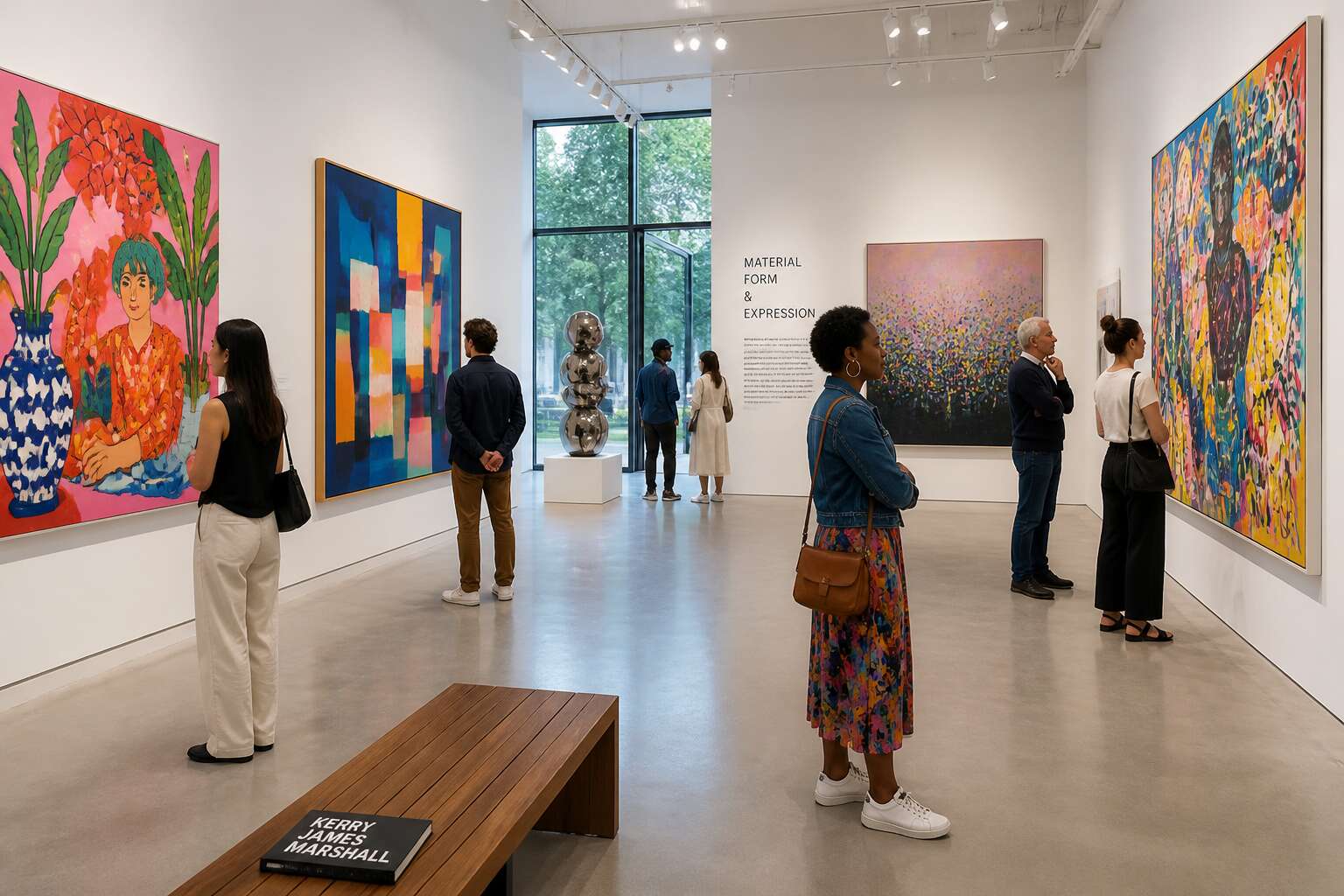
Humans crave the tangible buzz of an exhibit. We have moved past passive viewing. Visitors now seek a communal hum, a shared gasp at a striking piece. The exhibition today is a social organism.
A single artwork can draw a crowd, not for silence, but for chatter. Strangers exchange glances and remarks. They compare impressions. This unspoken dialogue creates a magnetic pull back to the physical space. Digital reproductions cannot replicate the electric charge of seeing something real, together.
For many, the highlight is the shared discovery with friends or family. Watching someone observe a piece changes your own perception.
There are distinct ways audiences interact within this live arena:
– The slow wanderer decodes every nuance.
– The quick scanner seeks a personal highlight to discuss later.
– The group coordinator often narrates or guides.
– The quiet observer listens to the ambient commentary.
This interplay forms the exhibition’s true atmosphere. The social connection of shared experiences transforms a simple visit into a memorable outing. People leave with a story woven from both the art and the human reactions surrounding it, a texture difficult to achieve alone with a screen.
The growing appeal of live exhibitions lies in this intangible social reward. We attend to see work, but we remember the feeling of seeing it alongside others. The energy is palpable. In a fragmented digital age, the simple act of standing shoulder to shoulder, debating a piece’s merit, feels refreshingly authentic. It affirms that some experiences are best enjoyed in company.
How Exhibitions Enrich Personal Knowledge
Walking through a gallery, I often notice how much I absorb from a single room. An exhibition today lets me examine original objects up close. The knowledge gained here is specific and present.
Curators arrange pieces to show connections across periods and styles. I trace a technique from its first use to its later form. This sequence deepens my understanding of history and production.
- Reading provenance notes reveals a work’s journey.
- Observing restoration details exposes preservation.
- Comparing neighboring works sharpens my judgment.
Each visit builds personal insight that no screen offers. The experience turns passive looking into active learning. Every step becomes a lesson in context.
Supporting Local Artists and Creators
One 2023 industry survey placed year on year attendance at local showcases at 18% growth in Gauteng alone. That demand is plain to anyone walking into a gallery. An exhibition today is a commercial statement as much as a cultural one.
This appeal rests on a tangible desire to see one’s neighbours succeed. Buyers want provenance traceable to a studio in Braamfontein or a workshop in Woodstock. I watch that preference play out every preview night. They favour the maker’s voice over imported names.
Consider what draws repeat visitors to these events:
- Direct access to artists and their working methods
- Original works priced with the local market in mind
- A chance to build a collection with identifiable roots
The result is a reciprocal economy. Audiences arrive curious, leave invested, and return with friends. An exhibition today rewards that loyalty with fresh work and honest conversation. It is an arrangement that benefits everyone involved.
The Economic Impact of Cultural Events
The growing appeal of live exhibitions is measured in footfall. A single opening night can fill nearby coffee shops and parking bays, which is the economic impact of cultural events in real time. One Cape Town survey recorded a 12% rise in local retail sales during a gallery run.
An exhibition today functions as a civic investment. It creates work for installers, security staff, and printers. It draws tourists who book meals and stays. The live format itself generates spending on transport and admission, a chain that keeps small venues alive.
- Venue hire and administration
- Transportation and parking fees
- Local hospitality and catering
Attendees pay for these extras because they value the physical encounter. They bring out-of-town friends. This is not passive consumption. It is a deliberate choice to participate in a local economy. Exhibition today rewards those who show up!
Diverse Formats of Exhibitions to Discover
Art Galleries and Museum Showcases
An exhibition today is no longer a passive walk through a silent hall. It has become a dynamic conversation between the artwork, the space, and the viewer. Walking into a well-curated gallery feels like stepping into a living ecosystem where every piece has a voice. The energy is tangible.
The formats themselves have shattered the confines of the traditional white cube. Consider the rise of site-specific installations, where a sculpture is born from its environment, or the immersive digital projections that wrap the walls in a cascade of moving light. These multi-sensory curations demand active engagement. They challenge the eye to look beyond the surface:
– Pop-up showcases in urban ruins
– Sound-based installations that remodel the acoustic space
– Kinetic pieces that shift with the crowd’s movement
– Interactive virtual galleries accessible from any corner of Cape Town
This evolution moves the observer from a spectator to a participant. The dialogue between the object and the audience becomes the core of the experience, ensuring that an exhibition today offers a genuine discovery for every sense. The curation is deliberate, guiding the flow without stifling the wonder.
Trade Shows and Industry-Specific Fairs
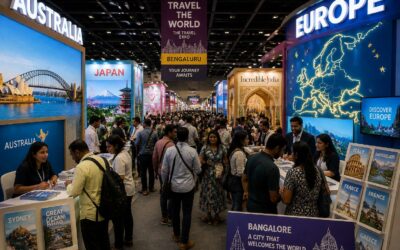
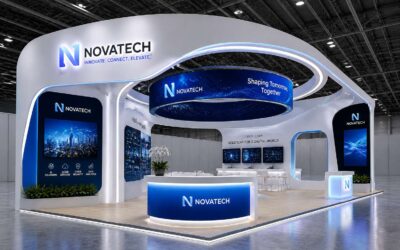
Trade shows and industry specific fairs operate as their own universe within the broader world of exhibition today. These events are not about passive viewing; they are about commercial discovery and professional connection. Here, a warehouse floor can transform into a miniature city of booths, each one a distilled representation of a brand’s capability. The atmosphere is charged with the specific hum of business, the exchange of contact details, and the tangible weight of product samples.
Walking through these densely packed aisles, one encounters the machinery and technologies that usually live behind the scenes. It is less about abstract inspiration and more about solving concrete problems. For the visitor, several formats stand out for their potential:
1. The annual large-scale expo that spans entire sectors, offering a broad landscape of suppliers and services.
2. The niche trade fair focused on a single vertical, such as mining, agriculture, or fintech, where the depth of expertise is staggering.
3. The invitation-only summit, designed for executives and decision-makers to hash out partnerships away from the public eye.
4. The international pavilion model, which groups regional exhibitors to showcase their national capabilities on a global stage.
Each event demands a different strategy and mode of engagement. In Johannesburg, the sheer scale of shows like NAMPO or SAITEX dictates a marathon pace, where planning a route is as crucial as the conversations you have. At such gatherings, I learned useful things about supply chains and procurement that no article could teach me. This is the raw, unpolished side of exhibition today, where the return on investment is measured in qualified leads and new contracts signed. For businesses, it is the most direct line to market intelligence and potential collaborators. The true value lies in the concentrated access, the ability to compare a dozen options within an hour, and the unexpected conversations that occur between scheduled meetings. These fairs remain a testament to the power of physical congregation for economic progress. Indeed, from the massive halls of the Cape Town International Convention Centre to specialised pavilions in Durban, these events form the backbone of the professional exhibition calendar. They are the workhorses of the industry, a distinct ecosystem where industry-specific context drives every display and demonstration. This is where the real energy lives.
Pop-Up Exhibitions in Unexpected Spaces
Pop-up exhibitions are the exhibition today’s answer to the question nobody asked: what if we put art in a space that leaks? In Johannesburg, empty office blocks and disused warehouses have become rotating galleries for a single weekend. You might find a sculpture in a former bank vault, or a video installation in a loading bay.
The appeal is scarcity. Once it is gone, it is gone. No permanent collection, no gift shop, just the experience.
Some examples worth chasing:
– A rooftop show in Maboneng with views over the city
– A basement exhibition in an old Durban textile factory
– A drive-through installation in a Cape Town parking garage
These spaces force a different kind of attention. The exhibition today thrives on this unpredictability, where the venue becomes part of the work itself.
Virtual Reality and Online Showcases
Immersive digital rooms now host exhibitions in ways that defy physical limits. Virtual reality places you inside the artwork itself. I recall a Durban showcase where a ghostly sea creature swam through the space, its movements tied to my own heartbeat. The experience felt intimate.
Online showcases extend the shelf life of any exhibition today. They let viewers return at their own pace, with no closing hour and no crowd. Some formats worth discovering:
- A VR tour of historical Cape Dutch interiors
- A web-based archive of protest art from the 1980s
- A live performance streamed from a remote Karoo farm
These diverse formats change the relationship between visitor and creator. The exhibition today exists wherever a signal reaches.
Your Guide to Finding Exhibitions Opening Today
Using Local Event Directories and Websites
Finding an exhibition today is less about luck and more about knowing where to look. Local event directories and official venue websites are the fastest route to accurate information. A quick online check beats a poster that has been patched over twice.
Start with these steps:
- Open the venue’s own calendar. It lists all confirmed shows.
- Visit your city’s tourism or cultural portal. These aggregate many events.
- Search social media for live updates. Artists often post last-minute details.
Each source has a strength. Venue sites are reliable. Portals cover broader ground. Social media catches what gets missed. Combine them, and you will rarely face a closed door. The next show you attend might come from a simple search you did over morning coffee.
Leveraging Social Media Hashtags and Geotags
A single geotag tells you more than a hundred posters. In Johannesburg, where opening dates shift with little notice, most news travels through social media. A hashtag such as JoburgArt collects dozens of posts from galleries, artists, and visitors. Scrolling through it gives you a current view of what is happening. Geotags are even more precise. They show you where the crowd has gathered, often before the official announcement.
The most useful posts are rarely the polished ones. A photograph of a ladder leaning against a freshly painted wall, or a caption reading “setting up tonight,” carries more weight than any press release. When the venue itself stays silent, these fragments fill the gap. For anyone hoping to see an exhibition today, the proof is often in the piles of packing foam and the smell of fresh paint.
Checking Museum and Gallery Schedules
Most galleries post their schedules late, and the printed guide often lies. Last month, one Parktown venue listed a show as closing, yet the doors stayed open for two weeks. To find an exhibition today, consult the museum’s own webpage first, then confirm by phone if the date seems doubtful.
Some institutions update their calendars only on the first of the month. Others, especially the smaller ones, rely on chalkboards and hand-written notes at the entrance. A quick method involves three checks:
- Review the venue’s online calendar for last-minute changes.
- Call the front desk and ask for the day’s programme.
- Look for a printed flyer near the ticket counter.
That final step often reveals private previews that never appear online. For anyone chasing a specific piece, the schedule on the wall remains the truest source. Arrive before noon, because afternoon shifts sometimes alter opening hours.
Mobile Apps for Real-Time Exhibition Updates
Galleries move fast. An exhibition today might close by tomorrow, with no notice. To find an exhibition today, mobile apps are the essential tool. Services like ArtFinder and the official app of the Norval Foundation stream live updates from multiple venues. They send alerts when a show extends, cancels, or opens early. The most useful ones include three features:
- Push notifications for venues you follow.
- A daily tab listing all current and opening shows.
- Visitor reports confirming what the venue posted.
These apps aggregate information that museums post inconsistently. In Durban, a local gallery often announces same day openings exclusively through its app. My own experience confirms this. I arrived at one exhibition ten minutes before closing because the app had flagged a late opening. The printed schedule lied. The app told the truth. For anyone hunting a specific artist, the mobile feed is the only dependable calendar.
Word of Mouth and Community Bulletins
Word of mouth moves faster than any server. A voicenote from a friend, a mention in a taxi queue, a poster taped to a lamppost: these channels reveal an exhibition today when digital schedules fall silent. Community bulletins, from church newsletters to corner store windows, remain essential to local art awareness. They lack polish, yet carry a different kind of trust.
In my practice, I check the notice board at the neighbourhood bakery before trusting any online listing. One Saturday, a hand written card announced an exhibition today in a converted warehouse two streets away. No website, no hashtag. The printed word had already gathered a small crowd. That is human networks at work!
- Ask local artists where they pin their calls.
- Check community halls and municipal offices.
- Follow the flyers from shop windows to taxi ranks.
They do not aggregate, but they remember. The word comes from a neighbour.
Maximizing Your Experience at an Exhibition
Planning Your Route and Prioritizing Highlights
Stepping into a crowded space, I watch many visitors drift without direction. That is why planning your route matters. This exhibition presents hundreds of works, and your stamina is finite.
Begin by locating the floor plan near the entrance. Circle three pieces that you cannot miss. Then prioritize by urgency. Temporary exhibits often close earlier than permanent collections, so schedule those first. A simple sequence works:
- Visit limited-time installations immediately.
- Tour the permanent galleries in order.
- Return to favorites during quieter late hours.
This approach prevents frustration. I have learned that the exhibition today rewards those who balance structure with spontaneity. A thoughtful path lets you discover hidden gems without losing sight of the highlights.
Photography Tips Without Disrupting Others
Flash photography can flatten the texture of a painting and break the concentration of those nearby. I have seen visitors wince as a burst of light bounced off a display case. The exhibition today rewards restraint. Turn off your flash before entering the hall, use the ambient lighting, and let the camera work with what is already there.
Some venues ban tripods and selfie sticks. These tools create tripping hazards and narrow the walkways. Read the house rules before you set up.
– Keep a respectful distance from each work.
– Avoid stopping in doorways while you frame a shot.
– Mute the camera clicks and notification sounds.
The strongest photographs come from waiting. Observe how the crowd shifts, find the opening, and capture it quickly. Patience protects the art and preserves the experience for everyone else.
Balancing Time Between Works and Rest Areas
Pacing is the quiet skill of any good exhibition today. I watched a visitor rush through the Johannesburg art fair last month, spending less than ten seconds before each canvas. They left looking more tired than when they arrived. The experience is not a race. Your legs will remind you of this within the first hour.
Your energy is a finite resource. Spend it wisely by moving between the dense, cerebral works and the open, airy corridors. The bench in the middle of the hall is not a sign of weakness. It is a tool for processing what you have just seen. Use it to let the colours settle in your memory.
Consider your physical needs as part of the plan. Your feet will ache, your focus will wane, and the art will blur together if you ignore your body.
– Stand back from the paintings for a clearer perspective.
– Give the sculptures a wide berth.
– Choose one or two rooms to linger in rather than all ten.
The crowd thins out in the late afternoon. This is the best time for quiet contemplation. You might find that the smaller pieces, the ones you skimmed past earlier, hold the most meaning when you return to them. That is the real reward of managing your pace. A museum visit is a negotiation between your curiosity and your stamina. When you strike that balance, the exhibition today becomes a conversation rather than a checklist.
Bringing Along Friends or Going Solo
Choosing between a solo visit and a group visit changes how you remember an exhibition today. A companion shifts your attention; they draw your eye to details you would have skipped, and they slow you down when your patience thins. The problem is a group of more than three becomes a democratic committee. Each person’s interests pull in different directions, and the art becomes background noise.
A solo route is a direct line between you and the artist. You can walk past a canvas, return to it twice, and leave without consulting anyone. The silence does not mean isolation; it gives you room to sort out what matters.
Visitors find that structured compromise works best. They begin together, peel off at the first room, and regroup in the cafe to compare notes. Others prefer a loner method. Both ways require knowing your temperament before the ticket is bought.
The Future of Exhibitions in a Digital Age
Hybrid Exhibitions Blending Physical and Virtual
According to the International Association of Exhibition Organizers, 78% of trade shows now offer remote attendance. In South Africa, this changes what an exhibition today must deliver. A Cape Town showroom can reach Durban buyers if the digital side offers real time interaction.
Hybrid exhibitions merge a tactile showroom with an online portal. Visitors touch products in Pretoria while online guests follow a guided tour through live video. The two formats support each other; they do not compete. This arrangement requires reliable bandwidth and skilled moderators, both scarce in some areas.
- live chat with booth staff
- on demand replays of talks
- digital product catalogues
Organisers now measure engagement instead of door counts. I have watched hybrid events fail because the digital side was ignored. The exhibition today rewards adaptability. A hybrid future will depend on local infrastructure and creative scheduling, not on replicating the physical event online.
The Rise of Augmented Reality in Art Spaces
Augmented reality quietly reshapes the art space, and an exhibition today carries a digital layer beyond the canvas. In Johannesburg galleries, visitors point phones at a sculpture to see its conceptual sketches float above. That interplay feels less like gimmickry, more like actual engagement.
The future depends on accessibility. A Cape Town artist can project work into a Durban venue without shipping a crate. AR costs less than freight, and it expands who participates.
- layered audio guides for exhibits
- real time overlays on static pieces
- virtual restoration previews
I have seen a small museum double its foot traffic through a simple AR scavenger hunt. Such tools reward curiosity over attendance. Digital layers will not replace the physical room, but they will deepen what the room offers.
Data-Driven Personalization of Exhibition Tours
Data analytics now shape how visitors move through galleries. In Cape Town, a museum can log which artworks hold attention for ninety seconds versus nine, then feed that insight into a suggested route. This is not surveillance; it is a way to reduce choice fatigue.
Personalized tours might consider:
- dwell time per piece
- audio guide pauses
- time of day and crowd density
Such signals let an exhibition today adapt its narrative on the fly. A visitor drawn to protest art might receive follow-up context, while another with a taste for landscapes gets quieter exits. The result is a coauthored experience, shaped by behavior rather than a floor plan.
Sustainability and Eco-Friendly Exhibition Design
Exhibition today requires a new kind of efficiency. In my work across South African venues, I have seen circular design take hold. Every panel and plinth gets reused. One gallery reported a 40 percent drop in waste after overhauling its builds.
Digital tools reduce paper use, but sustainability goes deeper. Motion sensors control lighting. Water-based finishes replace solvents. These measures keep exhibitions comfortable while lowering energy demand.
For a greener future, consider these practices:
- Modular flooring systems
- Borrowed or rented furniture
- Local material sourcing
An exhibition today can prove that environmental stewardship and creative display work in harmony. The result is a space that respects both the art and the planet.


0 Comments