Defining Exhibitions
What Qualifies as an Exhibition
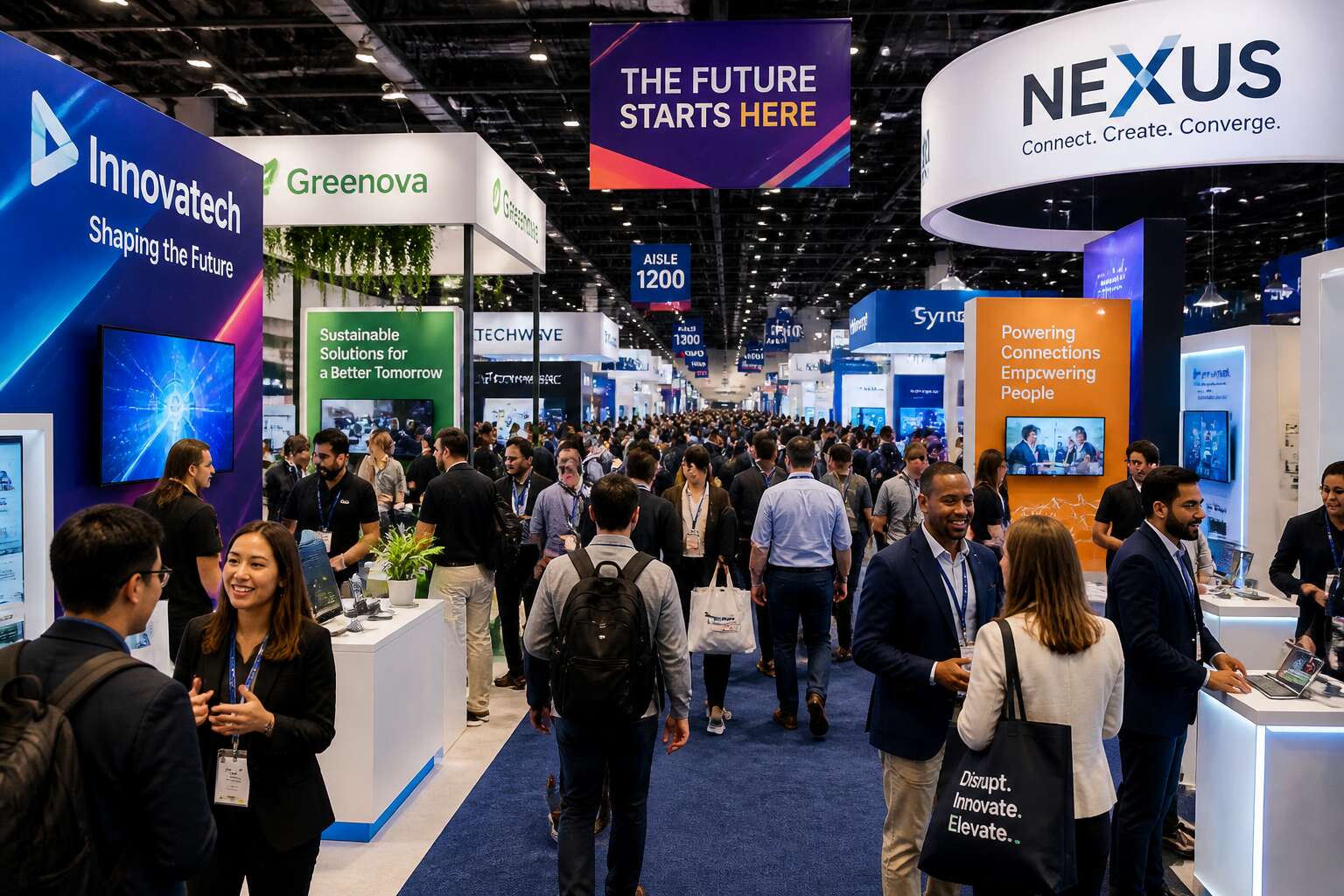
At the 2023 Rand Show, visitors paid to see tractors and livestock. That event passed as an exhibition by most definitions, yet it felt closer to a carnival. I have wandered enough halls to know the difference. An exhibition is a curated assembly of objects or information, arranged with purpose and presented for public engagement. The curatorial intent is what separates it from a random store display.
Three features typically qualify something as an exhibition:
- A deliberate selection process, often guided by a theme or argument.
- A spatial arrangement that directs movement and attention.
- An interpretive layer, such as labels, guides, or interactive elements.
This framework clarifies the exhibition or fairs meaning. A fair prioritises commerce and transaction, while an exhibition prioritises communication and reflection. The overlap confuses many, but the distinction holds.
Primary Objectives and Benefits
The average visitor spends seven seconds at a stand. That is less time than choosing a sandwich filling. So why bother with exhibitions at all? Because the primary objectives run deeper than handing out branded trinkets. The exhibition or fairs meaning hinges on intent: a fair transacts, an exhibition communicates. Goals include sparking curiosity, shifting perceptions, and building a stockpile of trust.
- A concentrated audience actively seeking solutions.
- Immediate feedback from the very people you hope to serve.
- A chance to test messaging without social media’s distortion.
These benefits justify the expense. South African trade shows, from the Rand Show to Decorex, demonstrate that face to face contact still converts sceptics. Once you grasp this distinction, you stop chasing carnival energy and start crafting moments of real exchange.
Common Exhibition Formats and Venues
Defining exhibitions starts with location. Stand at the entrance of the Cape Town International Convention Centre during Design Week and you will witness the exhibition or fairs meaning shift from spectacle to strategy. Venues shape what is possible. A gallery demands contemplation. A convention hall invites commerce. An industrial warehouse forces raw engagement.
Formats multiply as fast as industries demand them:
- Trade shows such as Propak Africa, built for supply chain buyers
- Public expos like the Rand Show, geared toward family audiences
- Specialist fairs where curators and collectors negotiate quietly
Every venue alters the event. Sandton’s glass towers create a corporate rhythm. The Gallagher Convention Centre supports heavy machinery displays. When organisers grasp this, they stop booking generic halls and start selecting spaces that amplify their message. The exhibition or fairs meaning is not static. It shifts with every room you enter.
Key Stakeholders and Participants
Walk any floor at the Ticketpro Dome and you will see that the exhibition or fairs meaning depends on who is in the room. Organisers set the rules, but exhibitors bring the substance. Visitors provide the energy. Sponsors pay for the polish.
Each group has a different stake. A procurement manager from Johannesburg wants supplier contacts. A start-up founder wants media attention. A casual attendee wants something to do on a Saturday. When these interests align, the event works.
- Exhibitors rent space and measure success in leads
- Visitors trade their time for discovery
- Organisers broker the entire exchange
Without balanced participants, you have a room, not a show.
Understanding Fairs
Core Characteristics of a Fair
A fair is a recurring gathering of people and goods, often tied to harvest cycles or religious festivals. Unlike a formal exhibition, a fair thrives on open participation and sensory appeal. The exhibition or fairs meaning shifts here because fairs prioritize community exchange over corporate display. In South Africa, traditional fairs blend livestock judging with craft stalls and carousel rides, creating a space where trade and celebration happen together. Key characteristics include:
- A fixed or traditional location that sometimes evolves into permanent grounds.
- A contractual or cultural rhythm, returning annually or seasonally.
- An emphasis on direct transactions rather than lead generation.
These traits make fairs distinct from their curated counterparts, even when both operate as public events.
Historical Roots and Cultural Significance
Fairs have existed for centuries as places where people gather to exchange goods, stories, and traditions. Historians trace their origins to medieval trade routes and seasonal gatherings that brought distant communities together. These events created a shared space where commerce met celebration, and where news and merchandise moved side by side.
In South Africa, the cultural significance of fairs runs deep. Communities use them to mark the passing of seasons and to honour heritage through food, music, and craft. The exhibition or fairs meaning expands here, because fairs carry the memory of local identity in ways that formal exhibitions often do not.
- They connect rural and urban populations through shared rituals.
- They sustain informal economies that operate outside formal markets.
Understanding these roots explains why fairs endure despite the rise of digital marketplaces.
Popular Varieties of Fairs
What makes a fair different from a shopping mall? It is the conviviality itself, the shared experience of moving between stalls with strangers. The exhibition or fairs meaning goes beyond transactions. Fairs create temporary communities where people chat, compare goods, and celebrate the act of showing up.
Understanding fairs requires seeing their shapes. I have always found that variety defines them!
- Agricultural shows, like the Rand Show, highlight rural production.
- Traveling carnivals bring rides and games to smaller towns.
- Cultural fairs celebrate language, music, and traditional crafts.
Each type reshapes the core experience, but all rely on face-to-face interaction.
Distinguishing Exhibitions from Fairs
Scope and Scale Differences
According to the Exhibition Association of Southern Africa, the median exhibition floor space is 2,500 square metres, a mere fraction of the 40 hectares that the Rand Show commands. This gap in physical scale defines the exhibition or fairs meaning in practical terms.
Scope reinforces the contrast. Exhibitions pursue depth, zeroing in on one sector, such as renewable energy or fine art, and attract specialists. Fairs chase breadth, weaving together livestock, food stalls, carnival rides, and retail opportunities for a general audience. Their scale demands more land, longer hours, and a broader logistical footprint.
- Exhibitions: targeted, often indoors, lasting two to four days.
- Fairs: sprawling, seasonal, frequently outdoors, running for a week or more.
This distinction matters for visitors and organisers alike. A networking event thrives in an exhibition hall; a family outing belongs at a fair. Recognising these differences prevents wasted budgets and mismatched expectations.
Commercial vs. Community Orientation
Here’s the real tell in the exhibition or fairs meaning: money versus belonging. An exhibition is a commercial bazaar where business cards are the currency. A fair is a communal shindig where the currency is goodwill and a questionable vetkoek.
Take a livestock fair in the Free State. Farmers aren’t there to sign procurement contracts. They’re there to see neighbours, compare bulls, and buy a school fundraiser raffle ticket. The commercial element exists, but it answers to community spirit.
- Exhibition: buyer meets seller, transactions dominate.
- Fair: resident meets resident, relationships dominate.
Both exchange value, but one sharpens the bottom line while the other oils the social gears.
Audience Profiles and Engagement Styles
At an exhibition, the audience moves with intention. Visitors arrive as procurement managers, engineers, and distributors who measure success in leads captured and contracts signed. They engage through product demonstrations, specification sheets, and scheduled follow-ups. At a fair, the crowd is neighbours, church groups, and families with sticky-fingered children. Engagement is unhurried. A grandmother inspects handmade preserves while a toddler chases pigeons. The body language alone reveals the exhibition or fairs meaning.
The typical interactions differ:
– At an exhibition: firm handshake, business card exchanged, conversation logged.
– At a fair: shared laughter, a story repeated, a promise to visit another’s stall.
One audience hunts for solutions. The other hunts for belonging. I have watched a jam maker at a fair spend twenty minutes with a stranger discussing apricot varieties. That conversation never happens in an exhibition hall.
Duration and Frequency Patterns
Time reveals the exhibition or fairs meaning more sharply than any mission statement. An exhibition is a compressed event, a three day burst of calculated intensity where every hour carries a cost. The floor plan is packed, the schedule is relentless, and the temporary walls come down as quickly as they went up. A fair, by contrast, unfolds with the patience of a harvest moon. Many community fairs run for a full week or stretch across several weekends, allowing the local rhythm to dictate the pace rather than a corporate calendar.
This divergence in duration also shapes the frequency of these gatherings. Trade exhibitions often follow an annual or biennial cycle, timed to product launches and industry procurement budgets. A fair, however, might return with the seasons, tied to a specific saint’s day, a planting calendar, or the simple rhythm of a town’s social heartbeat. Consider the common patterns:
– Annual industry expositions that move between host cities.
– Biannual shows for seasonal buying cycles, such as spring and autumn.
– Monthly or quarterly flea markets that operate as permanent community fixtures.
The ephemeral nature of an exhibition forces urgency into every conversation. The long, recurring life of a fair allows relationships to develop at the speed of trust, not the speed of a lead sheet. One is a sprint with a finishing line; the other is a recurring ritual where the clock is a suggestion, not a master. This temporal fingerprint is a core part of the exhibition or fairs meaning, distinguishing a business transaction from a communal tradition.
Overlapping Hybrid Events
The line between exhibition and fair blurs most often in the hybrid events that populate the South African calendar. Consider the annual agricultural show. It carries the machinery and livestock of a traditional fair, yet it also houses a sales floor where vendors negotiate bulk deals on equipment. That dual nature defines the exhibition or fairs meaning in a practical sense. These gatherings do not fit a single label.
They operate on a spectrum. The primary purpose is the deciding factor, not the venue. A town’s spring festival may host dozens of craft stalls, but if it exists to celebrate community heritage, it remains a fair. Conversely, a trade expo that adds a public day with food trucks does not lose its commercial identity.
Some common hybrid patterns include:
– Industry expos that open their doors to the public for the final day.
– Farmers’ markets that occasionally host product demonstrations and B2B meetups.
– Charity galas with exhibition halls that still auction off local goods.
These events borrow the urgency of an exhibition and merge it with the warmth of a fair. They are chimeras, and they work. The visitor gets the spectacle, the exhibitor gets the lead, and the community gets a story to tell. In these spaces, the exhibition or fairs meaning becomes a matter of emphasis, not definition. The calendar and the catalogue matter less than the connection. A strict taxonomy is impossible. I know, because I have walked the same dusty field where a farmer sold cattle and a software firm pitched a tracking app, each satisfied with their transaction.
The Economic and Social Impact
Driving Business Growth and Lead Generation
South Africa’s exhibition halls generate R12 billion in direct spending yearly, but the real value lies in the wider economic benefit. A successful visitor leaves with new contracts, supplier relationships, and market intelligence. This is where the exhibition or fairs meaning becomes a strategic investment.
The social dimension runs parallel. Attendees share problems, pilot solutions, and build trust through conversation. That trust accelerates decision making, which shortens sales cycles and boosts lead quality! For exhibitors, this lowers acquisition costs. For host cities, it drives hotel bookings and employment. I have seen small vendors double their client base by showing up year after year.
Measurable outcomes include:
- Direct revenue from booth fees and sponsorships
- Indirect growth in local service industries
- Shared knowledge that reduces R&D duplication
These factors compound into a long term growth engine for businesses and communities.
Networking Opportunities and Industry Collaboration
The exhibition or fairs meaning emerges through direct encounters that reshape business capacity. A Johannesburg apparel maker once told me that attending one event replaced three months of cold outreach. Her new supplier relationship began at a shared coffee station. Economic impact flows from these moments, independent of entrance fees. Restaurants, parking operators, and audio visual teams all benefit. Social impact appears as trust between strangers who discover common constraints. Networking opportunities at these events often produce specific solutions. Two engineering firms might combine tooling for a municipal tender. Industry collaboration requires this face to face context, and it yields measurable effects:
- Contracts signed after conversations lasting minutes
- Shared logistics that cut delivery costs
- Joint prototypes that reach market sooner
The measurable returns appear in contracts and reduced research costs. I have watched small vendors test prototypes with potential users on the floor. That feedback shortens development cycles. The exhibition or fairs meaning also covers long term community building. Recurring attendance creates a professional circle where problems are shared openly. The local economy gains from faster decision making.
Cultural Preservation and Community Building
The exhibition or fairs meaning extends beyond financial transactions. It reaches into cultural preservation. In rural KwaZulu-Natal, beadworkers use fair stalls to pass patterns between generations. An elder demonstrates weaving while a granddaughter records prices on a phone. The transaction is economic, but the transfer is ancestral.
Community building follows a similar pattern. Recurring fairs anchor local calendars, giving residents a shared reference point. The social impact appears in quieter places: a church group fundraising at a food stall, a school displaying learner art next to commercial booths.
Cultural preservation through these events produces tangible outcomes:
– Oral histories recorded at community booths
– Craft techniques documented through sales demonstrations
– Indigenous languages used in signage and trade
The exhibition or fairs meaning, then, is also a repository. It holds what communities choose to keep.
Making the Most of Your Visit or Participation
Pre-Event Planning and Strategy
An exhibition floor is no place for improvisation. The sheer scale of stalls, demonstrations, and free knick-knacks can derail even the sharpest visitor. To grasp the exhibition or fairs meaning correctly, you need a strategy before you pass through the gates. Setting clear objectives is the first move. Are you chasing a specific supplier, or scouting the competition? That answer determines your entire route.
Pre-event planning also demands an honest audit of your own weaknesses. Attendees who skip breakfast or wear new shoes are classic victims of poor preparation. Exhibitors, meanwhile, must choose booth staff for their conversational dexterity, not just their availability. Veterans know that the most productive interactions happen when you have studied the floor plan and marked your targets. The exhibition or fairs meaning only becomes clear once the homework is done.
Engagement Tactics for Attendees
When you finally step onto the floor, the true test begins, and the static floor plan transforms into a living organism. The exhibition or fairs meaning shifts from a concept to a sensory experience, driven by motion and chance encounters. I have found that the most successful attendees move with intent, using their pre-marked map as a compass but allowing room for serendipity. Your physical presence is a signal; stand tall, make eye contact, and approach booths with a specific question ready. This instantly separates you from the casual browsers and prompts exhibitors to engage with you on a substantive level. I always watch the staff, not just the products, as the people are the ones who reveal the true company culture.
Engagement is a two-way street, and silence is a wasted opportunity. Instead of nodding along to a rehearsed pitch, interject with your own analysis of the market’s current friction points. The magic often happens in the periphery, so keep your senses open to the subtle cues around you. As you move, pay attention to the rhythm of the conversations you have.
– Position yourself near high-traffic aisles to observe interaction patterns.
– Ask exhibitors about their biggest industry challenges, not just their product specs.
– Use downtime at your own booth to scout the competition’s promotional tactics.
For anyone local to Johannesburg or Cape Town, the rhythm of these events carries a distinct energy that demands a similar energetic response. A simple, direct conversation can unlock far more than a hundred collected brochures. The exhibition or fairs meaning is ultimately defined by the quality of the contact you make, not the quantity of your swag bag.
Best Practices for Exhibitors and Vendors
The exhibition or fairs meaning for exhibitors is often mistaken for a sales sprint. I have seen booths with flashy graphics and zero follow through. The businesses that thrive treat every interaction as a small exchange of trust.
Strong exhibitor teams listen before they pitch. They ask about the visitor’s specific context, avoiding the usual job title small talk. A quiet booth can outperform a loud one when staff focus on understanding problems rather than reciting features.
- Staff rotation prevents tired conversations from killing leads.
- Visible note taking signals genuine interest to visitors.
Post event, the winning vendors send tailored messages within two days. That habit cements the exhibition or fairs meaning as a relationship builder, not a business card collector.
Post-Event Follow-Up and Measurement
After the halls empty and the banners come down, the actual work begins. I have watched exhibitors lose momentum at this juncture, treating the close of the event as a stopping point. Measurement does not require dashboards. It requires honesty.
The exhibition or fairs meaning becomes clear when you track what changed after the doors closed. Did conversations turn into appointments? Did samples become orders? Count the responses to your follow up messages, not just the handshakes.
- Log every lead with context within 24 hours.
- Send tailored follow ups within two days.
- Review which booth conversations produced actual revenue.
Without this discipline, the exhibition or fairs meaning collapses into a vague memory of a busy day. South African businesses, from Johannesburg to Cape Town, often skip this step. They miss the signals found in unanswered emails and silent phone lines.



0 Comments