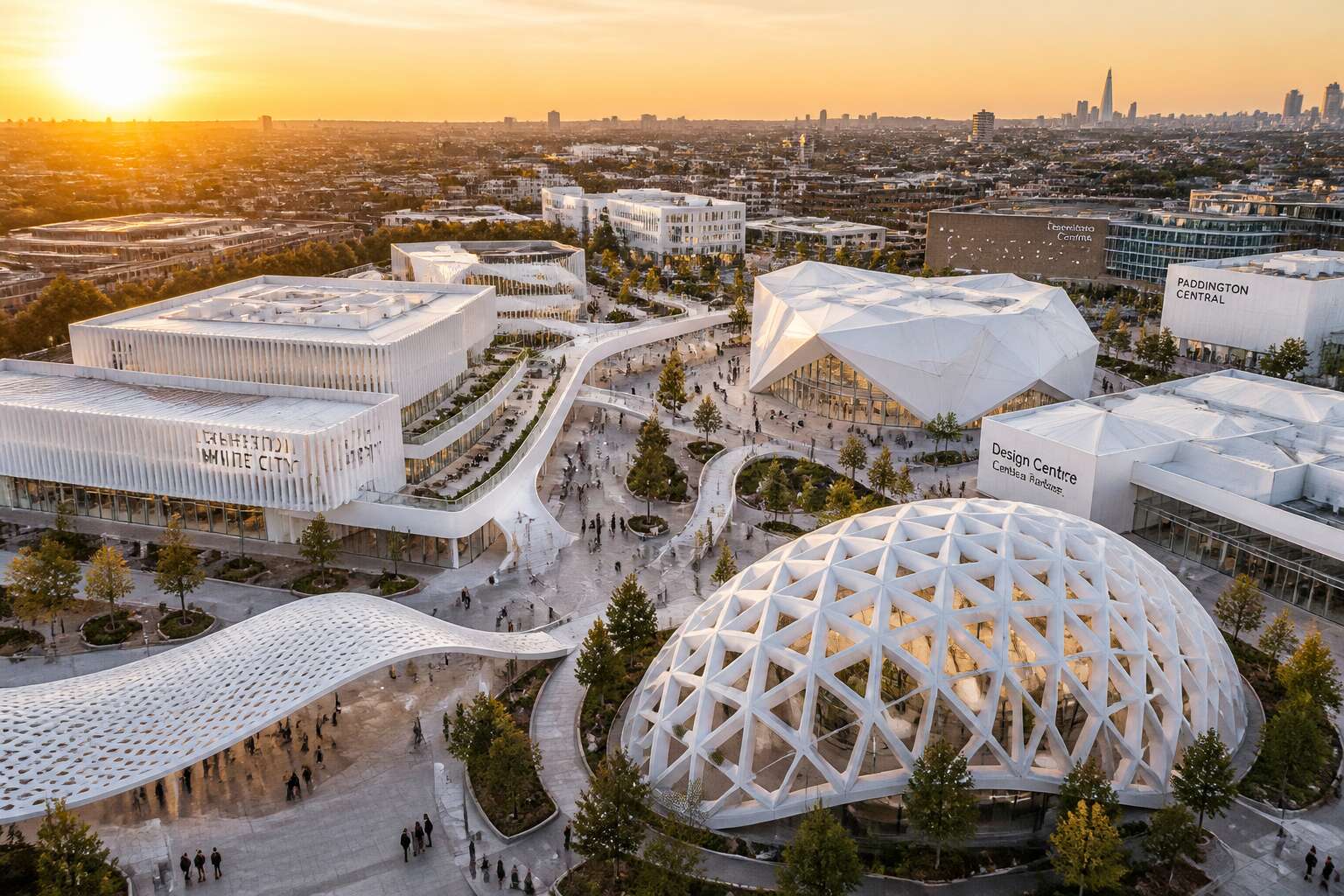
Unveiling the Legacy of White City
The Origins of White City: From Vision to Reality
Few spaces carry an origin story as complex as the exhibition white city. Its foundations trace back to a single vision: transform open land into a venue for global discovery. Architects and planners moved with quiet urgency, erecting pavilions that seemed to rise overnight. The result was a landscape of gleaming facades and winding promenades, designed to impress.
What made this place remarkable was the deliberate interplay of scale and detail. Vast halls catered to thousands, while intricate ornamentation rewarded closer inspection. The site’s success rested on choices made before construction began.
– Rail connections determined the plot’s selection.
– Utility lines were laid beneath the soil first.
– Timelines compressed from years into months.
What strikes me most is how those decisions shaped crowd flow, exhibit placement, and the district’s energy. The exhibition white city legacy remains visible today in architectural echoes and urban planning practices across South Africa.
A Timeline of Transformation Through the Decades
Over seven decades, the exhibition white city has been rebuilt, rezoned, and reimagined at least three times. By the 1960s, it had begun replacing its temporary structures. Permanent buildings took the place of canvas and timber. The transformation accelerated in the 1980s when municipal planners rezoned surrounding blocks for mixed use. New architecture layered onto old footprints.
Decade by decade, the district accumulated distinct identities:
- The 1970s brought reinforced concrete pavilions and wider boulevards.
- The 1990s introduced heritage protections and adaptive reuse projects.
- The 2000s shifted focus to pedestrian connectivity and public art.
Each phase altered the district. The exhibition white city today contains visible traces of every era, a physical record of economic pressures and civic ambitions. Where original exhibition halls once stood, there are now offices, galleries, and residential blocks. That layering is the legacy, and it rewards careful attention!
The 1908 Franco-British Exhibition and Its Global Impact
In 140 days, the 1908 Franco-British Exhibition attracted more than eight million visitors! This exhibition white city was a physical manifestation of the Entente Cordiale, its 140 acres of white pavilions rising from Shepherd’s Bush. The global impact extended beyond attendance.
French and British exhibitors showcased innovations that altered daily life. The first public escalator in England carried riders through the Machinery Hall. Colonial pavilions introduced audiences to goods from across the empire, while trade agreements brokered on site influenced diplomatic relations for years. This exhibition white city legacy extended into subsequent international fairs.
Three legacies stand out:
- The 1908 Olympic Games, held at the purpose-built White City Stadium, anchored modern sport in London.
- Exhibits relocated to museums seeded permanent institutional collections.
- Fire safety and lighting standards adopted here became global benchmarks.
How White City Became a Cultural Landmark in London
Today, the exhibition white city lives on not as a fairground but as a name etched into London’s geography. The vast plaster facades are long gone, yet their imprint persists in the streets, the station, and the memory of a place that once shimmered with electric light.
When the fences came down, the site did not sleep. The stadium that hosted Olympians later roared with greyhound races and motorcycle speedway. Then came the BBC, which turned these grounds into a hub of broadcasting for decades. That transition cemented the area’s reputation as a cultural landmark.
- The White City estate emerged from the exhibition white city’s footprint.
- Television studios and production offices rose where pavilions once stood.
Walking through White City today, you feel the layers. The exhibition white city was ephemeral, but its legacy is carved into the city’s everyday rhythm.
Architectural Wonders and Design Highlights
Iconic Structures That Defined the Exhibition Grounds
Few visitors knew that the white facades around the exhibition white city were plaster and lath, a mimicry of quarried stone that justified the nickname. The 1908 Stadium formed the centrepiece, a double tiered structure of iron and concrete that seated 68,000 spectators and hosted the Olympics; its outer wall remains today.
Architects arranged the site as a deliberate sequence. Four miles of colonnades connected pavilions from Canada, France, and India, each crowned with distinct towers. Two engineering details deserve notice:
- Concealed water tanks, housed inside ornamental turrets, supplied 500,000 gallons to the fountains.
- Two hundred arc lamps on lattice masts let evening sessions continue in the central court.
These mechanisms made the exhibition white city feel authoritative and durable. The site’s geometry of avenues and courts influenced later British fairgrounds, and the concrete foundations were reused for the 1960s television studios. A visitor from 1910 would recognise little, but the street lines remain identical!
The Great Stadium: A Marvel of Engineering
With a capacity that exceeded every other British arena, the Great Stadium at exhibition white city was a structural gamble. Its iron and concrete frame rose in ten months, a speed modern engineers still find remarkable. The double tier arrangement kept all 68,000 seats close to the track, an unusual feat before computer modelling. Some details matter more than others:
- Twelve steel trusses spanned the arena, each weighing more than a locomotive.
- The running track used crushed brick and clay, a blend chosen for drainage.
Every bolt served a function. The preserved outer wall was never load bearing; it worked as a decorative screen. That honest structure beneath the ornament captures the exhibition white city approach: utility and theatre!
Materials, Styles, and Innovations of the Era
The exhibition white city was never meant to survive. Its facades were cast in staff, a mixture of plaster and fibre that could be moulded into elaborate ornament in days, not months. That material choice defined the entire aesthetic. The gleaming white surface that gave the grounds their name was a byproduct of speed, a practical solution that became a spectacle in itself.
Designers mixed architectural vocabularies without restraint. Byzantine domes sat beside classical colonnades, and timber frames carried the structural load while plaster supplied the ornament. Some structures used:
- Layered cornices that hid simple wooden gutters
- Painted canvas ceilings that imitated marble
- Terracotta details that weathered the rain better than plaster
Every element favoured effect over endurance. The exhibition white city was a city of surfaces, and that was exactly the point.
Preserving Architectural Heritage in a Modern Context
Few exhibitions ever reshaped a city’s geography as completely as the exhibition white city. Its staff facades crumbled within a decade, but the design logic behind them proved durable. Architects today borrow the ground plan’s clear sightlines, its plaza hierarchies, and its use of water as a cooling element.
That legacy appears in modern developments on the same soil. The stadium’s original entrance arch now sits beside glass towers, and old terracotta panels have been reused as decorative screens.
- The central axis guides visitors through retail and park spaces.
- Ornamental plasterwork inspired the facade patterns on the new residential blocks.
- Raised walkways echo the original viewing galleries.
Preservation here lets the exhibition white city’s original principles inform how people move, pause, and gather.
Key Exhibitions and Attractions at White City
The Franco-British Exhibition: A Celebration of Unity
The Franco-British Exhibition was a stage where two empires showed off their finest. Visitors walked through pavilions that felt otherworldly, with lights and sounds that seemed to defy the era. The exhibition white city grounds held attractions that pulled crowds from across the globe.
Some of the most memorable features included:
- The Flip Flap, a giant revolving arm that lifted passengers high above the park
- The scenic railway, which offered a thrilling ride through a miniature world
- The Palace of Fine Arts, where artworks from both nations hung side by side
Each attraction told a story of cooperation and rivalry. The exhibition white city became a place where wonder and politics mixed seamlessly. For South African visitors, it was a glimpse of a distant spectacle, a rare chance to see the world’s grandest show without leaving the continent.
The Festival of Empire and Imperial Spectacles
In 1911, the British Empire governed roughly a quarter of the Earth’s land. The Festival of Empire tried to squeeze that quarter into the exhibition white city. Visitors rode the All-Red Route, a miniature railway tracing imperial holdings across three continents. The journey took an afternoon, which may be the only time imperial administration felt efficient.
Inside the stadium, the Pageant of London staged historical tableaux. Warriors, monarchs, and scattered revolts were rendered as crowd-pleasing scenes. It was sanitised history.
- The Dominion Pavilions, where Canada, Australia, New Zealand, and South Africa displayed their resources
- The Palaces of Industry, packed with machinery and manufactured goods
- The Flame of the Empire, lit for coronation day and kept burning through the festival
For South African visitors, the exhibition white city offered a peculiar reckoning. Cape Colony, Natal, and Transvaal appeared as compact displays of mining wealth and agricultural output. Everything on show served the empire’s trade.
Amusement Rides, Pavilions, and Public Attractions
The exhibition white city hid its more frivolous side behind the grand pavilions. While politicians praised imperial unity, ordinary visitors queued for the Flip Flap, a ride that hurled them skyward. The water chute offered a similar lesson in gravity, ending with a splash that soaked neatly pressed collars.
- The Flip Flap, a giant pendulum that tested stomachs and marriages.
- The scenic railway, which moved so slowly that you could read the entire exhibition guide.
- The public gardens, where visitors recovered from the machinery halls.
These attractions gave the exhibition white city its lasting reputation as a place where empire and entertainment shared a ticket booth. For South African visitors, the contrast was stark: the mines back home offered no such thrills.
Art, Culture, and Innovation Showcases
The art galleries of the exhibition white city held treasures that outshone the machinery halls. Paintings from the colonies hung beside British masters, each canvas telling a story of distant lands. For South African visitors, these rooms offered a glimpse of how their homeland appeared through European eyes.
Innovation found its own stage. The Palace of Fine Arts displayed sculptures and ceramics, while newer halls demonstrated electric lighting and early film projectors. Crowds gathered around each novelty, eager to witness tomorrow taking shape!
Cultural showcases presented music, dance, and craftsmanship from across the empire. These performances drew long queues and enthusiastic applause. The exhibition white city celebrated people as much as progress.
The most talked about exhibits included:
- a life size diorama of a South African diamond mine
- live weaving demonstrations from Indian artisans
- a working model of a hydroelectric dam
White City’s Role in Sports and Entertainment
Hosting the 1908 Olympic Games and Its Marathon Finish
The 1908 Olympic Games turned the exhibition white city into a global sporting stage, and the marathon finish remains its most chaotic moment. Italian runner Dorando Pietri entered the stadium in near collapse, fell five times, and was physically helped across the line by officials. That assistance disqualified him, handing gold to American Johnny Hayes. The controversy dominated headlines, yet the stadium delivered far more than drama.
Swimmers competed in a pool built inside the arena’s infield, while cyclists raced a banked track. The event also fixed the 42.195 kilometre marathon distance still used today. After the Olympics, the venue shifted to speedway racing, boxing, and greyhound coursing. It hosted the first live radio broadcast of a sporting event and later became a concert venue. The exhibition white city remained a spectacle machine until its redevelopment.
Speedway, Greyhound Racing, and Stadium Events
By 1928, speedway riders leaned their machines into the stadium’s infield corners at 80 miles per hour, flinging cinders into the front rows. The cinder track drew 50,000 fans to league fixtures, and the mechanical rasp of unsilenced engines became the venue’s signature sound. What a roar that must have been!
Greyhound coursing arrived in 1930, replacing the infield with a sand loop and an electric hare. The dogs, bred for explosive acceleration, turned the arena into a betting hall. Stadium events fell into recurring categories:
- Speedway World Championship qualifiers
- The Greyhound Derby finals
- International athletics challenge matches
The exhibition white city survived as a commercial, working-class entertainment hub until demolition, never a genteel relic.
Music Concerts and Live Performances Through the Years
In the 1930s, the stadium’s loudest nights were not always for motorsport. That was the other life of the exhibition white city. Between the cinder sprays and the electric hare, live performances filled the calendar. Military tattoos, choral gatherings, and firework displays drew families who never placed a bet. Later, in the 1960s, the arena hosted pop package tours, with screaming crowds replacing the roar of engines. The acoustics were never refined, but the energy was raw. For working-class audiences, these nights were affordable and immediate.
The stadium also staged:
- Variety shows and military bands
- Orchestral concerts and community singing events
All of it used the same vast bowl, proving the venue could shift from sport to spectacle in a single weekend.
The BBC and Television Production at White City
By the late 1960s, the Television Centre at the exhibition white city estate was producing thousands of hours of programming each year. That figure still surprises me, because the site’s earlier life had been about packed public gatherings. The BBC’s arrival in 1949 turned an arena for crowds into a centre for broadcasting.
The circular building became famous quickly. Its numbered studios handled everything from news bulletins to sitcoms, and the staff canteen hosted more rehearsed gossip than any theatre bar. For South African viewers of that era, the programmes carried a distinct British accent that felt both familiar and remote.
- Outside broadcasts coordinated from the grounds
- Drama series and comedy pilots recorded in studio
- International news and documentary units
Sports coverage remained an important thread. The stadium’s history gave the BBC a natural home for athletics commentary, and the old floodlights were replaced by camera rigs. The exhibition white city identity shifted from physical spectacle to broadcast memory, but the name endured in production credits.
From Athletics Field to Multipurpose Venue
The stadium’s original cinder track survived decades of change, but the events layered on top of it reshaped the grounds beyond recognition. By the 1930s, the exhibition white city estate was no longer a single-purpose arena. It had become an adaptable collection of spaces. Ground staff learned to switch from laying turf to building temporary stages in under 48 hours.
That versatility attracted promoters who wanted crowds without the constraints of a typical football ground. The site’s inventory reflected the variety of bookings:
- Portable lighting rigs
- Moveable seating banks
- Modular dressing rooms
Each new booking required a different configuration, and the layout accommodated them all. I find the old site plans fascinating. They show separate entrances for athletes, performers, and the public, each with its own ticketing system. The logistics alone were a spectacle! The exhibition white city name endured because the venue kept reinventing its own floor plan.
Exploring White City Today: Visitor’s Guide
Getting There: Transport Links and Access Points
Under fifteen minutes from Oxford Circus, the exhibition white city remains remarkably easy to reach. I have navigated this corner of west London many times, and the journey never loses its interest. The district is anchored by Wood Lane and White City underground stations, both on the Central line, placing you within a short stroll of the historic grounds. Overground services from Clapham Junction and Stratford also stop at Shepherd’s Bush, a ten minute walk away.
Key access points include:
- Wood Lane station, steps from the former stadium site
- White City station, adjacent to the shopping centre
- Shepherd’s Bush Overground, connecting to national rail
For drivers, the A40 and A3220 provide direct routes, though parking remains scarce. Several bus routes, including the 72, 95, and 220, thread through the area. These transport links connect this district to the everyday rhythm of London life.
Key Neighborhoods and Districts Around White City
Few corners of west London reward wandering quite like this district. The former grounds now contain old industrial zones beside new residential squares.
- Wormholt and White City: red brick estates with community gardens
- Shepherd’s Bush: market halls and indie shops
- Holland Park: quiet avenues and a formal garden
Each district has its own rhythm. I find the calm of the canal path near Ladbroke Grove contrasts sharply with the density of Wood Lane. This is a place where the exhibition white city story continues in conversations with locals.
Green Spaces, Public Art, and Walking Tours
On warm afternoons, Hammersmith Park offers the closest living link to the exhibition white city era. Its lawns and pond sit directly on ground the 1908 pavilions once occupied, and patient visitors can find original paving stones and garden walls near the eastern border. The park’s scale feels modest, but its history is monumental.
Public art now anchors the newer quarters. White City Place and the Television Centre courtyards hold commissioned works referencing broadcast history and the speedway years. The sculptures connect the past to daily pedestrian life.
Walking tours of the exhibition white city grounds vary in focus and length. Some trace the old Olympic marathon route. Others map the vanished pavilions using archive photos.
Common stops include:
- Hammersmith Park’s surviving gates
- The Stadium’s lost footprint near Wood Lane
- Remnants of the 1908 garden layout
Each route offers a different lens on how this landscape absorbed a century of change.
Shopping, Dining, and Local Experiences
Westfield London anchors the modern retail district, but the true character of the area lives in its independent venues. The exhibition white city past shaped these streets into a layered combination of old and new. Shoppers can move from department stores to vintage markets in a single afternoon.
Dining offers equal variety. The food market under the Westway serves jerk chicken and Ethiopian platters. A few blocks south, independent cafes brew single-origin coffee. I prefer the late-night noodle bar near the bus station.
- Visit the rooftop terrace at a local bookstore for a view of the old stadium site
- Try handmade pasta at a trattoria hidden in a residential arcade
- Join a cheese tasting session at a specialist deli on Uxbridge Road
These local experiences define daily life here. The exhibition white city heritage remains present, but the area thrives on its own terms. Visitors often leave with a deeper sense of place.
Nearby Accommodations and Recommended Itineraries
More than half a million people pass through White City annually, yet most rush past the side streets that hold its real character. For a rewarding visit, book a room at the K West Hotel, a five minute walk from the old stadium site. Budget travelers should look at the generator hostel nearby.
Start your day with breakfast at the market under the Westway, then head to the BBC for a behind the scenes tour. The afternoon belongs to the gardens and the public art trail. I recommend allowing two hours for the walking loop, as the signage is dense.
- Arrive before 9am to avoid queues
- Wear comfortable shoes for the walking loop
- Finish with dinner on Uxbridge Road
I find this itinerary captures the exhibition white city without feeling rushed. You get history, food, and a sense of daily life in one afternoon!
The Future of White City and Ongoing Revitalization
Urban Regeneration Projects and New Developments
More than £5 billion is being poured into the land once known as the exhibition white city grounds. This is not a distant promise. Cranes already dominate the skyline around Wood Lane.
The old BBC Television Centre has reopened as offices, independent cinemas, and rooftop restaurants. The former police station is becoming creative studios. New public squares and cycling routes now connect the district to Wormholt Park.
A few projects anchor this momentum:
- The construction of 1,500 new homes across three main blocks
- A medical research hub near the old stadium footprint
- Retail space that favours independent traders over chains
The exhibition white city heritage remains visible in the brick facades. But interiors are being rebuilt for a new century. This is urban regeneration done with scale and care, and it is far from finished.
Community Involvement and Cultural Programming
The future of exhibition white city is being shaped by the very people who call it home. Community involvement has moved beyond public consultations into genuine co creation! Residents now sit on design review panels, and they help select the cultural programming that fills new public squares.
This is not passive placemaking. It is an active negotiation between history and daily life. The community archive, for instance, will record oral histories from former stadium workers alongside new arrivals. That shared memory becomes the foundation for future events.
A few programmes are already taking shape:
- Monthly open studios for local artists in the converted police station
- Intergenerational storytelling workshops with former BBC staff
- Seasonal night markets that prioritise independent traders from the area
Each initiative reinforces a simple truth about exhibition white city: regeneration only works when it is rooted in the people it serves.
Balancing Historical Significance with Modern Growth
Balancing historical significance with modern growth is the defining tension for exhibition white city. The original 1908 stadium footprint is now a blend of old brick and new glass. Demolition is rarely the answer here; instead, architects work around surviving structures, integrating them into mixed-use plans.
This ongoing revitalization involves adapting heavy concrete shells into creative offices and studios. The former media buildings now house digital startups, preserving the industrial scale while introducing contemporary life. The process is iterative, requiring patience from planners and investors.
- Original track surfaces are preserved as public walking paths
- Listed facades are retained even as interiors are completely rebuilt
- Neighbourhood historical markers guide future development briefs
The future of exhibition white city depends on this coexistence. Each planning permission weighs the value of a Victorian gateway against the need for new homes. This is an ongoing process. The outcome will shape the area for the next century.
Future Events and the Next Chapter of White City
Exhibition white city is becoming something else. The next chapter is being written in real time. Abandoned signal boxes now host micro-cinemas. Cooling ponds have become test sites for floating gardens. The ongoing revitalization is a series of small acts, each one provisional. I keep returning to see what changed since the last visit!
- Residents vote on new murals each autumn.
- A rotating residency for sound artists in the old transmission hall.
- Night tours of the original stadium foundations.
These future events are not celebrations. They are experiments. The site thrives on this restless energy. It refuses to settle. That refusal is the next chapter.


0 Comments