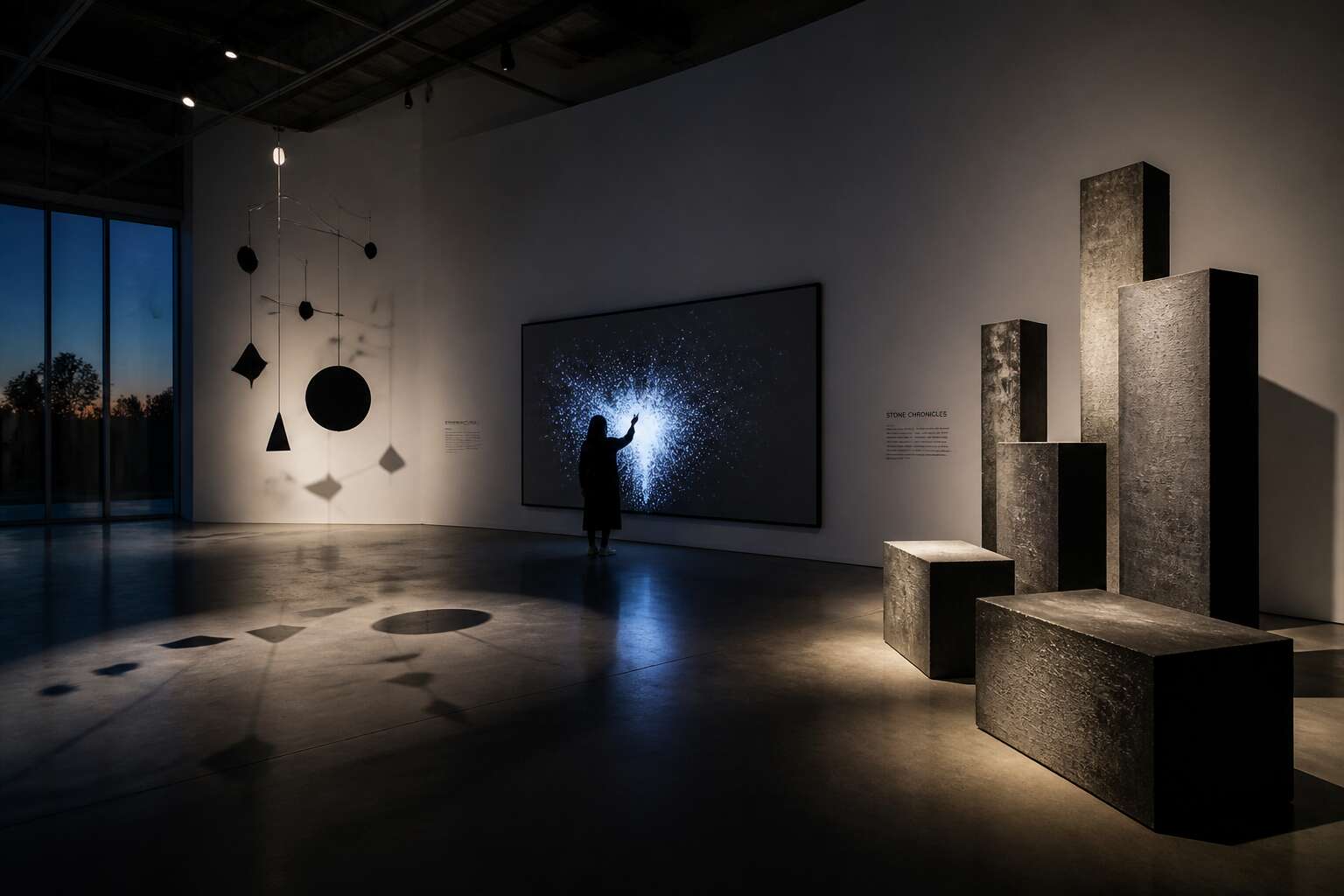
Foundational Frameworks for Immersive Displays
Narrative Arc Construction
Statistics from the 2023 Vuka Awards showed that exhibits with a defined narrative arc retained visitor attention for 40% longer. For exhibition concept ideas, the foundational framework of an immersive display begins with tension, not theme. I have learned that a visitor traverses a story in spatial terms, moving through rising action without reading a single label. The arc must be engineered through thresholds, light shifts, and sound cues that signal a turning point.
Consider the rhythm!
- Exposition: orient the visitor with a familiar anchor.
- Conflict: introduce an element that unsettles their expectations.
- Resolution: offer a recompense that reframes the entire journey.
This sequencing is practical. It orders visitor attention. Without it, exhibition concept ideas become scattered objects. The narrative arc must fit the local landscape. In a township retrospective, the arc might pivot on oral memory, while a nature display could revolve around seasonal cycles.
Object-Led Storytelling Techniques
In the half light of a gallery, objects retain their authority. Object led storytelling places a single artifact at the centre of the experience. The visitor circles it, studies its wear, its patina, its fractures. The technique demands restraint. A worn handle or a cracked lens carries more weight than any interpretive panel. I have watched visitors spend ten minutes reading one shoe, one letter, one bone. The object becomes the narrator. Trust it!
For exhibition concept ideas, this framework shifts the designer from narrator to custodian. The display becomes a sequence of encounters, each anchored by a physical thing that refuses easy explanation.
Consider the hierarchy of evidence:
- The object itself, with its visible history.
- The space around it, which shapes perception.
- The visitor’s own memory, which completes the story.
Thematic Zoning Strategies
Three zones shape the visitor’s path: the threshold, the labyrinth, the sanctum. Thematic zoning strategies divide a floor plan into distinct environments, each with its own light, sound, and texture. In Johannesburg’s exhibition spaces, I have seen a single corridor transform into a rain forest, then a morgue, then a cathedral. This is not decoration. It is a way of controlling attention. The visitor does not wander. She moves through a sequence of physical cues. To build these zones, consider:
- Boundaries that are porous, so curiosity passes through.
- Transitions that use darkness to create a pause.
- Returns that force a new angle, not a reversal.
These foundational frameworks for immersive displays rely on the visitor’s own gait; they turn spatial arrangements into paths. The zoning must feel inevitable. When done well, exhibition concept ideas require no explanation.
Balancing Education and Entertainment
The tension between instruction and absorption defines every immersive project. Visitors retain roughly 10% of what they read, but nearly 65% of what they encounter physically. This disparity forces a rethinking of exhibition concept ideas. The display must reward touch while refusing to lecture.
I have seen installations where school groups linger because the audio guide asks questions, not because it recites dates! Entertainment draws the visitor forward. Education gives that movement purpose. When the two conflict, the experience fractures.
A thermal camera reveals body heat against a cold surface. The visitor learns about heat transfer without a single label. The principle is felt before it is named. That is the foundational framework: sensory engagement that precedes semantic understanding. Balance requires restraint. Too much instruction stalls momentum. Too much play erases meaning.
Interactive and Technology-Driven Engagement Concepts
Augmented Reality Overlays
Seventy percent of visitors carry a smartphone into any exhibition hall, and that device becomes a portal when augmented reality overlays enter the picture. Instead of static labels, a visitor holds up their phone and watches a historical object animate, revealing hidden layers of provenance.
AR overlays place fresh exhibition concept ideas directly into physical displays. The technology adds digital strata to artifacts, allowing visitors to peel back time through their screens.
Consider how AR enhances specific spaces:
– A fossil specimen shows its muscle structure in motion
– A heritage building reveals its original interior layout
– A sculpture displays its carving sequence from block to finished form
These overlays don’t replace the object. They deepen its context through a tactile, personal encounter that feels less like a lecture and more like discovery.
Responsive Sensor-Based Installations
Responsive sensor installations turn passive viewing into active exploration. In South African galleries, infrared and pressure sensors enable interaction. These exhibition concept ideas work through physical proximity, not screens, and suit all ages!
A floor plate triggers spoken memory when stepped on. A wall changes texture from palm pressure. A corridor shifts recorded ambience with body heat. I have seen visitors move slowly, testing every step.
- Motion sensors activate archival footage when approached
- Touch sensors reveal hidden inscriptions on replicas
- Sound sensors modulate audio based on ambient noise levels
Each system responds to individual movement, encouraging slow observation. That is the core value of responsive design.
Gamified Discovery Pathways
Old mine shafts and coastal caves in South Africa reward those who explore them. Gamified discovery pathways borrow this logic. Visitors earn access to hidden layers of a collection by completing small, physical tasks. A brass plaque turns when a riddle is solved. A sealed drawer opens after the correct sequence of objects is touched. These exhibition concept ideas convert gallery floors into sequential challenges. I have walked such rooms slowly, watching strangers trade quiet clues.
Scoring systems add gravity. One visitor’s choice alters what the next viewer encounters. This approach does not require screens or prompts. It asks for patience and a willingness to be led astray.
Consider the mechanics that work well in local spaces:
– A token system that unlocks a final chamber
– Maps that reveal new routes after each completed station
– Codes hidden inside object labels that open private archives
Each pathway reroutes attention through the muted corridors of memory. These exhibition concept ideas reward the curious and the patient in equal measure.
Data-Driven Personalization Hubs
Every visitor carries a signature of preferences, often invisible until data captures it. Data-driven personalization hubs read that signature through entry scans, dwell times, and choice patterns. These exhibition concept ideas shift from broadcasting a single narrative to composing a unique sequence for each person. I have watched a hub redirect a family toward tactile stations while sending a solo visitor deeper into archival material. The logic is not about surveillance; it is about relevance. Consider what a hub can tailor:
- Alternative object interpretations based on past selections
- Audio narratives that adjust vocabulary and pacing
- Wayfinding routes that prioritize unexplored galleries
Each choice creates a feedback loop. The exhibition becomes a conversation where the visitor speaks through behavior, and the space answers in kind.
Hybrid Physical-Digital Interfaces
Nearly 70% of visitors carry smartphones, yet few exhibitions use them for shared physical experiences. Hybrid physical-digital interfaces address this. I watched a visitor rotate a bowl while a projector cast its glaze recipes on the wall. The object stayed physical; digital layers invited touch without replacing it. That immediacy is startling!
Such exhibition concept ideas depend on choreography. A pressure-sensitive floor can trigger audio cues that match footsteps, while embedded screens display archival photos overlaid on the case. The key is making the transition seamless.
- Projected annotations that follow a handled object
- Wearable tags that unlock textual layers on nearby artifacts
- Digital workstations where visitors sketch over scanned relics
These interfaces ask visitors to move, inspect, and respond. When done well, the exhibition becomes a medium, and the division between real and rendered disappears.
Spatial Design and Sensory Storytelling Approaches
Scenic Environments and Set Design
Physical environments communicate before a single object is seen. Scenic environments demand deliberate choreography of light, shadow, and material texture. In my work designing exhibition concept ideas for South African heritage sites, visitors remember the weight of a room long after they forget the labels.
A well-constructed set design uses spatial hierarchy to guide the eye. Dark corridors give way to sudden openings. Rough surfaces contrast with polished glass. These choices shape emotional response without words.
Consider these spatial elements:
- Transition zones that slow the pace between scenes
- Acoustic materials that absorb or amplify ambient sound
- Scent diffusers that anchor memory to specific moments
- Lighting angles that alter perceived scale
Sensory storytelling approaches bypass intellectual processing. The visitor does not interpret the environment; they feel it. This is where exhibition concept ideas succeed or fail, often within the first three seconds of entry. That window demands respect!
Lighting and Color Psychology
Light does more than illuminate. It sets the body’s expectations before the mind catches up. In exhibition concept ideas, an amber wash can shrink a cavernous hall into an intimate chamber, while a cool blue pushes walls outward. Color psychology works the same way. Red accelerates, green calms. The skill is using these tools sparingly.
Consider the sensory load. A room that is too bright flattens texture. A room that is too dark hides the objects. The right balance lets visitors feel the space without noticing the effort. That is the trick! I test lighting at times of day, because natural light shifts the palette. Some colours need particular conditions.
Luminance contrast builds hierarchy. Place a dim object against a lit wall and let shadows do the curation. That approach grounds exhibition concept ideas in experience rather than appearance.
Soundscapes and Acoustic Branding
A room without intentional sound feels like a waiting room. The hum of an HVAC system becomes the unintended soundtrack. Spatial design should treat audio as a physical material. In exhibition concept ideas, sound shapes the visitor’s path as directly as any wall. Place a soft drone near a corner to slow movement. Play a sharp, dry click to signal a change in material or time period.
Acoustic branding works on a subconscious level. It identifies a theme before the visuals register. Consider these elements:
- Volume: A quiet space demands focus.
- Direction: A sound source behind a wall creates curiosity.
- Texture: The grain of a recording tells you if it’s old or new.
For South African exhibitions, ambient sound must respect local context. When planning exhibition concept ideas, the acoustics of a repurposed warehouse differ from a concrete bunker. I test sound levels during peak hours to avoid masking conversation. The goal is to create an aura that feels inevitable, not staged. That is the art of acoustic integration.
Tactile and Olfactory Elements
Tactile and olfactory cues carry memory more reliably than any screen. In exhibition concept ideas, the hand and the nose guide visitors. Visitors remember the cool of a river stone or the bite of cured leather. For South African galleries, source local materials: Karoo clay, sisal rope, aged timber. These surfaces invite touch without a single printed sign.
Olfactory elements anchor a place. A whiff of fynbos after rainfall or the smokiness of a braai can transport a visitor instantly. Scent must be used with restraint, as a room that overwhelms repels rather than immerses. I find a single, subtle note works better than a blend. Consider these placements:
- Warm wood near a reading corner
- Mineral dust in a geological zone
- Herbal sprigs in heritage displays
The spatial choreography of texture and smell creates a layered narrative. When paired, the visitor’s pace naturally adjusts, drawing them into quieter attention.
Scale Manipulation and Perspective Play
Scale manipulation alters the visitor’s sense of self. A giant chair makes you feel small; a tiny door makes you feel huge! Perspective play, such as tilting a floor or skewing a frame, breaks habitual vision. In exhibition concept ideas, these tools turn a gallery into a space of productive uncertainty.
I find that combining both creates the strongest effect. A room where the ceiling descends as you advance, paired with a mural that recedes incorrectly, leaves no neutral ground. For South African venues, consider these spatial moves:
- Exaggerate the height of a Karoo barn doorway.
- Miniaturise a township street corner into a tabletop model.
- Use angled mirrors to multiply a narrow passage.
The visitor exits with a recalibrated sense of size, and that feeling lingers.
Wayfinding as Narrative Device
A corridor never simply connects rooms. It dictates the rhythm of discovery. In exhibition concept ideas, the path itself is the first exhibit. We design for the object, but the space between objects carries the emotional weight.
A floor that changes from concrete to timber alters pace. A narrowing ceiling signals a secret. A sudden window resets context. For South African venues, a visible orienting landmark gives visitors agency while holding your narrative line.
- Align doorways to create sightlines that tease the next scene.
- Change floor levels to segment a narrative chapter.
- Insert a narrow passage that forces a pause before a reveal.
These cues build expectancy without instruction. The visitor participates, solving the space through their feet!
Audience-Centric and Participatory Exhibit Models
Co-Created Content Walls
Visitors rarely remember what they were told. They remember what they helped make. Co-created content walls transfer narrative control from the curator to the audience. For South African exhibitions, where oral tradition still shapes collective memory, these walls become living archives. They capture perspectives that no planning process could anticipate.
Contributors might:
– write a response to a prompt
– sketch a reaction to an artwork
– attach a personal object with a short note
The result is an ever-shifting palimpsest of voices. Each visit changes the texture of the show. The wall accumulates meaning as people pass through it, and that accumulation is the real exhibition. It rewards return visits and builds a sense of ownership among participants. Within the wider range of exhibition concept ideas, this model offers a low-cost, high-relational approach. The wall does not compete with the objects. It amplifies their resonance.
Live Polling and Real-Time Feedback Stations
Live polling stations turn visitors into active decision-makers. When audiences vote on questions about the work in front of them, they watch the collective opinion reshape the room. That instant feedback loop gives people a stake in how the conversation unfolds, a core concern for contemporary exhibition concept ideas.
For South African exhibitions, these stations capture the mood of a moment. A show about land reform can display live public sentiment alongside the artifacts. A simple keypad or phone interface is all it takes!
- Instant voting on interpretive directions
- Rating the emotional weight of specific objects
- Anonymous responses to sensitive heritage questions
- Submitting questions for the next guided tour
The accumulated data becomes part of the archive itself, a real-time record of how communities responded. This approach belongs in the wider field of exhibition concept ideas where audience voices carry actual weight.
Community-Contributed Artifact Displays
Some of the most revealing objects never start in a museum store. They sit in wardrobes, under beds, in shoeboxes. Community-Contributed Artifact Displays invite people to bring these personal items into the exhibition space, shifting the authority of curation away from institutions alone. For a South African show on forced removals, a family’s old rent book becomes a document of survival. The items themselves are often modest:
– A wedding photograph from District Six
– A passbook stamped with dates
– A hand-stitched quilt made from scrap fabric
Each object carries weight no museum label can replicate. The process requires clear protocols for handling, provenance, and return. Of all exhibition concept ideas, this one leans hardest on trust. When visitors see a neighbour’s contribution on the wall, they see themselves in the narrative. That recognition transforms the room into a shared record of lived experience.
Open Mic and Storytelling Booths
There is a particular tremor when a person steps to a microphone in a room of strangers. The storytelling booth, an acoustic chamber, captures that tremor. Unlike static displays, this model grants the visitor custodianship over the narrative moment. In South Africa, where memory is a communal act, the booth becomes a stage for testimonies that resist institutional editing.
Booths provide a prompt, not a script. They might ask for a recollection tied to a scent or a street corner. The audio is often layered, creating a palimpsest of voices. Operational prompts include:
- Describe a piece of music that defined a decade of your life.
- Relate an encounter with a stranger that changed your direction.
- Recount a local protest that you joined, even if only on the periphery.
This participatory design forces curators to relinquish the final word. The yield is unpredictable, raw, and occasionally profound. Among exhibition concept ideas, this one transforms the audience into witnesses, building an archive of unguarded oral history.
Child-Led Discovery Trails
A child does not read a museum like an adult. They follow impulse. Child-led discovery trails accept this impulse as a curatorial method. Instead of a fixed path, the floor offers branching choices. A child selects a rock, a bird call, or a metal pipe. Each selection unlocks a different micro-narrative. The adult holds the map, the child holds the decision.
This model requires the designer to build trust in youthful curiosity. In South African heritage sites, this approach aligns with community practices where children learn through observation and play. The trail can include simple tasks:
- Find an object that smells like rain.
- Draw a symbol that represents your family.
- Place a stone on the story cairn.
The child returns to a base station to share findings. Staff listen and record responses, which feed into future iterations. This is one of the more radical exhibition concept ideas because it surrenders the narrative sequence. The result is an archive of child perspectives, often more honest than adult curatorship.
Sustainability and Community-Focused Exhibit Themes
Upcycled and Repurposed Material Installations
A mangled aluminium can, once crushed under a taxi tyre, retains a specific geography. We are experimenting with repurposed material installations that trade pristine white plinths for gritty, salvaged surfaces. This shift is crucial for exhibition concept ideas, grounding the visitor in the physical economy of South Africa’s townships. Community members become co-authors of the space by donating scrap tyres, bottle caps, and rusted galvanised sheeting. These objects pivot the exhibit away from passive viewing.
The process demands a logistical framework. We must secure industrial partnerships and manage contamination risks. The payoff is a raw, tactile authenticity! The installation structure often segments into:
- high-volume waste stream mapping to identify low-cost materials,
- long-term storage negotiations with municipal recycling centres,
- skills-transfer workshops where residents pre-assemble components.
These methods push exhibition concept ideas into a circular economy. They create a system where community trauma and environmental decay become raw material for dialogue.
Local Heritage Co-Creation Projects
In South Africa, heritage often arrives with labels already attached. Council plaques tell one version. Museum texts tell another. Local heritage co-creation projects invert that authority. Residents decide what matters and why. This inversion is central to contemporary exhibition concept ideas. Sustainability here extends beyond material choices. It means the exhibit remains relevant after the doors close. When community members co-author the narrative, they carry ownership into daily life.
We structure these projects around shared authorship:
- Oral history recording stations operated by local youth capture stories in isiXhosa, Afrikaans, and English.
- Neighbourhood mapping sessions let residents plot significant sites on a communal digital canvas.
- Rotating curation slots allow households to present their own artifacts, not borrowed museum pieces.
This approach treats heritage as a living system. It demands time, patience, and a willingness to surrender curatorial control. The reward is an exhibition that remains active in community life long after opening day.
Circular Economy Demonstration Zones
Circular economy demonstration zones turn sustainability into something visitors can watch, touch, and question. A crushed plastic bottle enters a machine and exits as a workable sheet. That transformation, usually hidden inside industrial processes, happens in full view. These exhibition concept ideas reveal the mechanics that recycling plants keep behind sealed doors.
In South Africa, where municipal waste systems face constant strain, the demonstration carries local urgency. These zones operate as true laboratories. Local recyclers supply the materials. Local makers run the equipment. The process stays honest, glitches and failed batches included. Nobody boos a jammed shredder. That authenticity builds more trust than a perfect showcase ever could.
The best exhibition concept ideas do not lecture. They show. Visitors leave knowing the exact path from discarded object to new resource.
- Interactive screens trace one material through multiple lifecycles
- Pop-up sessions feature small manufacturers explaining their real workflows
- Waste drop-off points feed the demonstration with fresh material daily
Accessible and Inclusive Design Principles
Only 32% of South African public venues meet basic accessibility standards, a gap that exhibition concept ideas can close. Sustainability and community focus converge when exhibits draw maintenance crews, neighbours, and school groups into daily operations. A solar array display in Durban can include shaded seating and interactive elements where parents teach children, turning energy literacy into a social ritual.
Accessible and inclusive design principles demand more than ramps. They require thoughtful audio description, contrast ratios that respect low vision, and rest areas that support chronic fatigue. Practical exhibition concept ideas include these anchors:
- Captions on every screen, including videos.
- Height adjustable surfaces for wheelchairs and children.
- Quiet hours with reduced lighting and sound.
These choices signal that the exhibit belongs to everyone. When community members help shape the content, sustainability becomes a shared responsibility rather than an individual burden.


0 Comments